Last month saw a flurry of activity as Dublin hosted several international conferences as part of Ireland’s presidency of the Council of the EU. The International AI Summit drew a lot of attention, but I was at least as interested in the Global Bioeconomy Summit, which was organised around the publication of the Global Bioeconomy Vision 2040 and Dublin Goals.
As someone who works in economic development but is also pretty passionate about the environment, the bioeconomy is one of those areas where several of my interests tend to collide in exciting ways. At its core, the bioeconomy is about using biological resources and process to produce food, building materials, energy and chemicals.
Many of the most pressing challenges we face are a result of dependence on finite resources, not least fossil fuels. With the bioeconomy, we have an opportunity to solve those problems in collaboration with nature. Lest this sound like hippy-dippy wishful thinking, it’s something that innovative Irish companies are already doing.
Cork-based HaPPE Earth, for instance, makes compostable personal protective equipment for hospital use. Almost half of all the plastic we use is designed for single use, much of which is unnecessary but some of which, like PPE, is entirely understandable. I don’t think I’m alone in being unenthusiastic about the idea of being examined or operated on by someone wearing second-hand PPE, no matter my enthusiasm for the environment. But instead of worrying about the number of uses, HaPPE instead changed the material to one that could be disposed of without the environmental impact of plastic.
Studio Mark Moriarty review: I ate one of the best things I’ve had all year in this convivial spot

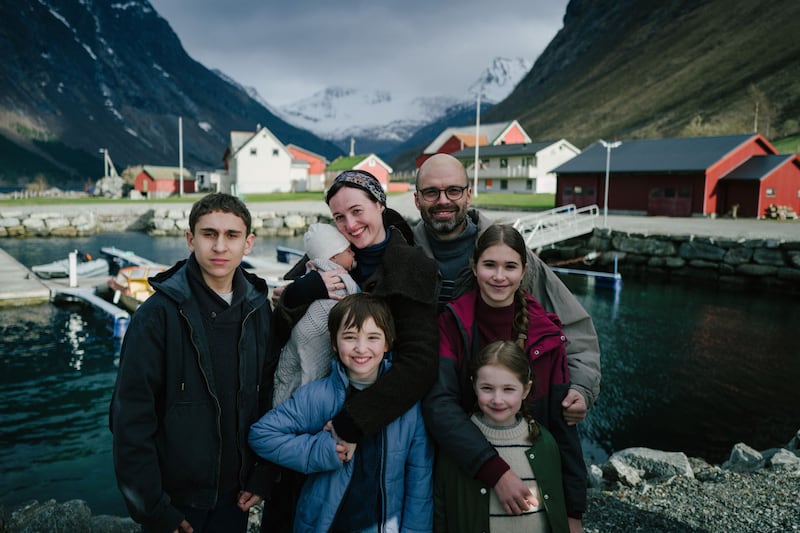
Fjord review: Palme d’Or winner has an incendiary plot for arthouse liberals
14 new restaurants to visit around Ireland this winter

Greenhorns: Frank McNally on learner drivers and impatient motorists who honk too much

There is similar potential in other sectors. Anaerobic digestion can convert agricultural waste into fuel, while pyrolysis can turn digestate and agricultural waste into biochar, which can dramatically reduce the amount of carbon emissions from concrete production.
[ Bioeconomy has many meanings and plenty of potential in all its formsOpens in new window ]
Potential does not necessarily lead to economic opportunity, however. There can be quite some distance between a good idea and a commercially viable one, and for much of the bioeconomy there are areas such as manufacturing capacity, available investment and market demand that would benefit from further support.
The Dublin summit did give some cause for hope, though. The Taoiseach, alongside Ministers Martin Heydon and Darragh O’Brien, launched Ireland’s first National Bioeconomy Strategy, while European Commissioner Jessika Roswall launched the Biobased Europe Alliance, which hopes to secure €10 billion worth of commitments to buy products from the bioeconomy by 2030. The Global Bioeconomy Vision 2040 and the Dublin Global Bioeconomy Goals, meanwhile, set a range of ambitious (although not binding) goals based on growth, climate and nature, and fairness and inclusion.
Both Vision 2040 and the National Bioeconomy Strategy highlight textiles and construction as key areas to grow, which is good news for Irish firms which, like HaPPE, have already begun to develop innovative bioeconomy products. Research from projects such as BioDirect, led by Stephen Barry-Hannon at Munster Technological University, have unearthed a plethora of imaginative pilots, but identified barriers that frequently prevent these from being scaled up to commercialisation. These include weak demand, lack of finance, fragmented standards and regulations, and a lack of shared processing facilities.
Of course, growers need predictable demand, processors need an adequate supply of material and manufacturers need consistent quality to produce a product customers want at a competitive price. These issues aren’t unique to the bioeconomy. But unlike many other manufacturing processes, we have the potential to produce many of the raw materials for these on the island.
Indeed, Ireland was once a world-leading producer of natural fibres. Flax was a significant crop along the Lagan and upper Bann rivers and a big factor in Belfast’s industrial growth. Even today its city hall is on the site of a former linen exchange, and one of its six quarters is the Linen Quarter, formerly home to factories, weavers and warehouses to support the industry.
No less significant, although not as well known, was hemp. Sadly, Hemp Street off the Newtownards Road is all that remains of the vast ropeworks, the world’s largest. It employed more than 3,500 people at Connswater, making rope from plant fibre that supplied the adjacent shipyards as well as international markets, and was a key target for German bombers during the Blitz in the second World War.
Today the opportunities for hemp are more varied, and include hempcrete, hemp insulation, and formaldehyde-free hemp panels for construction, alongside hemp-based composites to replace glass fibre in car parts. Much of our textile waste is exported, burned or downcycled. We now have an opportunity to reuse this waste and move it up the value chain. With consistent demand and a supportive policy framework, Ireland could once again be a world leader in natural fibres.
Stuart Mathieson is research manager with InterTradeIreland