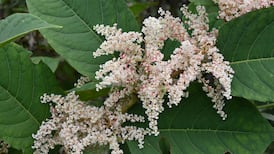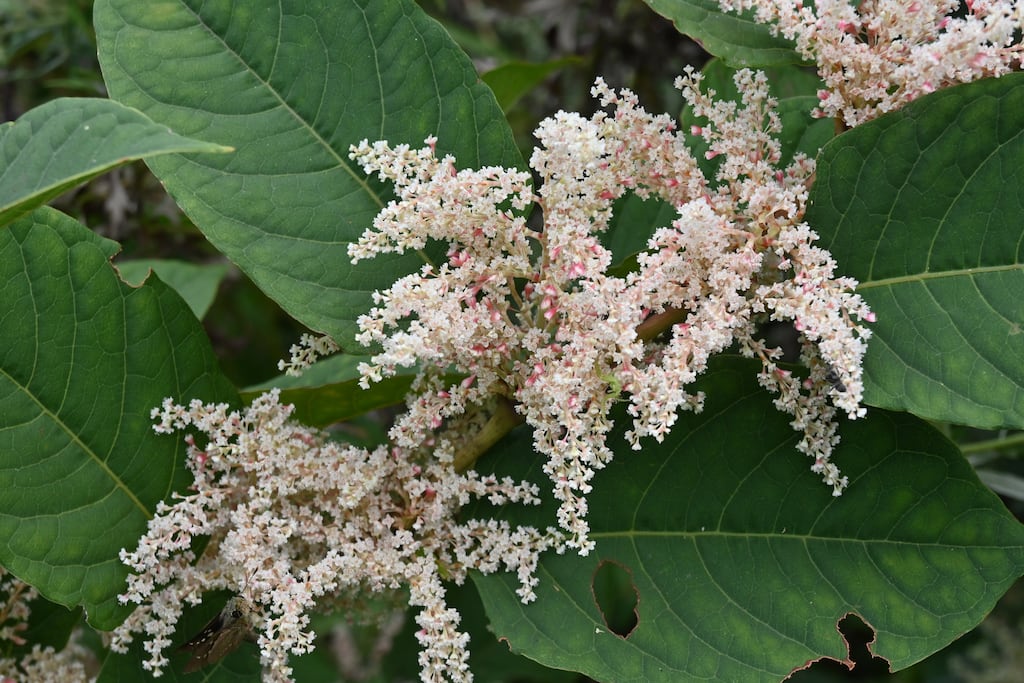

I’m pretty sure I can see a patch of Japanese knotweed growing in the garden next door. I don’t know my elderly neighbour well, but I doubt she’s aware of it. What would you suggest as the best course of action? I’m worried it’s going to find its way into my own garden or start undermining the foundations of the boundary wall between the two properties. Sonya F, Co Dublin
Hmmm. This is a potentially tricky one from the point of view of keeping peace with your neighbour, but you’re right to be concerned about the potential risks to your own property. Left to its own devices, Japanese knotweed (Reynoutria japonica/ Fallopia japonica) can slowly but surely cause substantial damage to the foundations of built structures as well as to underground drains, gradually colonising large areas of ground and spreading via its deep, exceptionally resilient, vigorous rhizomes. The latter can be notoriously hard to eradicate once established, so the sooner you act the better.
My guess is that your neighbour will be grateful to be alerted to this potential problem so that it can be tackled professionally before it causes damage. It’s also worth noting that Irish property owners are obliged by law to take suitable steps to eradicate this invasive species if it’s growing in their garden. That said, be cautious. It may be the case that you’re mistaken in your identification, so I’d suggest going gently when it comes to approaching your neighbour to explain your concerns.
If she’s happy for you to do so, start by taking some photographs of the plant in question and see if you can positively ID it using online resources (for example, biodiversityireland.ie, rhs.org.uk and jkc.ie). If it is Japanese knotweed, then the best way to safely remove it is by employing a professional licensed contractor, who will carefully assess the site and typically use a combination of chemical sprays and carefully controlled excavation works, with all plant parts securely removed off-site. They’ll also give advice on preventing any remaining root fragments from reshooting to form new colonies.
RM Block


For further details on the biosecurity risks posed by Japanese knotweed, the protocols being developed to control this plant, and property owners’ legal obligations in this regard, see invasive.ie, npws.ie and dublincity.ie