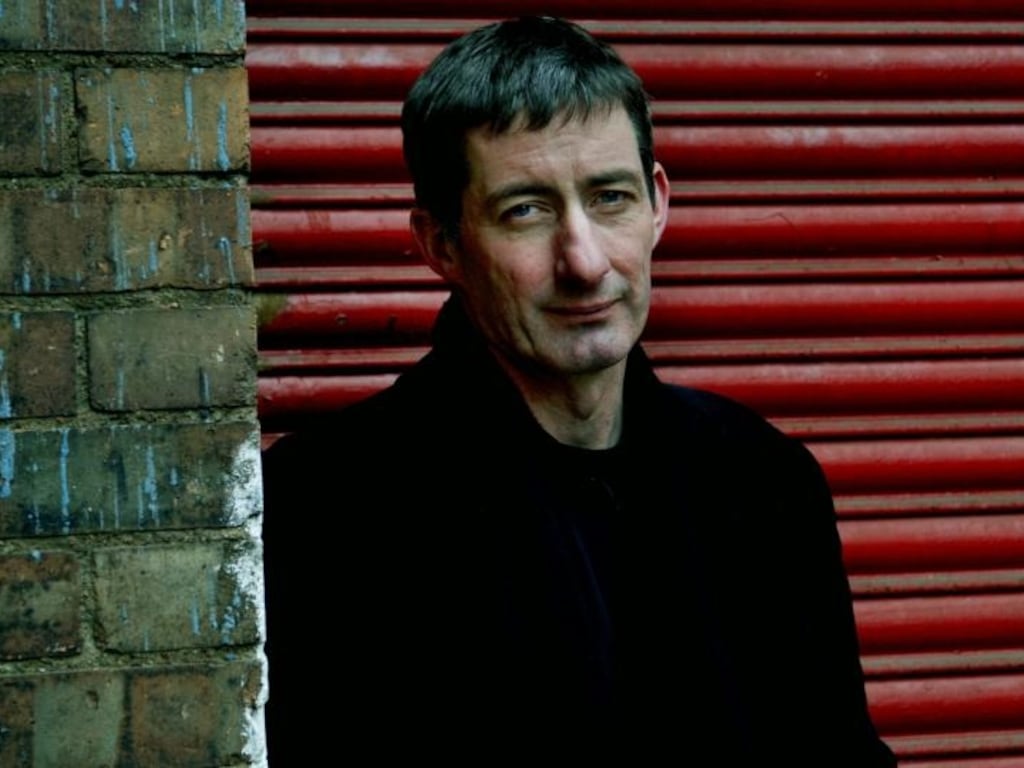
In this collection of short fiction, Eoin McNamee takes you to places that feel familiar, and yet you have never visited them, and you hope you will never visit them, but in his masterly hands you are happy to reside there a while, trying to comprehend a little better the human hearts that crush the beauty out of the world into cuts and bruises of stark existence.
The Co Down author, who has written several novels, the best-known being Resurrection Man, places faces in front of you that fell from grace some time ago, if their owners are not already on their knees to begin with, and draws dialogue from them that’s as earthen as the environment that’s shaped it; what sounds like a song one second might slip into a snare the next.
In wrapping these stories in tempestuous weathers, McNamee rattles the windows of his characters’ minds, while smudging their sensibilities so that the line between pleasure and pain is something they stumble over.
You realise the light in the field of vision of The Comets is appropriately streaky when closing its pages, but that’s because McNamee is a writer who’s unafraid to approach darkness. The title of this collection makes sense as many characters follow strange orbits, most have nowhere to call home, nor inner lives to find a moment’s peace.


Most seem to function in high-pressure mode, always watching and waiting for when the pot lid will eventually flip in the futility of bone-crunching violence, bubble over and burn out. Sparks fly in many of the stories, with other recurring images: silk; snow; dust; tables of cigarette burns and drink stains; a magical realism in the weightlessness of wings contrasting the weight of industrial labour’s grind, wearing down the soul; memento mori lurk almost everywhere.
McNamee’s characters are fascinating due to the paradox of how many of them are looking to be found and yet wishing to get lost. A splendid line, of which there are many in this collection, encapsulates the fate of many found within: “If there was a realm of bad choices she would be queen.” His characters feel predestined to a life of pain - from the plain facts of poverty, ignorance and intolerance, religion and sectarianism; or from being other; or from just unfortunately born into it, as he writes movingly in Walking North, Walking Home, of those who have no start in the world.
“There would be children, princelings of destitution in worn-outclothes. There would be care workers, dim figures moving on the periphery of what children allowed themselves to see. All she remembered was that you never looked up.”
In these stories, looking up is likely to get you a smack in the head. In another story we find neglected children with no shoes, leaving beads of crimson after walking through the snow to the local church in search of some food. They are considered forsaken by the Brethren, and turned away hungry. It’s a cold world in every sense, in these tales.
McNamee’s ear for speech is as sharp as ever, as is his materialising menace in the most economical manner (“She knew the look in Eddie’s eye and would get to know it a lot better”) and death is never far from his pages, with its “thick sherbert smell”.
The two longest pieces of fiction in the collection - Love in History at 70 pages, and The Last of Deeds at almost 100 pages - feel the least satisfying from the author’s stretching, compared with his other impressively compact constructions. Among the ragbag cast of characters in the longer works there is no one to truly root for, to lock into with your heart to maintain a reader’s curiosity.
Love in History, set around second World War Belfast, feels overegged with metaphorical description, while The Last of Deeds, with its small-town sectarianism and coming-of-age struggle, is weighed down by its portentousness. Contrasting these are the likes of Quo Vadis, one of the finest in the collection, where McNamee brilliantly delivers dramatic high points in a paragraph in the story, as he does elsewhere, where another writer might overwrite.
A quibble in the turning point of The Road Wife, where a young woman is selling her body to long-haul lorry drivers: at a service station she goes to the toilet and leaves her handbag in the cabin; this is unlikely in almost any circumstances, but especially hers.
Nonetheless, as a collection The Comets leaves a satisfyingly heavy trail on a reader’s mind by its end. With titles such as Corpse Flowers and Sable, you realise you are journeying towards a dark horizon, but there’s a squalling pleasure of being blown around in these stories, like facing outwards for a walk into a stormy night, and not knowing who or what you might encounter.
NJ McGarrigle is a journalist from Co. Tyrone