

The number of ways chief executives keep finding to get themselves into bother is a source of ceaseless wonder.
When they are not having an affair with a colleague, or funnelling business to a girlfriend, they take drugs, spy on staff or do something even more peculiar, like getting caught on video kicking a dog in an elevator.
That feat was achieved by Desmond Hague, former boss of the US sports catering company, Centerplate, back in 2014. He resigned a short while later.
But the news that Michael Rousseau is stepping down from Air Canada breaks fresh ground. He seems to be the first CEO to leave a large company after failing to speak a language.
Ministers meet on State’s oil reserves and sorting out finances in fractured families

Solid tax trends will only increase demands on the Government for energy supports

‘I was injured during a company trip and no longer receive a salary due to absence. What rights do I have?’

The internet is deciding what to forget

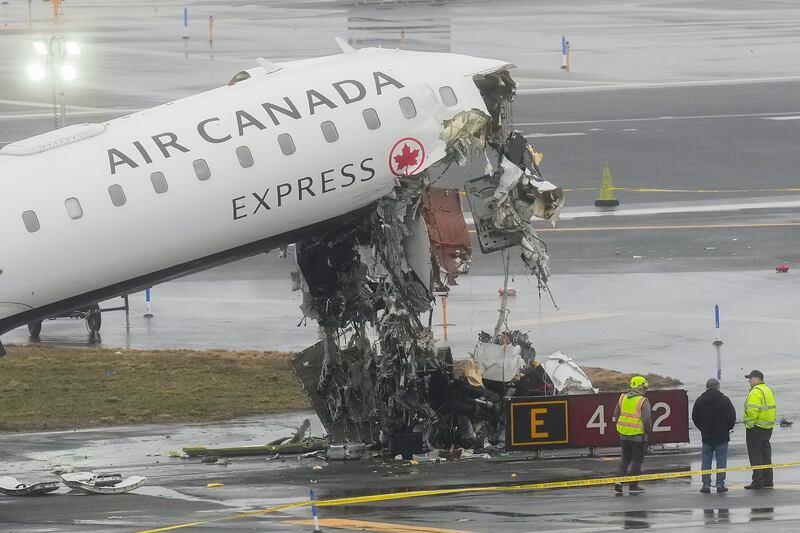
In his case it was French, a tongue he virtually ignored in a video message to mark the deaths of two pilots, one of them from mostly French-speaking Quebec, in a crash at New York’s LaGuardia airport last month.
Rousseau’s use of English sparked outrage across Canada and especially in Quebec, where Air Canada – the country’s largest airline – is based.
As a serial second-language struggler, I at first felt a twinge of pity for Rousseau, who tried to quell the uproar by saying his French was still no good despite “many lessons over several years”.
Still, he had promised to raise his linguistic game in 2021, the year he was appointed CEO, when he also faced calls to resign after it emerged he and French were strangers.
[ Air Canada CEO to step down over failure to speak FrenchOpens in new window ]
Rousseau’s case is unusual but it does underline how much weight we put on the way CEOs speak and sound.
Interestingly, if he had managed to conquer French, even with a heavy accent, he might have fared better than expected.
Having a foreign accent can be a boon for chief executives, according to a recent study from University of Rhode Island academics which looked at how willing American nationals would be to invest up to $10,000 (€8,680) in a fictional company called Chocodelight.
Participants learnt about the company CEO’s reputation from a business journal article, then listened to recordings of AI-generated CEO voices delivering potentially bad news about a financial restatement in American, Kenyan and Indian accents.
As it turned out, if the foreign bosses had a good reputation, they attracted notably more investment than local CEOs. If both had bad reputations, accent made no significant difference.
Why so? It is unclear, though some researchers think foreign CEOs are seen as more hard-working and careful than local ones, so investors may not be deterred by what they regard as a one-off bit of bad financial news.
Either way, this is good news for the growing number of foreign-born CEOs in the US, who now head companies ranging from Nvidia and Google to Microsoft and Tesla. Their accents may often be muted, but they are usually still there.
Most of us, however, are not CEOs and must live in a world where a foreign accent is no bonus at all.
I once studied in the US where my Australian vowels were mostly comprehensible, but not always. One day, I found myself chatting with a bunch of American friends about how to get into a class taught by the economist Jeffrey Sachs. “I’m really keen on Sachs but I think I’ll have to wait until next semester,” I said, only to be greeted by explosive hoots from the Americans, whose ears heard me say “sex” instead of “Sachs”.
I managed to have a career after this, even though research has shown for years that having a foreign accent can make you seem less competent, warm and hireable.
One study, highlighted in the Harvard Business Review last month, suggests that even when hired, the hidden scourge of accent bias can make it harder to get your ideas and arguments accepted.
After analysing more than 5,000 TED Talks delivered in English, the researchers found speakers with foreign accents consistently received fewer views and likes online, no matter what they were talking about or how good their talks were.
This happens unconsciously, because accented speech takes more “cognitive effort” and reduces perceptions of warmth and trustworthiness, which in turn suppresses engagement.
Still, the bias can be tackled. Meetings can be reshaped so everyone’s thoughts are circulated in advance in writing. Or a single person, such as a chair, can summarise everyone’s contributions in one common voice.
Ultimately, making people aware of the problem can chip away at its effect. That’s the hope, anyway, even if the reality is that change is likely to be slow. – Copyright The Financial Times Limited 2026.


