
You may not have heard of “Manchesterism”. But if not, you will soon. It is the name given to the economics of Andy Burnham, the former mayor of Greater Manchester and the likely next British prime minister.
It is part of the case put forward by his supporters for why he should get the top job. Manchester thrived when Burnham was mayor, is the line, and this success can spread across Britain. Of course it is not as simple as that. But the evidence is interesting and has some messages, too, for Ireland.
Manchester’s performance
Manchester has, according to a study by consultancy Oxford Economics, “been the star performer of the UK economy since 2008, combining robust gains in gross value added with rapid increases in employment”. Burnham attributes this to a devolution of more economic power to local government and active state investment in areas such as public transport.
Productivity and employment growth in Manchester have been consistently ahead of the UK national average in the period after the 2008 crash, as well as being among the top cities in Europe for employment growth. This has been based, as with most successful modern cities, on higher-value services, many of them tech-based.
RM Block


Investment in transport and the urban environment has also paid off. The Economist Intelligence Unit’s Global Liveability Index for 2025, based on a series of economic and social criteria, showed Manchester as the highest-ranking UK city, beating London into second place.
The 9 per cent VAT rate has been welcomed by restaurants but does the hospitality sector actually need it?
Why has this happened?
Manchester is an interesting study in devolution of power to a region. It started with the 2011 creation of a combined authority, pooling the work of 10 local authorities.
Various powers were gradually devolved to the authority in transport, housing, policing, the use of EU funds, training and more. From 2023 Manchester received an annual financial “settlement” from London, giving it flexibility on where to allocate funds. The role of mayor was created in 2017.
This has created a stable policy environment, a “champion” for the region in the form of the mayor and a consistent platform, which has encouraged significant private investment. While Burnham talks up the role of the state, private investment has also been crucial.
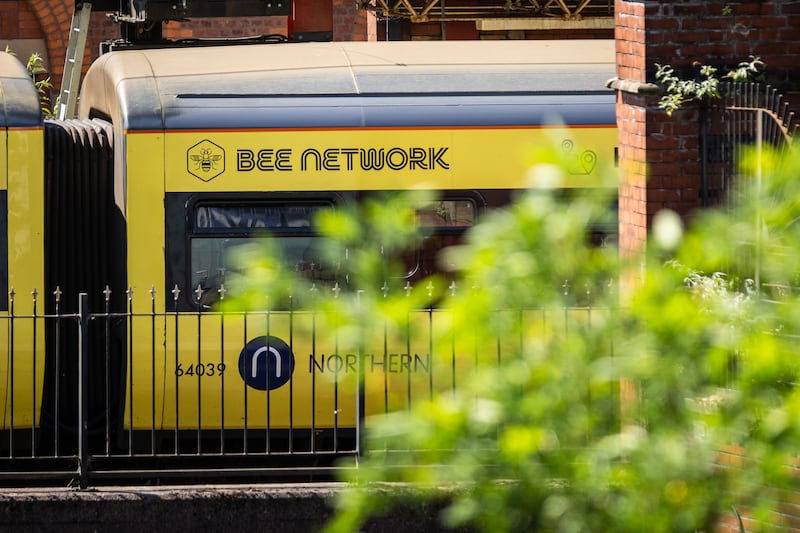
Local government has also taken back control of some areas, notably the bus network, from private companies. It has invested heavily in public transport based on buses and a tram network – called, believe it or not, Metrolink.
[ Evidence of the English psyche’s greatest fear lies in Surrey’s hillsOpens in new window ]
Oxford Economics cautions that not all its economic success can be attributed to this devolution. But it says its “trailblazer status” in this area allowed it to successfully argue for central funding and also provided policy certainty for private investors, who have driven growth in service industries. This has allowed mass development of large parts of the urban core of Manchester.
Surrounding regions have generally benefited from the spin-off, though the study points to questions about income growth generally, while – like many faster-growing European cities – high house prices and lack of supply are also a problem, along with affordability.
As in Dublin, the advent of build-to-rent investors, with its impact on the local population, has in places been controversial, including in the massive Victoria North regeneration project in the city’s northeast.

Burnham’s pitch
Manchester successes are a key part of Burnham’s pitch to be Labour Party leader and UK prime minister. Devolution of power from the centre is at the heart of this. A key marker is his promise to set up a “Number 10 hub” – a part of the central government policy machine – in Manchester.
There are few details of how devolution would work – beyond what happened in Manchester – though Burnham has spoken of the German system, where richer regions are obliged to provide top-up tax revenues to poorer ones to try to even out living standards. Whether councils have the resources and ability to step up and take on new responsibilities is another question.
He is also promising to gradually take back more state control of key services such as transport, energy and water – in some cases privatisation has led to chronic underinvestment. And, of course, to invest massively in council housing. These all being longer-term issues, he is also hinting at short-term help for households amid cost-of-living pressures.
The problem, of course, is that the parlous state of Britain’s public finances will give him little room for manoeuvre. To try to keep the markets onside, Burnham is committing to stick to the fiscal rules under which the Starmer administration has operated.
The markets will watch closely, with Britain needing to retain the confidence of bond investors. And there is speculation he may also have to raise taxes to pay for spending plans. It is an ambitious agenda, though the extent to which Burnham can overcome fiscal and political realities remains to be seen.
Lessons for Ireland
Manchester has been a successful city model but so, of course, has Dublin, which has outpaced the UK city in terms of economic growth, albeit that the figures are distorted by Ireland’s quirky economic data.
In Dublin’s case, productivity is genuinely boosted by the many tech-based service firms centred around the docks area, but these figures are exaggerated by their tax-planning practices. In Cork, the impact per capita of the pharma sector leads to even greater exaggeration.
Still, Dublin and Manchester have both had their economic successes and have attracted increasing populations, with what economists call the “agglomeration” – or proximity – of high-tech service businesses driving this. This allows skilled staff and backup supports to be focused in particular areas along with a ready supply of employees. It is the recipe for success of the modern city.
Ireland’s growth model is well studied internationally. But are there lessons from Manchester for Ireland and for Dublin in particular?
A few points are worth noting. One is that Manchester has been much more willing to build “up” than Dublin, ranking as Europe’s seventh largest city on the basis of buildings over 50 metres in height, both residential and commercial. The build-to-rent boom aimed at younger, better-off people is part of this, as is a different planning approach.
Higher buildings allow greater population density in a built-up area. There are other ways to achieve this, such as terraced or lower-rise developments. And Dublin has its Docklands high-rises. But the wider issue of how to develop dense city living and redevelop older and more run-down parts of the city centre remains. In addressing areas such as Glasnevin, Dublin may be able to learn from some of what Manchester has done. The UK city has also developed interesting innovation hubs and links to local universities.

A second point is the importance of public transport. The Oxford Economics study points clearly to areas connected with better transport links to central Manchester having higher income levels than those with poorer connections.
The researchers write: ”This pattern underlines an important point around gross value added and employment growth as primarily city centre phenomenon, while income growth – driven by residents commuting into higher-productivity jobs – is the more meaningful measure of whether surrounding areas are genuinely sharing in the region’s success.”
Dublin’s patchwork public transport may well have a similar “winners and losers” impact – previous studies have shown, for example, the impact on house prices of being close to the Dart. Senior Government officials and outside experts, looking at the case for the Luas extension to Finglas, argued it could help to lift incomes in an area where they are below the average.
The third point is the potential impact of devolution of power away from the centre and the opportunities this provides for development.
Ireland is one of the more centralised administrations in Europe, with local authorities raising funds via business rates and the local property tax to fund services, but requiring central approval for any significant spending. Limerick’s mayor was a small move to devolve decision-making. But power in Ireland remains at the centre.