

The verdict is in: Labour members are broadly delighted that the party ditched Keir Starmer as leader and UK prime minister and replaced him with Andy Burnham.
The general atmosphere at this week’s Labour Party conference, which started in Liverpool on Sunday, is one of relief. Fresh YouGov polling presented at the conference on Monday showed 79 per cent of Labour members felt it was right that Starmer quit.
Meanwhile, Burnham’s approval rating among members has soared above 90 per cent. That number, joked MP Justin Madders at the YouGov event, is at “North Korea levels”.
The slogan for Burnham’s first conference as UK prime minister is: “Hope again.” It is unclear if that is an observation by the new leader, or an order to his party members. Either way, they seem to be buying it for now. The “never kissed a Tory” T-shirts were on full display, loud and proud, among members roaming the docklands conference venue.
RM Block


What a difference a year makes. Last year’s conference effectively proved to be Starmer’s last stand. The then under-fire leader gave the speech of his life to ward off the stalking of Burnham, who left last year’s conference early when his plan unravelled.

The change in mood is palpable a year on. Burnham, having finally ousted Starmer in July, is preparing to make a big announcement on free social care in his conference speech on Tuesday. The party has nudged back in front in the polls, and a little of the swagger had returned among jubilant party members in the drinking dens of Liverpool.
There is recognition, however, that the new broom faces the same old problems. Chancellor of the exchequer John Healey gave his conference speech on Monday against a fiscal backdrop of jumpy bond markets and inflation angst.
Healey’s resignation as defence secretary in the dying days of the Starmer regime helped to seal his old boss’s fate.
Now, back in the fold as Burnham’s chancellor, he opened his speech with tributes to Starmer and former chancellor Rachel Reeves for the stability they brought. Burnham, he suggested, would now bring the “hope”. Healey mentioned it 21 times in his speech.
He was wearing what appeared to be rather battered old red tie. He soon explained it.
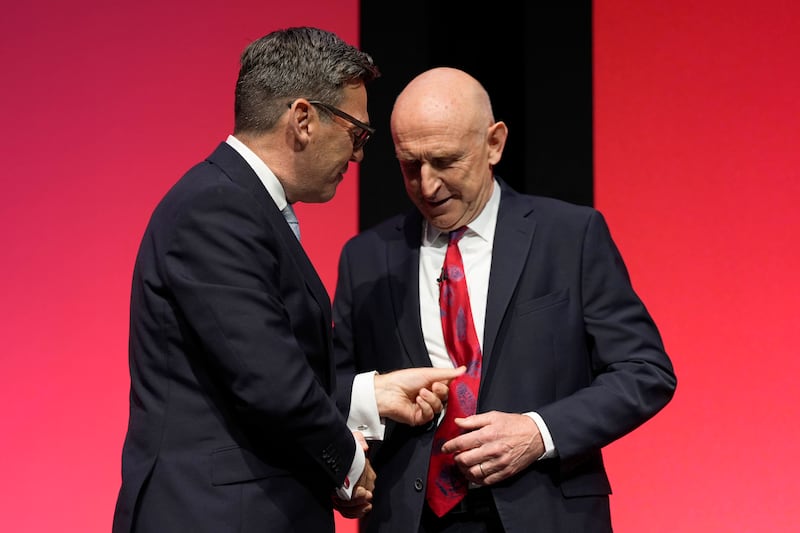
In 1999, Healey was a junior minister on the treasury team of then-chancellor Gordon brown, who had rushed to conference from Washington to give his big speech. As Brown went onstage, someone said he needed a red tie.
The only one in the room belonged to Healey. Brown borrowed it and gave it back to him afterwards. Healey wore it for his first speech as chancellor on Monday. The tie was the same, but little else. Healey emphasised that the money New Labour had to spend in the halcyon days of Brown and Tony Blair “is simply not there now”.
Meanwhile a foiled bomb plot at an RAF airbase on Sunday, which is being investigated for possible links to Iran, served as a reminder of Britain’s growing sense of vulnerability on the defence front. Security was tight at the conference venue on Monday morning.
[ EU countries consider Nato-style joint responses to Russian hybrid attacksOpens in new window ]
Claire Ainsley of the Progressive Policy Institute, who worked closely with Starmer as his policy adviser in opposition, told the YouGov event that she had initially thought that ditching him was “a hell of a risky move”. She said she eventually came to realise that it might be the right thing in the long term: “He wasn’t able to take the country with him.”
But for all the relief and good vibes among Labour members now, she warned that “the grit is going to come”. Burnham, she said, would have to start laying out the tough measures that must be implemented on the economy and public spending.
“Some of them are not going to like it,” said Ainsley.
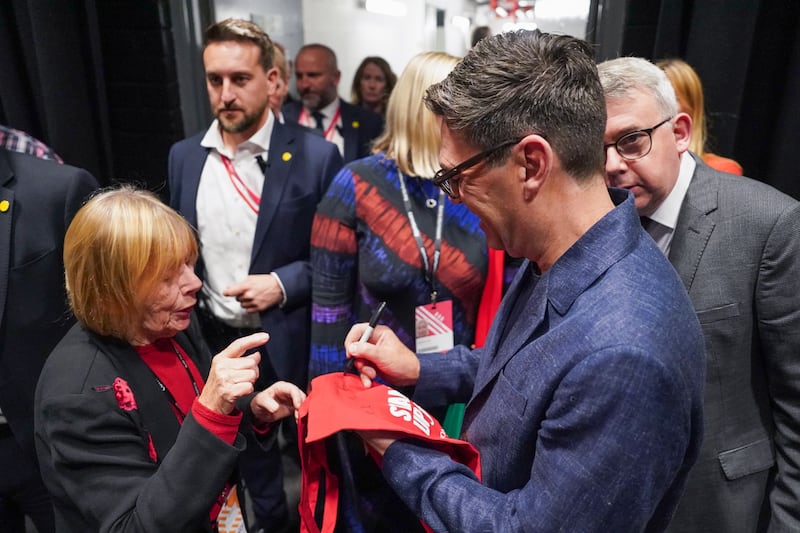
Madders, who was sacked as a minister a year ago by Starmer, said that looking back, many MPs “now appreciate just how much of a hole we were in” under the old leader.
He tried to dampen any talk of an early election, days after Burnham said he wanted to go all the way to 2029. Several polls suggest an election now would almost certainly bring the mother of all hung parliaments, but with Labour as the biggest party and best placed to form a government.
Labour members polled by YouGov were clear which party they felt would make the best coalition partner: the Liberal Democrats came out well ahead of every other option.
[ France’s far-right National Rally surges in Senate electionsOpens in new window ]
But for now, such talk is being pushed back by senior party figures, who want to get on with the business of governing while Labour still has a majority.
In the lobby of the Leonardo Hotel inside the conference venue on Monday morning, the health secretary Yvette Cooper queued patiently for coffee at the Illy stand while ousted former cabinet members such as Darren Jones and Hilary Benn also milled about.
Meanwhile, The Irish Times was told that the staff of one prominent UK cabinet member had been trapped in their Airbnb by a faulty door and were waiting on a locksmith to come and save them. There is rarely a dull moment where Labour politics is concerned.


