It is a mark of South Korea’s hopes for its planned new nuclear-powered submarine that it decided to name the vessel after Jang Bogo, a ninth-century naval commander known as the “King of the Sea”.
The Jang Bogo-N, which shares the hero’s name with Seoul’s first generation of diesel-electric submarines introduced in the 1990s, is intended to provide a potent counter to a nuclear-powered missile submarine under construction by North Korea.
Analysts say the new submarine programme, announced in May, will intensify the fierce arms race between the rival ends of the highly militarised Korean peninsula. It could also change maritime calculations in the wider region at a time of rising geopolitical tensions.
South Korea’s deployment of nuclear-powered submarines, which are faster, quieter and have much greater underwater range than conventional counterparts, would “complicate the decision-making” of North Korea and other potential US adversaries, said Peter Ward of the Sejong Institute in Seoul.
RM Block


“It is a serious improvement in South Korean naval capabilities,” Ward said.
On paper, North Korea is ahead. It announced in 2021 its plans for nuclear-powered submarines that would give Pyongyang a “second strike” capability to retaliate against an attacker even if all its land-based nuclear missiles were destroyed.
North Korean dictator Kim Jong-un last year unveiled the hull of his first such vessel, which, if deployed, could potentially operate much further into the Pacific than his current diesel-electric fleet. That would complicate US military planning by posing a threat to Guam, Hawaii and potentially the American mainland, Ward said.
But analysts say it is unclear whether the hull contains a functioning naval reactor and propulsion equipment or whether the secretive North has the capacity to produce such systems.
“North Korea has shown us the physical submarine,” said Moon Geun-sik, a former submarine commander who now teaches at Hanyang University. “But we need to verify whether the reactor and the technology for the reactor interface inside it are functioning properly.”
[ How Ukraine war has entered a new phaseOpens in new window ]
In 2023, Pyongyang launched the Hero Kim Kun Ok, a diesel-electric submarine modified to carry nuclear-capable ballistic and cruise missiles. But despite the fanfare, analysts say there is no evidence it has entered operational service.
Still, Kim Yeol-soo of the Korean Institute for Military Affairs said Pyongyang had potential avenues to acquire any technology it might be lacking, most obviously through military ties with Moscow boosted by its support for Russian president Vladimir Putin’s war in Ukraine.
“Since they provide so much support to Russia right now, they could ask for the entire nuclear propulsion system in return,” Kim said, adding that another option would be to try to steal submarine-related technology from other countries. “Their hacking capabilities are outstanding,” he said.
By contrast, there are few doubts about South Korea’s technical capacity to build a nuclear-powered submarine. The country is a leading exporter of nuclear reactors for power plants and has successfully built many diesel-electric subs.
But US opposition thwarted South Korea’s repeated previous efforts to develop nuclear-powered subs. Under nuclear co-operation arrangements, Seoul needs Washington’s approval to enrich or reprocess the uranium fuel required.

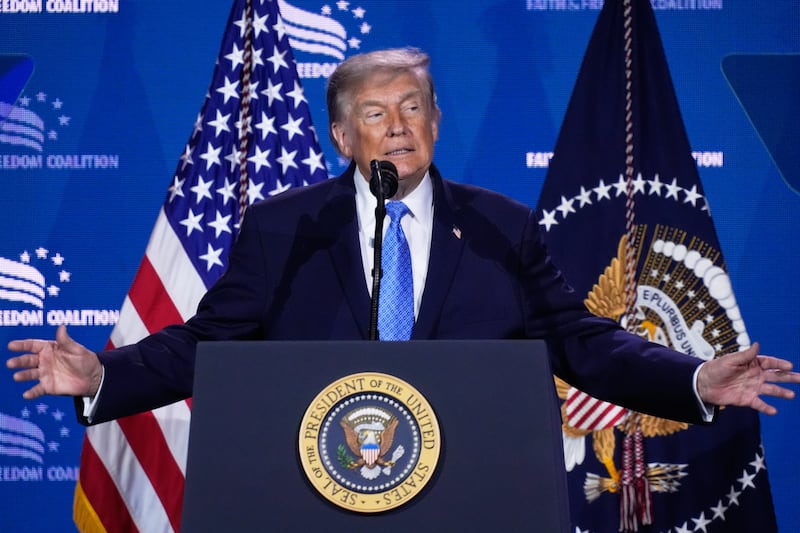
The Jang Bogo-N programme relies on a US change of heart apparently sealed during a visit to South Korea last year by US president Donald Trump, during which he was feted by his counterpart Lee Jae Myung and presented with a golden crown and the nation’s highest order of merit.
Apparently in response to a direct request from Lee, Trump announced on social media that he had granted South Korea “approval to build a Nuclear Powered Submarine, rather than the old fashioned, and far less nimble, diesel powered Submarines that they have now”.
But Ankit Panda at the Carnegie Endowment for International Peace think-tank in Washington said there was a “ticking time bomb around mismatched expectations between Trump and South Korea”.
Trump declared the submarines would be built in “the Philadelphia Shipyards right here in the good ol’ USA”. But while the Philly Shipyard was acquired by South Korean conglomerate Hanwha in 2024, it has never built submarines and Panda said doing so would be “essentially impossible”.
“Once Trump’s attention turns back to the issue and it’s discovered that the submarine project is not a ‘win’, there may be an attempt to renege,” he said.
South Korea’s presidential office and defence ministry did not respond to requests to comment.
Lee told Trump last year that South Korean nuclear-powered submarines would be better able to track both North Korean and Chinese submarines, “reducing the burden” on US forces in the region.
Kim Yeol-soo said South Korea should in private highlight its willingness to “play the role of containing China on behalf of the US”.
Washington is helping Australia obtain a fleet of nuclear-powered submarines under the trilateral Aukus programme with the UK, under which their enriched uranium fuel will be supplied by the US in sealed units.
China’s foreign ministry has warned Seoul to approach US co-operation on nuclear submarines “with prudence”. But Beijing’s own growing fleet is of keen concern to the US’s allies in the region.
According to the International Institute for Strategic Studies, Beijing had 12 operational nuclear-powered submarines as of early 2025 and launched 10 such vessels between 2021 and 2025, surpassing the US in number and tonnage over a five-year period for the first time.
Leif-Eric Easley of Ewha University in Seoul said successful deployment of nuclear-powered submarines by either North or South Korea would have implications for the balance of US and Chinese power in strategic waterways in the region.
“It would intensify naval cat-and-mouse dynamics in Asia,” he said. – Copyright The Financial Times Limited 2026