Peruvians have an expression – “aquí nunca te aburres” – which means “you’re never bored here”. It is said with heavy irony, for nothing is straightforward, particularly when it comes to politics.
In the current presidential run-off, Keiko Fujimori, the daughter of a former dictator, holds a razor-thin lead over a self-styled “campesino” (peasant) socialist, Roberto Sánchez. The run-off vote took place on June 7th, but electoral authorities don’t expect full official results until July, when hundreds of thousands of challenged votes are reviewed.
As a self-confessed “trembling” 19-year-old, Keiko initially tasted power in 1994 when her father Alberto appointed her as first lady following his acrimonious divorce. Her mother, Susana Higuchi, alleged that Alberto Fujimori had ordered secret agents to torture her. Keiko, who was so young that she had never voted when she took the position, said she accepted because she didn’t want any of her aunts to do it.
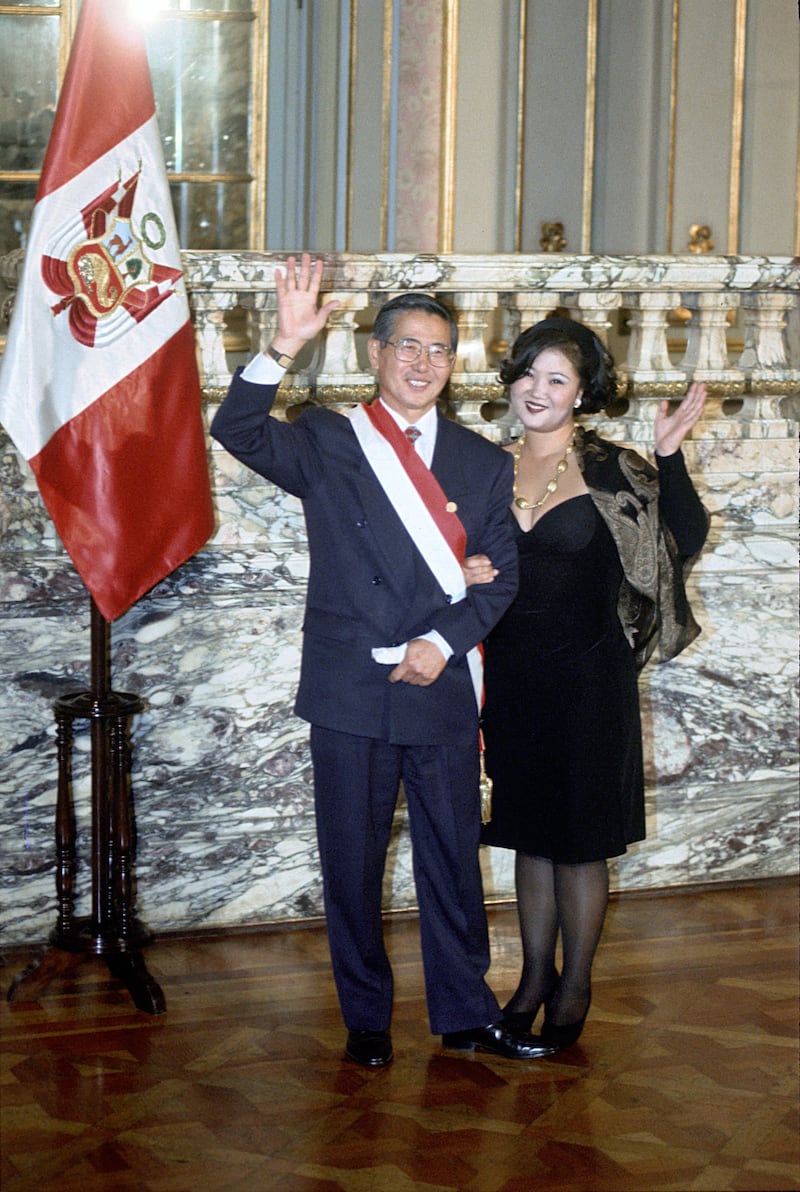
Alberto Fujimori, born to Japanese immigrant parents, was one of Peru’s most controversial and divisive presidents. He ruled with a “mano dura” or “strong hand”. He crushed the Shining Path terrorists in the 1990s and is credited with restoring economic order after a period of hyperinflation, which at one stage reached 7,500 per cent.
RM Block


However, Fujimori took full authoritarian power and his government was accused of widespread human rights abuses, including massacres. Hundreds of thousands of primarily indigenous women were also subjected to sterilisation under coercive conditions, part of the state’s reproductive health policy. Alberto Fujimori later fled to Japan, resigning by fax message and was ultimately extradited and jailed. He died in 2024.
Keiko Fujimori has spent her political career attempting to reframe her late father’s governing, positioning herself as a steadying force and pledging to tackle law and order, specifically in relation to the problem of extortion.
The 51-year-old mother of two is now within touching distance of becoming Peru’s first elected female president. Commentators believe she has managed to shake off the “Albertismo” variant of the Fujimori name and has become “La Señora K”.
“She has matured,” says Martín Hidalgo, a political journalist at El Comercio Peru. “Some years ago we were still seeing a Keiko that is [caught] between what she wants and what her father wants. Now that her father is dead she is in total control.”
Dressing mainly in smart jackets paired with jeans, Fujimori, who earned an MBA at Columbia University in the United States, appeals mainly to the 12 million Limeños in the urban capital. There are almost 35 million people in Peru.
She has built her fourth presidential campaign on pledging greater investment for security and reform of the education system, specifically the curriculum which doesn’t provide “the context” of terrorism, according to Hidalgo.
Speaking just ahead of the vote on June 7th, she boldly promised a military effort to “restore order” in her first 100 days in office, including tackling illegal immigration.
“We will ask for special powers – powers to modernise police stations, and powers for the armed forces to help us control the prisons,” she told AFP in Lima.

Meanwhile, Sánchez (57) has styled himself almost identically on the ousted and jailed ex-president Pedro Castillo, down to his iconic wide-brimmed, white peasant hat, appealing particularly to the Andean south.
But his hard-left pledge to undermine the independence of the central bank and use reserves to fund public investment spooked markets.
Hidalgo said Sánchez’s decision to copy Castillo has been his “primary advantage and also his primary disadvantage”.
Sánchez is also facing allegations of campaign finance irregularities. And, crucially, he remains aligned with the jailed former president Castillo, one of four former presidents currently serving sentences or facing pretrial detention. A specifically designed facility in the Barbadillo prison in Lima has been created to hold former heads of state.
Such is the dysfunction in Peruvian politics, no single candidate received more than 20 per cent of the vote during the first round in April.
While more than 63 per cent of Lima voted with Keiko, in Cusco, home of Machu Picchu, 78 per cent voted with Sánchez. Culturally, there is still a large chasm between the mostly Lima-based elite and the rest of the country, where the rural regions often lack basic state services, leading to frequent protests.
Hidalgo says the extremely tight vote is a consequence of this polarisation and there is no single person who appeals to the majority. At one point, just 600 votes separated the two.
“So these are the only two options that you have,” Hidalgo said.
Fujimori has now edged closer to victory with 99.1 per cent counted, even as she trails in the domestic vote.
As authorities tallied the last disputed ballots in recent days, Fujimori’s lead over Sánchez has widened to more than 36,000.
Fujimori is on course to become the first elected president in Peru this century to lose the vote inside the country. While dominating the overseas vote by roughly 80,000 she is trailing domestically by 43,000. In Ireland, Sánchez was the favoured of 67 expat votes – winning by just one vote. The winner will begin a five-year term on July 28th. – Additional reporting: Bloomberg
[ Denis Staunton: Peru's election closely watched by WashingtonOpens in new window ]