People are talking about Meta’s AI glasses, but not in the way the company had hoped. Nicknamed “pervert glasses”, they are becoming inextricably linked with conversations about the gradual erosion of our privacy.
They are also becoming yet another weapon against women.
If you were surprised by people using Meta’s smart glasses to harass and covertly film women on the street, then you quite simply haven’t been paying attention. This kind of tech-enabled abuse is commonplace, and it is predominantly aimed at women.
So commonplace, in fact, that when these glasses landed on my desk, it didn’t take long for the doubts to creep in.


Initially, I was excited by the technology and the possibilities. Who wouldn’t be? There are very good uses for them; for example giving people who are blind or have low vision greater independence. The things we take for granted – reading our own post, hunting down the last tin of beans in the kitchen – are easier for sight-challenged people with this technology.
But that has been lost in the argument as less wholesome, more sinister uses for the glasses have emerged.
On the positive side, they blend in, meaning those who are using them for a genuine reason feel less “othered”; on the negative side, they blend in, giving those with less wholesome intentions the chance to record undetected.
The only indication that they are recording is a small LED that flashes when the camera is active. That places the responsibility on people being recorded to notice that they are effectively being spied on.
This is not theoretical. There are plenty of videos online surreptitiously recorded with smart glasses in “pick-up line” videos, their subjects harassed for views and likes on social media.
[ OpenAI’s head of ethics leaves start-up less than a year after joiningOpens in new window ]
There is a thriving economy in covers, caps and blockers you can buy online to add to the glasses; not to block off the camera itself but to reduce that LED’s visibility. And while Meta’s safety feature won’t allow the glasses to begin recording with the capture light covered, it doesn’t stop recording if you do so after the recording begins.
Ten seconds to cover it leaves two minutes and 50 seconds to get footage without letting anyone know what you are at.
Blame the current situation partly on human nature and partly on badly thought-out design by Meta. While there is little we can do to change the worst elements of people’s nature, the design of the glasses themselves could be altered to make it more obvious that they are being used and less easy to circumvent.
Here’s a novel idea: how about removing the ability to record and share the footage? That would allow people who need the glasses as an accessibility aid to continue to use them without drawing suspicion.
Just because technology can enable such recordings does not mean it is a good idea. One wonders at the thought process behind the development of smart glasses, such as Meta’s, in their current form.
The truth is that women bear much of the brunt of bad technology decisions. Time and time again, big tech comes up with new(ish) ideas that have negative consequences, sometimes unanticipated but also cases – as with these glasses – that certainly could and should have been anticipated.
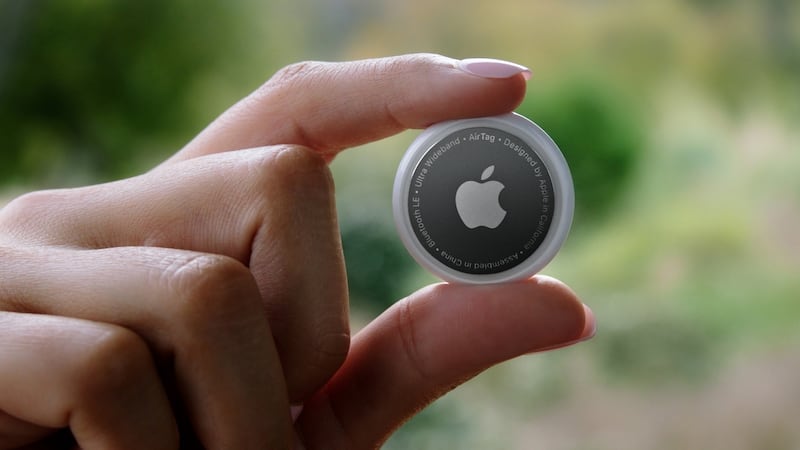
When Apple launched its AirTag bluetooth tracker in 2021, it was intended to be a useful way of keeping track of your belongings. And it was. But it didn’t take long before women started finding them in unexpected places. Tucked under carpets in cars by former partners, slipped into pockets, planted in backpacks, women found their movements were being tracked without their knowledge.
Apple wasn’t the first company to come up with Bluetooth tags, but its extensive Find My network, which includes billions of iPhones, made it the most useful.
Apple had to beef up protections quickly. Users were alerted sooner if a strange tag was detected – the three-day period was drastically shortened – and assuming your iPhone could support it, precision finding was put in place to help track down the tag.
The version for Apple users came first, with the Tracker Detect app for Android, which allowed you to manually scan for AirTags, following six months after AirTags were launched.
Around a year and a half after that, Android finally introduced automatic background alerts for the trackers through Google Play Services. The tags now come with a warning that their use to track people may be illegal in your country. Unbelievably, people have to be told not to stalk others.
That hasn’t stopped the problem altogether. There are tutorials online that show you, step by step, how to disable the speaker, ostensibly so you can make it harder for thieves to find them in your car, but you can bet there are others using these guides to make it harder for their targets to track down the tags they have squirrelled away.
[ Laptops: what you need to know before buyingOpens in new window ]
I could go on. Algorithms that push “sexist” job ads (Meta’s Facebook); AI tools that nudified ordinary images (Grok/X, formerly known as Twitter); virtual reality spaces where women were sexually harassed and subjected to virtual assault (Horizon Worlds) and abuse; threats of rape and death threats online on most social media.
That’s not even to get into the casual sexism and misogyny of the online world. In the wake of Donald Trump’s re-election, Meta revamped some of its community guidelines, effectively making it acceptable to refer to women as inanimate objects and trans people as mentally ill on its platforms, among other changes.
At the heart of it, the problem always comes down to people and their use of technology to abuse others. But the tech companies also need to have a hard look at their role.
Just give it a rest. The rest of us would really appreciate it.