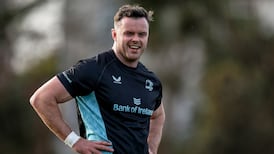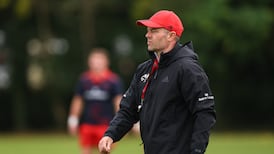
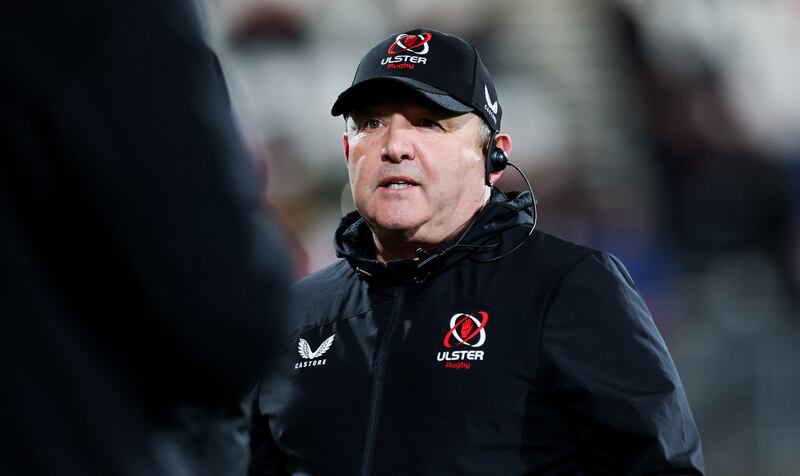
Ulster will arrive at the Aviva on Friday night having made a very public statement of intent before a ball is even kicked. Richie Murphy has not hedged his bets or hidden behind selection rotation dressed up as pragmatism. He has pushed his chips into the middle of the table and made it clear that this match matters.
The decision to rotate heavily for their Challenge Cup trip to Cardiff last weekend, effectively sacrificing short-term European momentum, gave his first-choice players a two-week run-in to the Leinster clash. The safer path would have been to go strong in Europe, pick and choose the ‘winnable’ URC games. It is how most teams manage their season and why many fall short when real pressure materialises.
Murphy’s call tells us that he believes Ulster are ready for an examination at this level and he understands that winning meaningful matches later in the season requires more than form or fitness. It requires a bank of shared experiences, particularly the uncomfortable ones, where players learn how to stay calm, connected, and brave when the game tightens. You do not acquire that currency by ducking big occasions.
I like this approach, not because it guarantees success, but because it is honest. Ulster are actively seeking out an acid test. They are not hoping Leinster will be off-colour. They are preparing as if Leo Cullen’s side will be good and backing themselves to meet that challenge.


Any coincidence around Leinster’s slightly patchy form is secondary. This is a decision rooted in Ulster’s own sense of where they are and where they want to go. In recent seasons, there has been a sense that Ulster’s confidence in their ability has not always been matched by results.
Ulster’s victories over Leinster in 2024 owed as much to he latter’s selection policy as anything else, and the northern province will not get that latitude again. This time, success cannot be outsourced to circumstance. That does not mean Ulster’s progress will be judged solely by the scoreboard.
A win would be enormously valuable, not just in the table but psychologically. Even in defeat, the manner of their performance, their composure, clarity, and conviction, will tell us whether this group is genuinely developing the mental resilience required to win knockout rugby.
The danger, of course, is that a capitulation would undermine everything. Coaches live and die by these calls. Murphy knows that. The fact he has made the call anyway suggests a belief in his group which feels grounded rather than hopeful.
Leinster enter this fixture in unfamiliar territory. Normally, by midseason, they are gliding along at altitude, results banked, systems humming, narrative firmly under control. This year has been different.
Injuries have disrupted continuity, form has been uneven, and the reintegration of international players has been fitful in effect. The win against Leicester was a good example; gritty and ultimately successful, but far from perfect.
Some questioned the performance, others questioned the ambition. Blowout scorelines at this stage of the season do Leinster more harm than good as they inflate expectations and mask issues that resurface later when the margin for error is gone.
In recent years, the favourites’ tag has become something of a poison chalice. There may be some value in drifting away from the assumption of infallibility. This is not the strongest Leinster side we have seen in the past decade. That is not a criticism so much as an acknowledgment of reality.
They remain capable of winning trophies, but work is required. There’s clarity around what needs improvement and there’s confidence those things are achievable. There were positives in Leinster’s recent performance, but better decision-making and sharper fundamentals would have changed the performance output.
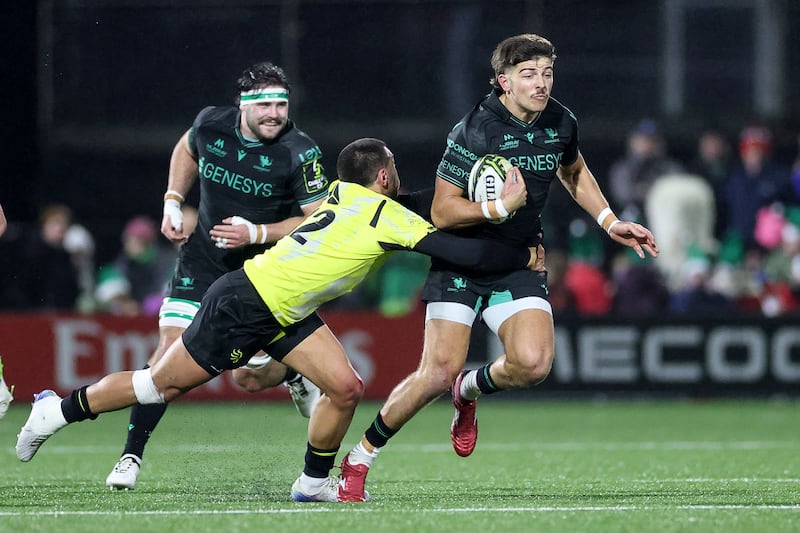
That level of composure only comes from time spent together in matches, understanding how team-mates move and think under pressure. Connacht and Ulster are good examples of sides whose cohesion reflects settled squads and clear coaching.
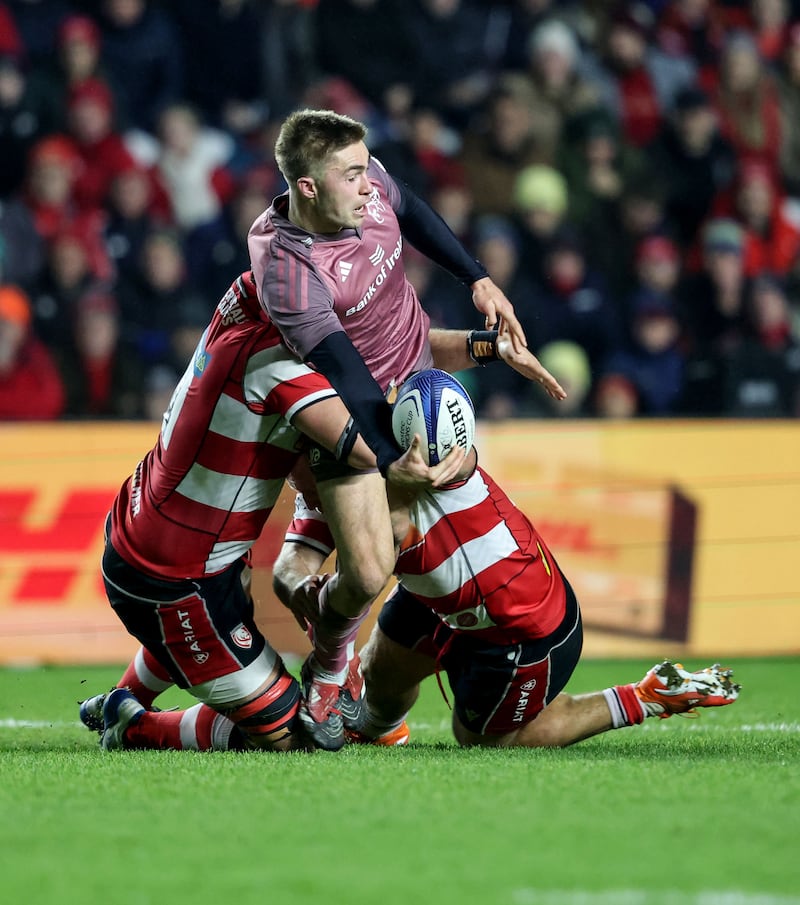
Munster, too, showed the value of continuity. Their response was strong after their unravelling in Bath. Jack Crowley, Craig Casey, and Mike Haley all looked intent on creating rather than forcing opportunities, and you could see passages beginning to knit together.
One of Crowley’s offloads, accepting contact from two defenders while keeping his arms free, was a moment of technical excellence built on timing and awareness.
For Leinster, timing is the single biggest area of growth this week. Too often, passes have been delivered to static receivers; very few players can win collisions that way. Joe McCarthy might be one of the rare exceptions, with his combination of size, power, and acceleration, but even he benefits from momentum.
Their alignment between passer and runner has been slightly off. Players drift into the passing channel too early or arrive half a beat late. That problem has been compounded by the way the English clubs target the ball carrier, clever in trying to hold players up.
One defender lingers just long enough in the scrumhalf’s channel to disrupt tempo. It is economical, legal, and effective on the understanding that slowing Irish ruck ball is a productive way to blunt their attack.
Responsibility still lies with the attacking players to change the picture. Josh van der Flier remains the best example of how to do this. His change of pace and direction is timed to the moment he receives the ball, meaning he is already moving before Jamison Gibson-Park or Harry Byrne releases the pass. Defenders are caught between decisions, unable to launch forward effectively.
Quick ball creates uncertainty. Uncertainty creates space. When that happens, structure becomes less important and instinct takes over. The opposite is also true. Continued missteps drain belief and tighten thinking. We saw moments where players like Rieko Ioane found soft shoulders and looked for offloads that never came simply because team-mates were not reading the cues.
Ulster go into the Aviva with a clear plan, ready to ascertain whether they are primed to compete at the top level. Leinster will be the scrutineers, but they’ll want a statement performance. It’s beautifully poised.