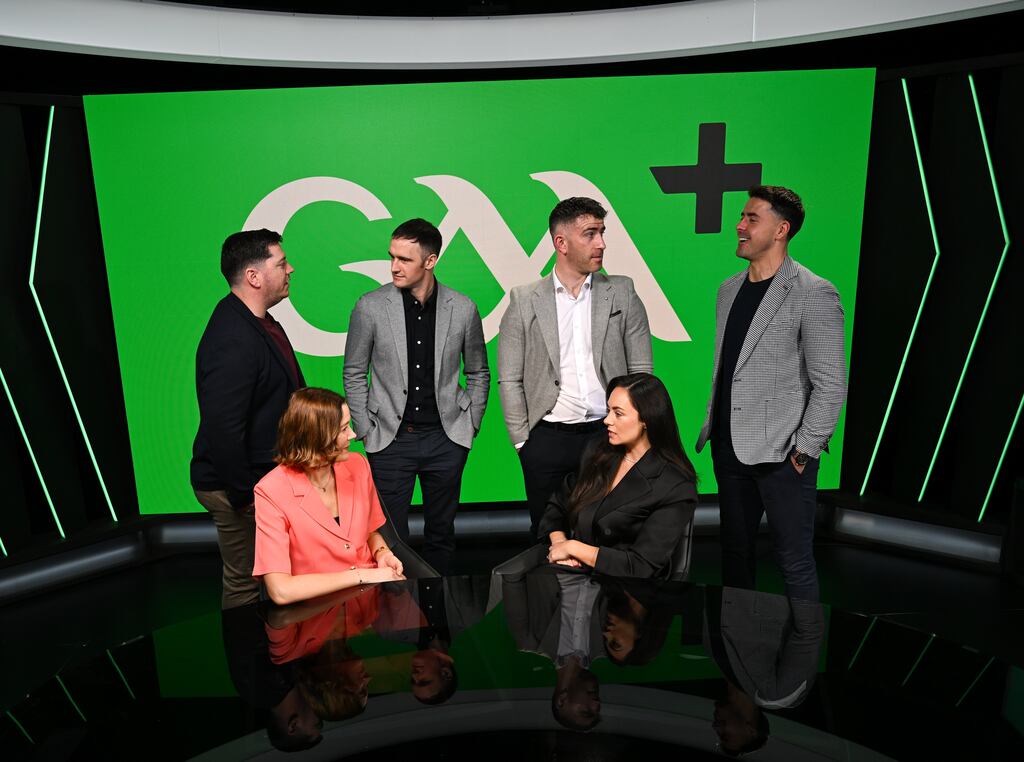

Tuesday saw the launch of its championship schedules by GAA+, the streaming service now owned exclusively by Croke Park after a couple of years uneasy cohabitation with RTÉ.
That unease arose when the service, then known as GAAGo, began to operate domestically as well as in its original overseas territories as a platform for expatriates or anyone abroad who wanted to see matches.
In its first year of operation, 2014, then DG Páraic Duffy had modest ambitions for the service.
“I don’t expect this to be a cash cow or anything like that. The big issue for us has always been making the games available in the highest technical quality possible. That’s been the big plus,” he said.


It may not have been a cash cow, but over the past two years the association and the broadcaster were able to share about €1 million in profits.
The brand, though, became slightly toxic when it became a domestic rights holder – with annual complaints about matches being put behind a paywall erupting each season as soon as any box-office contest ended up not on terrestrial television but requiring a subscription.
Both partners had also to endure the charges that fixtures behind the paywall could be manipulated because RTÉ was the primary terrestrial rights holder and could choose what went out free to air and what would require a subscription.
There’s no particular logic to it, but the rebranding to GAA+ last year coincided with the volume decreasing on the howling and hand-wringing about matches not being available on terrestrial.
During his first year in office, in 2024, GAA president Jarlath Burns mounted a vigorous defence of the model, pointing out that for the service to be financially viable it had to have some important matches to justify the subscription cost.
Reviewing the landscape in his annual report this year, current DG Tom Ryan welcomed the assumption of ownership.
“It is over 60 years since the first GAA match was televised. TV and radio are still both invaluable means for us to promote our games, but as new technologies and consumer preferences emerge the GAA simply must embrace those changes,” he said.
“For over a decade now, we have championed what we believe to be the biggest step-change in Gaelic games coverage in the form of our own streaming platform. We formerly knew it as GAAGo; it is now GAA+.
“Having our own platform offers us the agility and flexibility to show the matches our members want to see and the independence to do it on our own terms.”
Arguably, the power of streaming became apparent during the pandemic when crowd restrictions meant this was the only way of seeing club matches – an epiphany that has led to a thriving business within counties, earning up to six-figure annual sums and prompting a policy document from Croke Park in an effort to harmonise local and national arrangements.
Ryan said in his 2021 report that GAAGo assumed a vital function at national level when the championships played out through the winter.
“A new time and format for the senior intercounty championships needed a new broadcast plan as well,” he said.

“A new schedule involving an unprecedented 80+ matches, was drawn up for the 10 weekends from October to December period to ensure all remaining Allianz League and 2020 senior championship games were available to us to watch at home on either TV or online.
“GAAGo was a major factor here with domestic streaming live on the platform for the first time.”
Last year, a television milestone was passed in the US when for the first time streaming audiences overall surpassed the linear ones, combining cable and TV – although Nielsen, the media measurement agency, did emphasise that live sports was one of the factors behind the latter’s resilience in not falling farther behind.
Nonetheless, the trend is in one direction and the younger the cohort the more likely they bias towards streaming.
The GAA had its own landmark moment last year when it was revealed that the All-Ireland hurling final between Tipperary and Cork had attracted a record GAA streaming audience of 400,645 on the RTÉ Player. The football wasn’t too far behind with 378,279.
It is now 31 years since the GAA committed to a schedule of live championship matches. In the beginning they were so concerned about the impact on other fixtures that the broadcasts threw in at teatime, an arrangement that was acknowledged as impractical and from 1996 coverage was allowed to clash with other matches.
Last weekend, GAA+ and TG4 managed to combine streaming and broadcasting to bring live coverage of nine of the concluding day’s league matches. Nobody was worrying too much about the impact on attendances.
It is impossible to assess the subject matter of this week’s column without acknowledging the death of Michael Lyster, presenter of the Sunday Game for 35 years, announced at the weekend.
He joined two predecessors Micheál O’Hehir and Micheál Ó Muircheartaigh as the personification of Gaelic games coverage, but whereas the two Micheáls were most celebrated for their work on radio Lyster was the face of the television era that bridged live broadcasts of a handful of matches each year and the modern age.

It was only after a number of years of near-impossible doubling up that he had to relinquish the traditional highlights programme and concentrate on presenting the match broadcasts – his easy style executed under the enormous pressure of live television.
RTÉ’s tribute at the weekend looked like a time-lapse sequence, flicking through the decades of his career. It’s such a shame that a well-earned retirement has ended so soon.
The news brought to mind Ó Muircheartaigh’s comment on the end of his own career: “There’s only a while in everything. Sin mar a tá an scéal.”
True and, in this case, immensely sad.
sean.moran@irishtimes.com