Irish diplomats are careful about not leaning too heavily on the Guinness and craic card for fear of playing into tired stereotypes about Ireland and booze.
Come St Patrick’s Day, though, the black stuff is a reliable feature of parties thrown by Irish embassies across the world.
There has been a conscious effort to broaden perceptions of Ireland beyond the March 17th hooley, with embassies putting more emphasis on St Brigid’s Day, Samhain and Bloomsday in recent years.
An internal Department of Foreign Affairs study has a lot to say about how Ireland exercises “soft power” when trying to make friends and influence people on the international stage.
RM Block


It is rare to hear what the State’s diplomatic corps thinks of itself and its efforts, which makes the internal study interesting reading.
The review, obtained by The Irish Times, says other countries respect how Irish diplomats spoke up for values and the rules-based international order, before trying to leverage some policy debate toward their narrower “national interest”.
Ireland’s history and character as a small, “helpful” and “non-threatening” State opened doors, the internal review said.
The study said the department’s ambassadors and officials should lean into “cultural diplomacy” to warm up relations with other countries and possibly forge closer trade links.
A translated copy of a James Joyce text in the language of the host country always goes down well as a gift to a dignitary.
Possibly the most surprising element of the internal Iveagh House review is the suggestion the State’s diplomats could do more to tap into other countries’ affinity for U2, The Corrs and even Boyzone.
“The popularity of contemporary Irish music is a significant cultural asset for Ireland worldwide, including in southeast Asia. In Singapore and the wider region, bands such as U2, The Corrs, The Cranberries, Westlife and Boyzone remain extremely popular,” the study said.
The paper referenced an event the embassy in Singapore held to coincide with a U2 concert in the Asian country in 2019, which “raised Ireland’s profile and progressed specific economic objectives”.
It said the idea had come from another “smaller-scale” event the year before, when Boyzlife, the band formed by Keith Duffy of Boyzone and Brian McFadden of Westlife to sing their respective hits, made an appearance at the F1 Grand Prix in Singapore.
St Patrick’s Day is still the State’s trump card when it comes to opening doors.
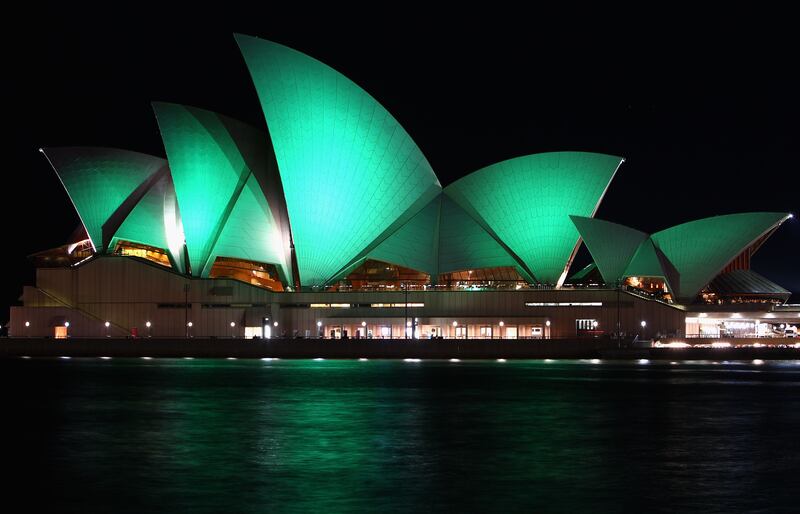
There are few small countries whose head of government enjoys a standing annual invitation to the White House. Although the previous, easy-going visit of the taoiseach to the US president has become a political minefield to be carefully navigated since Donald Trump’s return to office.
The rest of the Cabinet and most junior ministers are also dispatched to other corners of the world to press the flesh.
The occasional political flap is made about the Government heading abroad en masse for St Patrick’s Day, but you cannot buy the level of access Irish politicians enjoy to foreign governments for the few days. It vastly outweighs the cost of airfare and hotel bills.
The internal study said there was growing evidence “of the successful pursuit of economic interests on the back of Ireland’s cultural offering”.
The event organised in Singapore to coincide with a U2 concert helped “strengthen” ties between Enterprise Ireland, IDA, Bord Bia and “key business clients” in the country, the review said.
The internal department review was completed in December 2023 and released to The Irish Times in response to a Freedom of Information Act request. It included interviews with diplomats posted abroad and senior department officials based in Dublin.
The document noted a strategy to push the diplomatic boat beyond the usual reliance on traditional music and Ireland’s literary exports, to get involved in what it called “sports diplomacy and gastro-diplomacy”.
The Department of Foreign Affairs had done well to “capitalise” on progressive referendums legalising gay marriage and liberalising abortion access, the internal paper said.
Ireland’s identity as a non-colonial state was a “useful opening gambit for Irish diplomats in many parts of the world”, especially in the Global South, it said.
The department had a “compelling” story to tell about Ireland’s history, the study said.

“It is a nation that has survived poverty, hunger, colonisation, conflict and economic crises, and one that has developed to have a population with high life expectancy, strong economy and a skilled labour force,” it said.
“Much of DFA’s soft power resides in the interpersonal skill set of diplomats and officials during traditional diplomatic engagements and networking,” the study said, praising the Irish for having the gift of the gab.
The study noted there were challenges facing Ireland’s diplomatic network as well. “The negative perceptions of Ireland’s tax policy among EU colleagues, however, remain a challenge,” the department review said.
The study pointed to the “re-emergence” of geopolitical rivalries and the increasing retreat away from democracy in some countries as something that posed a “risk” to Ireland’s softly-softly style of diplomacy.