Have you tried visiting your GP lately? Where once you could pop into your family doctor without an appointment, slots in GP clinics can book up many days ahead. And that’s if you have a doctor locally.
Recent research on staffing shows a wave of retirement could leave some parts of Ireland without a single GP. Areas in east Clare, east Mayo, Inishowen and around Wexford and Westmeath – affecting tens of thousands of patients – are most vulnerable.
More GP training places have been created – the number is up 80 per cent in Ireland between 2019 and 2024 – but we still seem to be playing catch-up. Is there another possible solution?
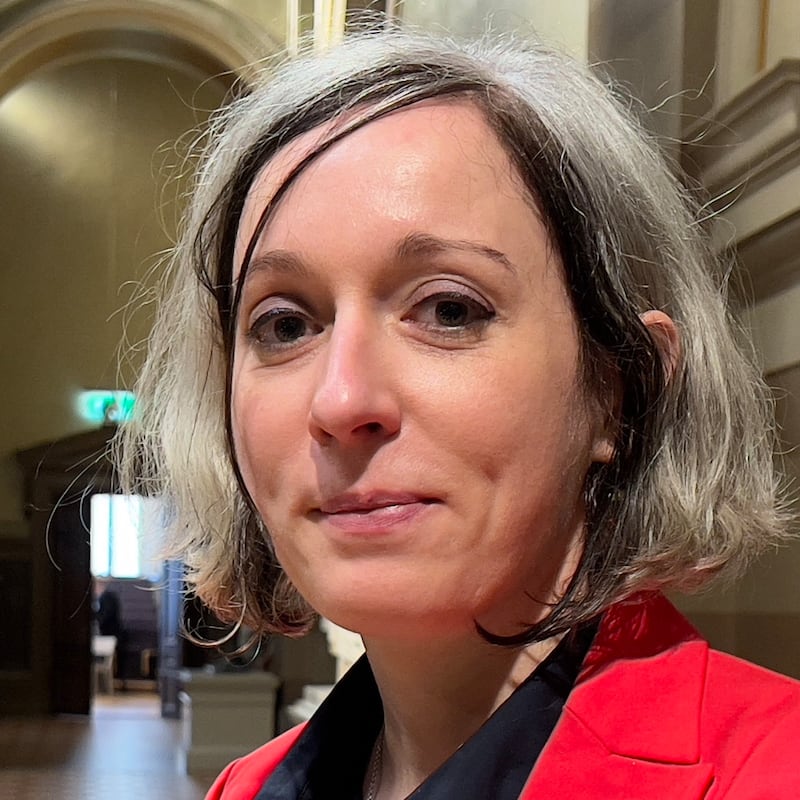
Northern Ireland researcher Charlotte Blease has been exploring the role artificial intelligence could play in future medical services. Author of one of this year’s most mind-shifting reads, Dr Bot: Why Doctors Can Fail Us – and How AI Could Save Lives (Yale), Blease is not a medical doctor – her PhD is in philosophy – but she has worked extensively with medical professionals in areas from placebo studies to psychotherapy ethics.
‘My kids idolise their dad. Should I tell them one reason for our separation is his affair?’

Bondi Beach shooting victims named: Holocaust survivor, 10-year-old girl and rabbi among those killed

Sinn Féin’s property portfolio: Inside the wealthiest political party in the State

‘I was sprinting as fast as I could’: Irish eyewitness describes Bondi Beach killings

Facing facts that many of us would rather not think about it, she is this week’s Unthinkable guest.
Is AI now outperforming medical professionals in diagnosing or treating patients?
“In some areas, yes – and faster than many clinicians realise. It depends on the specialty.
“In radiology, for example, AI can already spot patterns and anomalies that the human eye simply can’t detect. AI can read scans faster, more consistently, and in some cases more accurately than an average clinician – a game-changer for overstretched services and underserved regions. And while most AI systems aren’t trained to ‘think’ like doctors, the evidence is piling up: GPT-4 – not even a medical model – can generate impressively accurate differential diagnoses, even in messy, complex cases. Medical-grade chatbots already can in some cases, and will, go further.
“We’re not at full replacement yet. But here’s a hard home truth for healthcare: doctors make mistakes far more often than most people realise. Diagnostic errors occur in roughly 5 per cent to 20 per cent of clinical visits, and doctors only practice evidence-based medicine about half the time, even for common conditions. Mistakes disproportionately affect women, low-income patients, minorities and people with disabilities. This isn’t about blaming clinicians – it’s about recognising the limits of human cognition and the pressures of an overstretched system.”
Can you forecast a date when AI will be superior?
“I resist playing that game as there are too many variables . . . Technology improves. Humans, by contrast, haven’t had a software update in 200,000 years. Our brains evolved for the `four Fs’: feeding, fighting, fleeing and reproduction – not for parsing millions of data points or spotting microscopic signals in medical scans, nor for working in the frenetic, multitasking world of modern medicine. My message is: don’t be dazzled by AI nor dismissive: it’s important to recognise the direction of travel.”
People who are sceptical about AI displacing doctors talk of “the empathy problem”. Is it overstated?
“Doctors like to think empathy is their superpower – but the evidence says otherwise. Social-science research shows clinicians routinely misread patients, and when you’re burned out, rushed and juggling thousands of cases, empathy becomes performance. Most doctors are, frankly, the least well-equipped professionals to deliver it consistently.
“The ‘empathy problem’ isn’t overstated; it’s misunderstood . . . AI won’t replace human warmth, but it can help ensure patients feel heard, supported and not lost in the system.”
Is AI a solution to GP shortages?
“The real question is always: compared to what? Not compared to instant access to Ireland’s best GPs, because most people don’t have that. With doctor shortages soaring and demand rising, the inverse care law is alive and well: those who need care most get it least. For these patients, it is AI compared to no help whatsoever. That’s why patients are already turning to technology.”
Who will be held accountable if AI gives you bad advice or misdiagnoses you?
“It’s a crucial question, but let’s not pretend accountability in Irish healthcare is robust to begin with. We demand full transparency from machines while accepting opacity from humans. As The Irish Times reported, since 2014, 159 Irish doctors have been sanctioned, yet only about half of those cases were ever published. Some doctors found guilty of serious misconduct abroad have continued practising here. If an AI system had that record, there would rightly be an outcry.
“So, yes, tech must be held to strict standards, with clear liability when AI harms patients. But let’s not assume our legacy structures are doing a good job when it comes to accountability.”
Should we be rethinking Sláintecare, the planned universal health service model, in the context of new technologies?
“Sláintecare was meant to drag Ireland’s health service into the modern era, but AI has already leapfrogged. While other countries race ahead, Ireland still has no national plan for AI in healthcare. Meanwhile, clinicians are quietly using chatbots for diagnosis and treatment planning, with zero training and no guardrails. Patients are doing the same.
“This isn’t a fringe future; it’s happening now. Ireland is small enough to move fast and smart enough to be at the forefront of AI implementation in healthcare. The only question now is whether Ireland will lead the way – or once again be left breathlessly catching up.”