There was a time when car makers were all about mechanical engineering. Somewhere along the line, the power shifted to marketing departments and software developers.
These days there are several models on the market built by tech companies that simply deliver their touchscreens fitted with four wheels.
There remain a few firms where engineers still seem to rule the roost. One such is Honda. For decades it was a hive of innovation. Yet its early technological leadership in hybrid, hydrogen and even electric powertrains never really translated into market leadership. Amid the automotive revolution, one of the industry’s great innovators seemed to be taking a back seat.
The car brand also lost momentum in Europe, shifting its focus to Asia and the US.
Peugeot’s electric E-208 GTi proves that fun still lives. This is a real 1980s throwback

First look at Jaguar Type 01: Can this 1,030hp electric car save the brand?

Mercedes GLC review: A brilliant electric SUV that tries far too hard to get noticed

Best used electric estates: what should replace my diesel Mazda6?

Europe has long been regarded as one of the world’s most demanding car markets, further complicated by our fixation on diesel, an engine option not popular for private cars in either Asia or America. And then in the wake of the Volkswagen scandal, we abandoned that too. It’s understandable that Honda executives might have wondered if we were really worth the trouble.
Now, thankfully, we seem to be returning to its radar.
Enter the new Prelude, 25 years after the model last took to the road.
A lot has changed in that quarter century, both for the automotive world and the Honda brand.
The future of this two-door coupe format looks uncertain, much to our regret. And when I first came across it in the metal, I have to admit, I wasn’t that impressed with the new Prelude. The sharp front nose looks cool, but from the rear roofline to the back bumper, it’s all a bit bland.
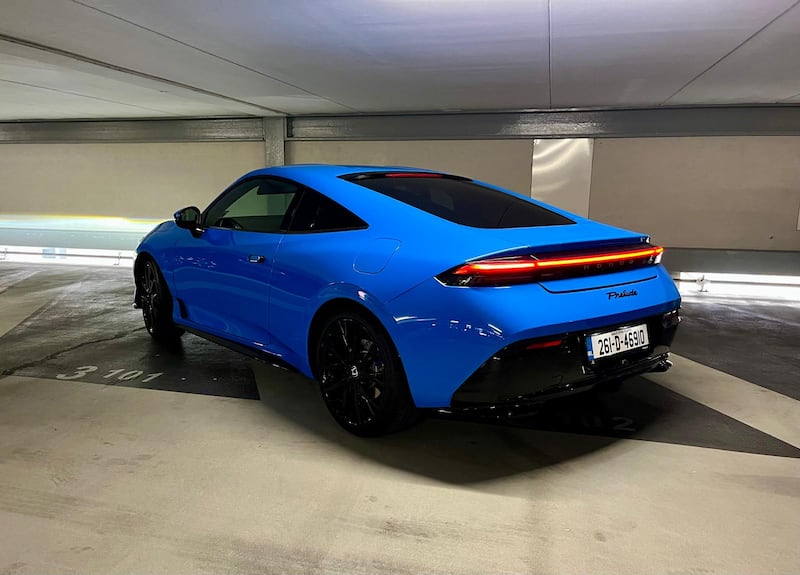
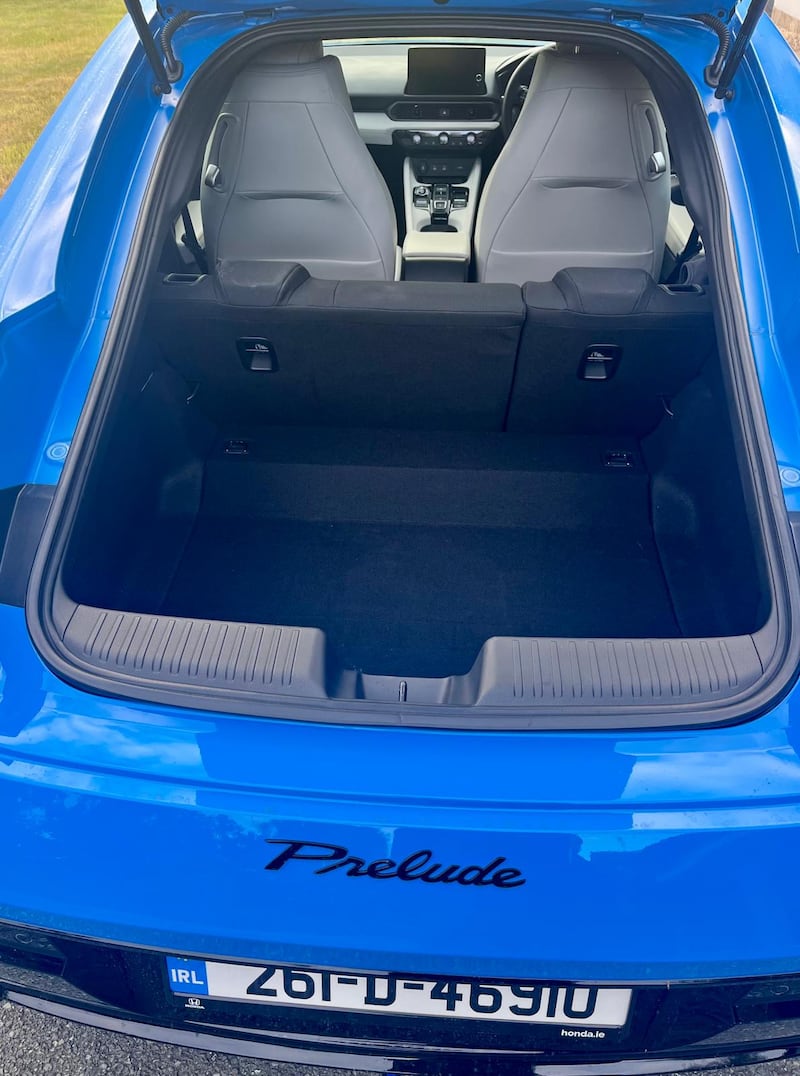
It’s elegant and understated rather than striking.
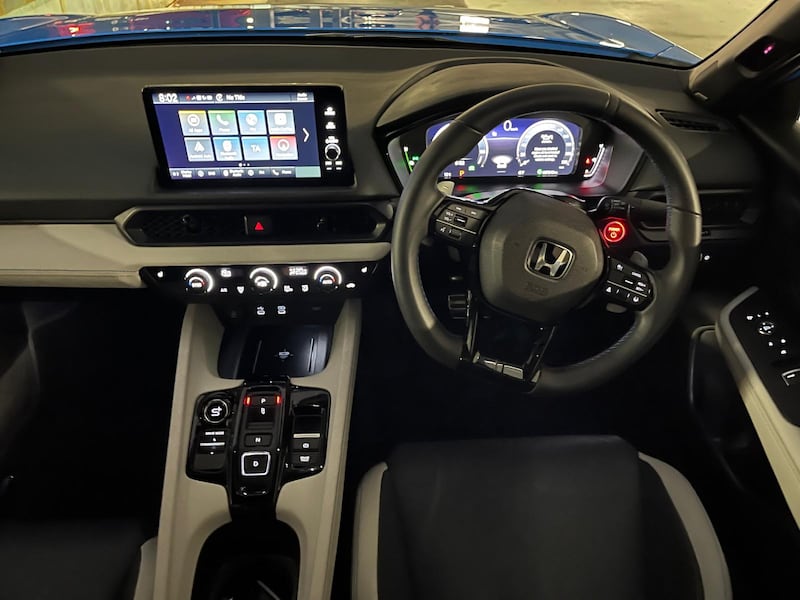
Inside was typical Honda: well built, even if there are areas where it looks a little dated, like the software graphics and button controls. Don’t get me wrong, buttons are welcome. But the overall impression is of an interior that’s embracing evolution rather than revolution. This is not a car that’s trying to deliver a sittingroom feel. This is what you get from engineers who rate function far above form.
The rear seats can just about accommodate two adults, but there is nothing graceful about the way you have to contort yourself to squeeze in and out. At stages, you do wonder if it might be easier to try to climb back into the boot and get out from there.
To appreciate the Prelude, you need to press the power button and get driving.
When we heard the Prelude is only available in hybrid, we started to worry that this would be Honda’s take on the Prius. And with a 0-100km/h time of 8.2 seconds, that’s positively sluggish when pitched against many all-electric rivals.
But this car is so much more than the cold figures. The beauty is not to be found in the 10-inch touchscreen or by flooring the throttle. The Prelude’s secret is discovered through the steering wheel. This car dances to a rhythm rarely seen outside Porsche.
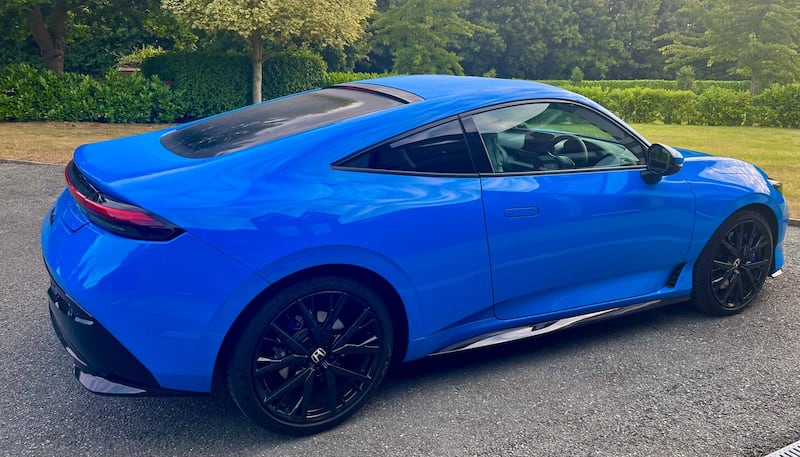
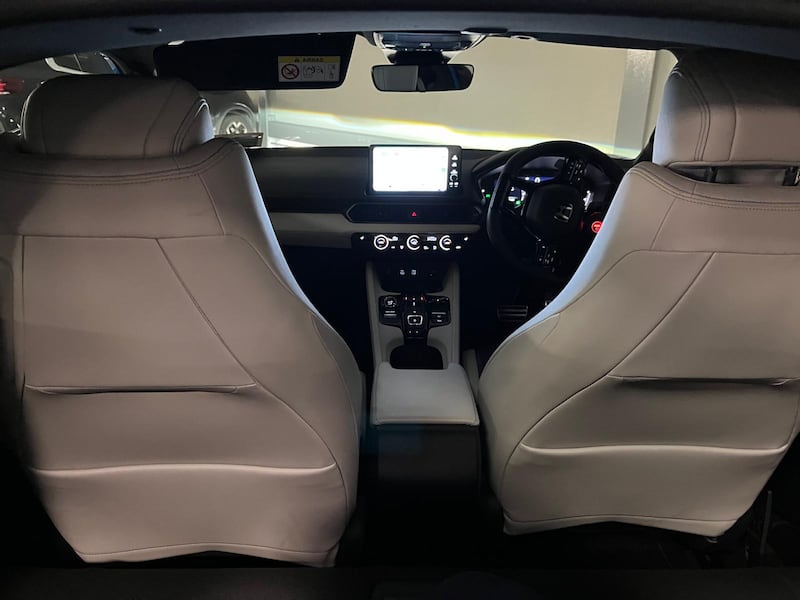
The agility of the Prelude is its greatest achievement.
Drawing a lot of its hardware from the Civic Type R, which isn’t on sale in Ireland, the Prelude gets adaptive dampers and some serious chassis engineering. Yet it’s a little more refined than a full-blooded hot hatch, which ultimately suits the car much better.
Power comes from a naturally aspirated two-litre four-cylinder petrol engine married to dual electric motors, delivering a total output of 181bhp (135kW) and 315Nm of torque to the front wheels.
A bit like the 0-100km/h time, that’s underwhelming when there are EVs putting out twice that power. But again, that’s far from the full Prelude story.
This is not a car for those who look to stats or straight-line speed. It excels on the twists and turns, where it’s not about power but poise and prowess.
The power here is delivered most of the time through the electric motors, fed from a 1.1kWh battery that is charged by the combustion engine. Now, that may sound a lot like the range-extender format, which rightly sets off alarm bells. There are a few models with this set-up on the market, and most of them are set up with all the performance personality of a wet sponge.
This time, however, the engine can feed directly to the wheels, which makes it a full hybrid in the traditional sense. The battery may also seem tiny compared with the double-digit units being fitted to PHEVs these days, but its purpose is not simply as an energy storage unit. Instead it’s choreographing the energy supply as the hybrid system switches power sources.
Again, you’d be right to be concerned when you see CVT mentioned in the same breath as the Prelude’s transmission. Conventional CVTs tend to struggle to get the rev mix right, particularly if there is any chance the engine output is lower than the car might need. Often this ends up with a high-revving, noisy engine and a frustratingly slow response.
Thankfully, Honda’s e-CVT transmission is considerably more convincing.
A lot is being made as well of its S+ mode, which simulates eight mechanical gears, with a fairly convincing fake soundtrack. Honda isn’t the first to try this, and it might be a gimmick to lure in a new audience, but I remain to be convinced that it’s needed or worth the effort.
With a price tag touching €60,000, this is a proper premium player, pitched against counterparts at Audi and BMW. That’s where Honda needs to work on its brand image. There was a time when buyers regularly put the Japanese brand into the premium mix, helped by halo cars like the NSX and superb models like the Legend and earlier Preludes. But that was at the end of the last century, and a lot has happened since then.
Is it going to be a big seller? For all its driving appeal, this is a niche car in a niche segment. Yet it goes a long way to underpinning the brand’s integrity, a halo model that aims to show frugal fuel economy alongside sporty performance. It’s this attempt to fulfil two seemingly divergent goals that leaves the Prelude in a quandary.
If you’re looking for Type R performance, look elsewhere. This is not a car with raw performance, which is arguably a shame given Honda’s pedigree in powertrains. What the Prelude demonstrates is that the mechanical engineers have the ingenuity to create a car with great balance, enough to cope with a much meatier power output. Will there be a Type R version of this car, particularly as the Civic version is no longer offered here?
Perhaps, but even if they don’t create a full-blooded Type R, there is certainly plenty of headroom left for this car to cope with a more performance-oriented powertrain.
The Prelude leaves you wishing its engineers had given it a bit more poke, but it also showcases their talent in turning power into motoring prowess.
Lowdown: Honda Prelude coupé e:HEV
Power 1993cc four-cylinder petrol engine mated to two electric motors and a 1.1kWh battery pack. Total output of the set-up is 135kW (181bhp) and 315Nm of torque.
0-100km/h 8.2 seconds
L/100km 5.2 official WLTP; 5.7 as tested
CO2 emissions 117g/km
Price €59,995
Our verdict 4/5
Our rating A very welcome return from a great engineering car brand; could do with more performance kick but the new Prelude makes up for that with poise and prowess