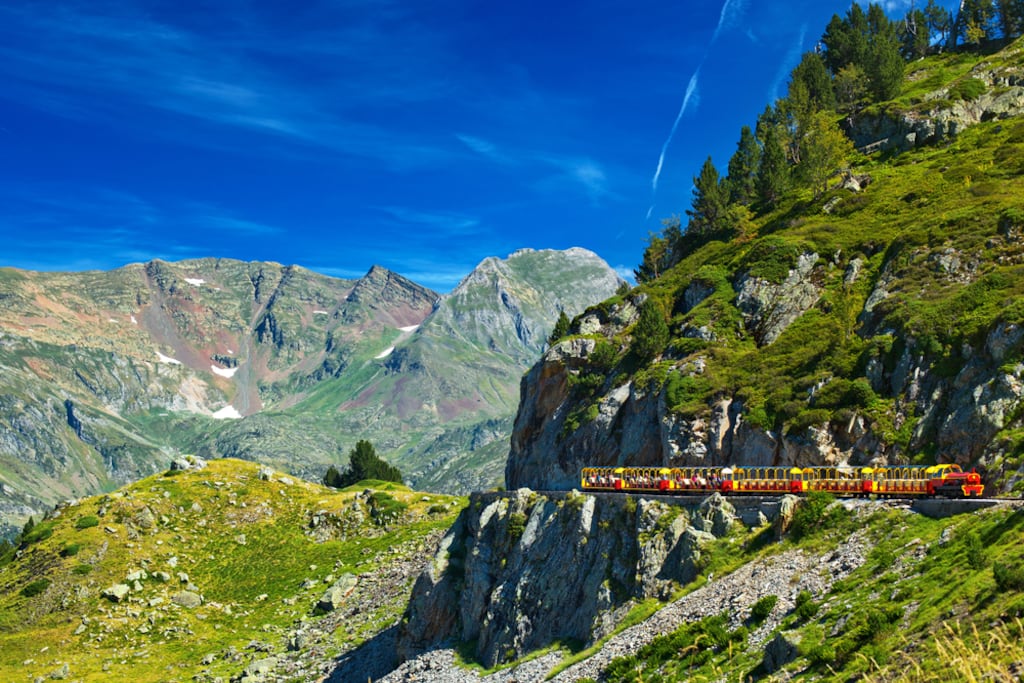
While trekking across the Pyrenees mountains, I discover they are repopulated with brown bears in the 1990s, transplanted from Transylvania. I ask a French shepherd, Gilles, who spends the summer tending goats, what to do if I see one. He said the advice is not to run, but that he runs. We leave it at that.
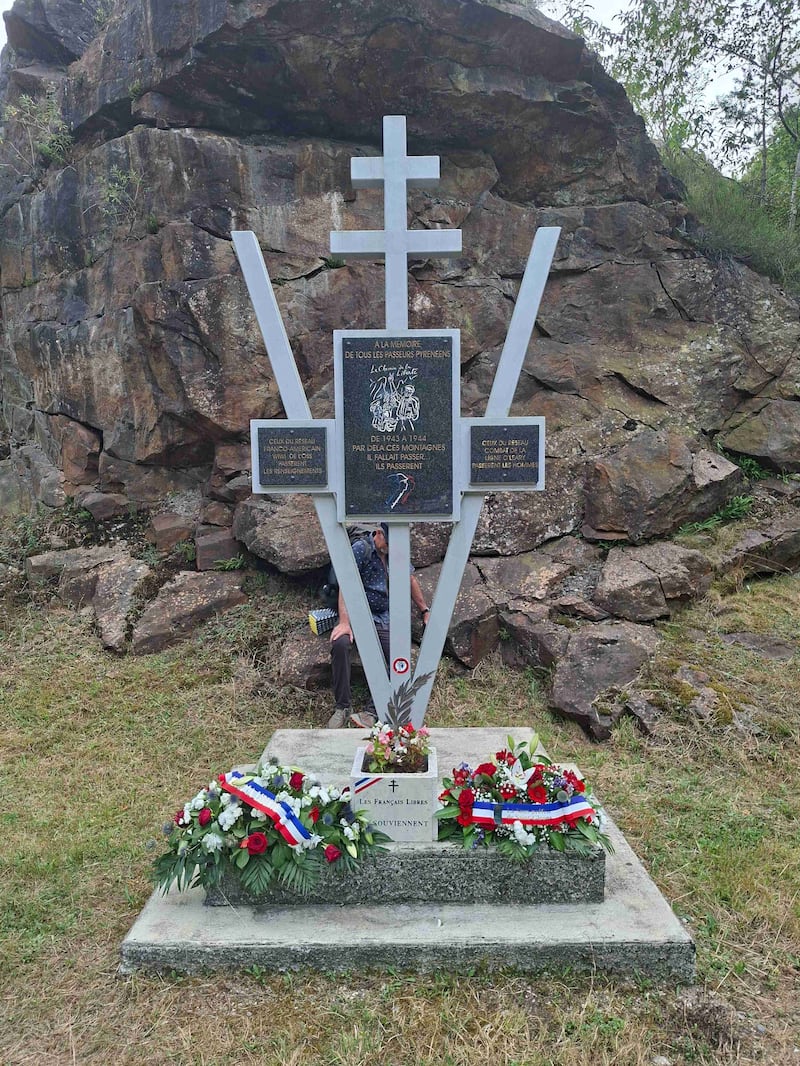
Brown bears were one of several risks Jewish refugees and Allied servicemen worried about when fleeing Nazi-occupied Europe across the Pyrenees into Spain during the second World War. In summer months, trekkers retrace their steps to commemorate Le Chemin de la Liberté, or “The Freedom Trail”.
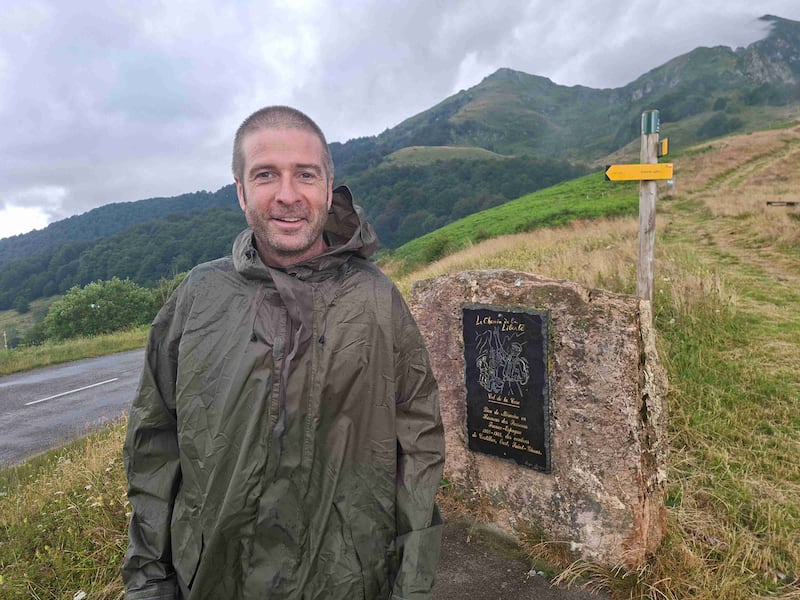
I undertake the four-day trek with a friend from San Francisco, Mark Rutherford. He’s a US Army veteran, which is useful because we don’t have a professional guide, and he knows his beans when it comes to surviving in the wild. I haven’t been camping, apart from music festivals and a couple of tours of duty at Burning Man, in about 30 years.
We meet at 6am beside a train station in Toulouse, France, and make our way to Saint-Girons, an enchanting town, and the start of the trailhead, precisely at a bridge over the river Salat. The bridge is part of an old railway line. During the war, station guards blew their whistle twice as a signal to escapers to jump off the train, where escape-line groups picked them up and readied them for their trek across the Pyrenees.
RM Block


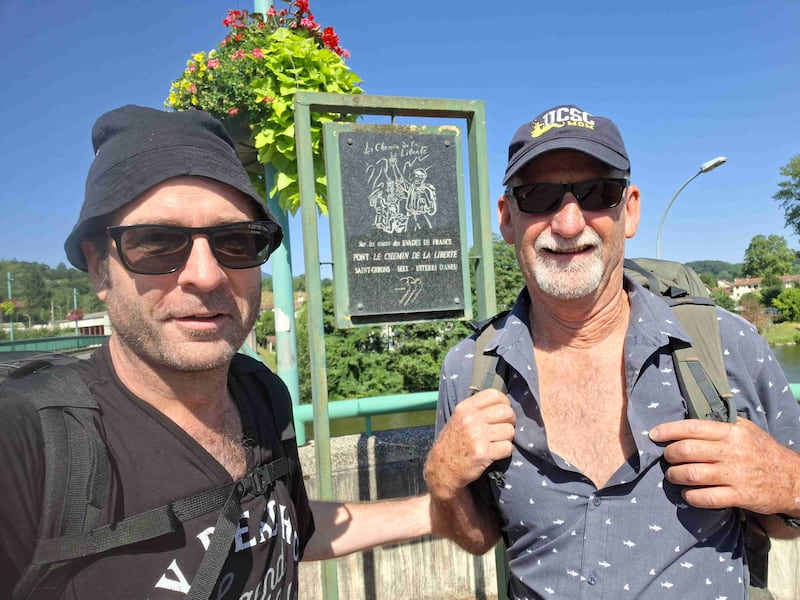
There were three main escape lines which spirited people across the Pyrenees – Le Chemin de la Liberté, the most difficult and dangerous route, a 40-mile hike 4,500 metres up and 3,350 metres down over the central Pyrenees; the Comet Line in the Basque Country; and the Pat Line close to the Mediterranean.
A British military document, Tips for Evaders and Escapers, hints at the life skills required to undertake a freedom trail. “The good escaper keeps himself fit, cheerful and comfortable. He is not a ‘he-man’ who boasts about his capacity to endure discomfort. He should be a man with common sense and above all great determination.”
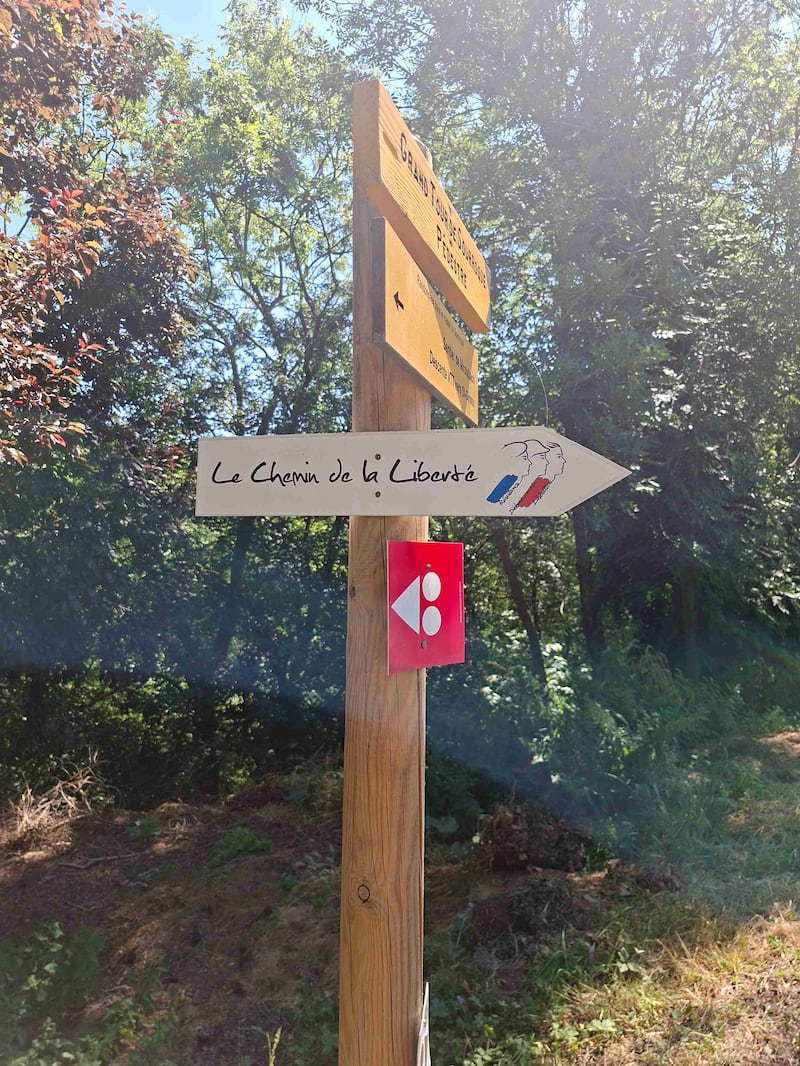
Common sense is an essential quality. We learn that early. After a few hours ambling uphill, along beech-wood trails, we get lost and can’t find a Chemin de la Liberté signpost. Three hours later, we eventually find a way out of the woods, on to a road by Lacourt, a small village. That gets us back on track. From then on, we are razor-sharp in keeping sight of trail markers, although this isn’t easy.
RAF crew members had silk maps sewn into their uniforms. Silk was light, didn’t rustle and could be treated so ink didn’t fade on it. They had “escape boxes”, each one the size of a large cigarette tin. It contained boiled sweets; amphetamine tablets for stamina (and stress relief); halazone for purifying water; matches; and a pint-sized rubber bottle holding a razor, needle and thread and a fishing hook and line.
Aircrews were also given instructions on, say, how to kill a hedgehog, and advised who best to approach behind enemy lines to contact an escape line – ideally poor people, as they likely hadn’t a stake in the status quo.
[ Travelling to Morocco? Bring a tape-measure and an empty suitcaseOpens in new window ]
Most escape lines began spontaneously, acts of defiance by people unable to fight Nazi tyranny through conventional means.
There were two strands to underground organisations – first, agents de passage, who helped escapees towards the Pyrenees, feeding them, hiding them in attics and barns. Second, the passeurs (guides), mostly men, who smuggled them over the mountains to Spain. It’s estimated passeurs helped more than 30,000 people escape to Spain. It was a perilous occupation. More than half, approximately 1,000, never made it to the war’s end. Some died in the mountains; others were betrayed and shot or deported to concentration camps in Europe.
Not all passeurs were driven by idealism. Most insisted on being paid. Some preyed on their clients. A common grift was that passeurs would lead their human cargo deep into the mountains and then demand – usually at gunpoint – extra money to finish the journey. In lieu of cash, they took watches, rings, pens, even going as far as to extract gold teeth.
Our second day passes uneventfully, but it is exhausting. We are both asleep by 6pm, conscious we have to get up again at Zero Dark Thirty to do it all over again. The third day is brutal. The trail is occasionally marked by cairns (mounds of rough stones) but typically by two lines of red-and-white paint – the size of two outstretched fingers. “More red and white,” “OK, we’re in business,” becomes a regular grunted exchange between us.
We know generally where we are headed, but not the specifics. We stop, stumped, unable to find the next painted marker or to discern where the trail is. Fifteen minutes might be spent stumbling around, trying to sniff out the next marker. It is exhausting.
By midmorning, we reach the crash site of what locals call “l’avion”. In July 1945, a British Halifax bomber hit bad weather at night-time, veered 80 kilometres off course and crashed into the mountainside, killing all seven crew. Wreckage lies scattered around the crash site.
After more hiking under a blistering sun, we reach Col de Craberous, our first significant mountain top. We take a breather on the narrow mountain ridge. Within minutes, approximately 10 birds of prey circle 50 feet overhead, just being nosy. We encounter different animals on our travels: wild horses; goats; cows (bells ringing from their necks); bees; dung beetles; shepherds’ dogs; and snakes (in Spain).
After descending into a valley, we climb a second mountain involving a steep ascent. The day’s final leg entails a tricky descent, scrambling down gigantic granite boulders, made difficult by a heavy fog that rolled in. We’re lucky with the weather. Heavy thunderstorms are predicted for our final two days’ trekking. It rains, but we dodge thunder and lightning.
It doesn’t bear thinking about – the conditions Jewish refugees endured during their passage. They travelled at night, often during winter in freezing cold, through storms, on empty bellies, many carrying babies, or shouldering grandparents along. Scant preparation for expeditions invariably turned crossings into tragedies. In spring, the corpses of exhausted escapers were often found in melted snowfields on the French side of the border.
After 13 hours’ hiking, we reach Estagnous Refuge, a hostel dating back to 1912. It’s spectacular, carved into the mountainside, overlooking glacial lakes, like something from a Bond movie. Food and wine are helicoptered in there.
The last day begins with a steep descent, then a treacherous, 200-metre ascent to a glacial lake, clinging on to cable lines, inching upwards, being careful not to look sideways or downwards.
Finally, we hike up a snow-filled gully until we hit another mountain peak. We’ve reached the Spanish border. All that is left is a winding trek downhill through grassy terrain into northwestern Catalunya, and the hope we’ve honoured in some small way the brave souls who’d gone before us during the war.
Travel, accommodation and itinerary
Day 1: Toulouse
Aer Lingus (www.aerlingus.com) and Ryanair (www.ryanair.com) fly Dublin-Toulouse. Make sure to find a hotel close to Toulouse-Matabiau train station.
Day 2 (trek): Toulouse – Saint-Girons – Aunac
Get a train-bus combination to Saint-Girons (2.5 hours), where the trailhead begins. Hostel (www.domaine-aunac.fr)
Trek approx. 8 hours
Day 3 (trek): Aunac – Subera Hut
Steep 700m ascent to Col de la Core; meandering trek to shepherd’s hut by mountain cliffs. Night camp.
Trek approx. 8 hours
Day 4 (trek): Subera Hut – Estagnous Refuge
Two mountain climbs: Col de Craberous (2,382m) and Col de Pécouch (2,462m). Hostel (www.refuge-les-estagnous.com)
Trek approx. 12 hours
Day 5 (trek): Estagnous Refuge – Spanish border
Descent to glacial lake, ascend to Spanish border, Col de la Pale de la Clauère (2,522m). Six-hour descent to hostel (www.refugidelfornet.es)
Trek approx. 12 hours
Day 6: Refugi del Fornet – Barcelona
Taxi to Esterri d’Àneu. Bus (www.alsa.es) to Barcelona (6 hours). Aer Lingus, Ryanair and Vueling (www.vueling.es) fly to Irish airports.