Yuliia Riabova’s hometown of Odessa was one of the first places to be attacked by Russia during its invasion of Ukraine in February 2022. Riabova was working as a correspondent for a local TV news channel, GRAD, and it was her job to be at the scene and report on the destruction.
Not long after the war started, Riabova stepped up to a more senior position.
“I kind of became the main editor at that point. I had just turned 25. It was overwhelming because before Covid there were a lot of TV companies in Odessa and then probably a year into the war there were only three left, and we were one of them.
“It did feel really important to keep doing our job.”
RM Block


The frequent and unpredictable blackouts made it extremely difficult. They left her team without internet to upload their stories, without phone signal to communicate and without heating or hot water.
As the winter went on, Riabova found the situation was taking a great toll on her mental health. After reporting on the war for over a year, she handed in her notice.
“I didn’t see a way to the future [staying in Odessa]. I’m still kind of a young person and I want to live my life in the fullest way possible. I really love my city and where I’m from, and I never really thought of relocating before the war.”
Riabova first tried to move somewhere in Ukraine but after that didn’t work out, she decided to move to Ireland. She had two reasons for deciding to move here: she knew English and she thought it was easier to claim asylum in Ireland than it was in the UK.
“I had a lot of mental doubts, because you always think of what’s best for you but then you don’t want to leave anybody behind, and you are always second-guessing yourself.”
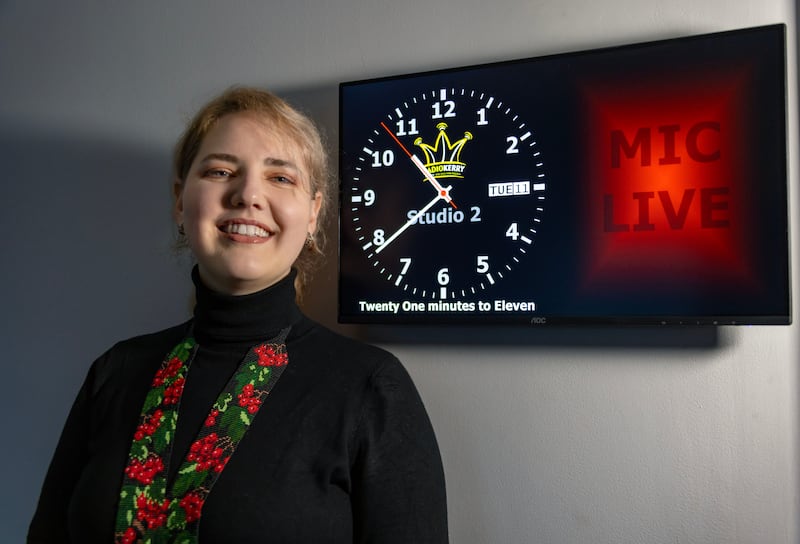
Most of Riabova’s family chose to stay in Ukraine. She moved to Ireland by herself in April 2023. Her journey was fairly arduous as with the war ongoing she had to make her way out of Ukraine on buses and trains, with services frequently disrupted, and then fly to Ireland from Poland.
After arriving in Dublin airport, Riabova and other Ukrainian refugees were taken to Citywest to have their documents processed, she was then assigned accommodation in Limerick.
“In the first few weeks, I felt a sense of euphoria. When you’re in Ukraine you don’t realise it because you are there and [witnessing] all these events, you don’t realise what it takes from you.”
On her second day in Ireland, Yuliia and some other people staying in her accommodation decided to venture into a local pub in Limerick.
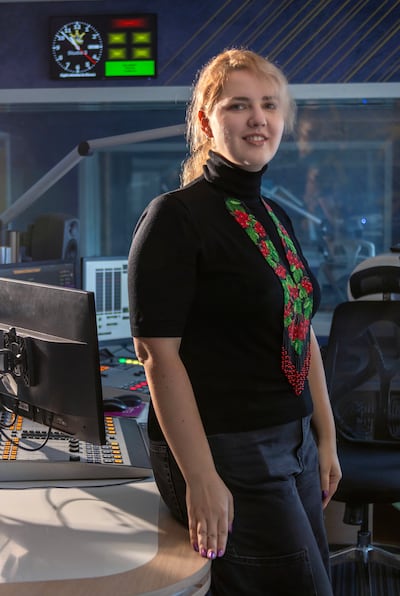
“There was this old barman. We asked him how much things cost because we had no idea about anything. He started telling us and we couldn’t understand a word. That was probably the moment that we realised okay, we don’t know English, not the way it’s spoken in Ireland.”
In September 2023, Riabova discovered the Accommodation Recognition Programme which pays Irish people to house refugees. She applied to be housed through the programme and eventually moved in with a family in Killorglin, Co Kerry.
“I was lucky that I found a nice family. They’re Polish-Irish which really helped because at the time I couldn’t understand the Kerry accent, but I could definitely understand the Polish lady speaking much better. Me and another Ukrainian girl who I met in Ireland had a big room all to ourselves. There were obviously some rules, and we helped a bit around the house but there was nothing major like no conflicts.”
Today Riabova (28) lives with relatives of the Polish-Irish family in Tralee, Co Kerry.
“They are my best friends in Ireland. Over the last two years they [have] helped me so much and I’m so grateful to them.”
While Riabova is happy in Kerry, her family’s safety back home remains a constant source of worry.
“My mum has a habit of if something happened there, she would text straight away to say that they are okay and that everything is fine. With my friends I would just text in the group chat asking if everyone is okay? They just say yeah,” Riabova says.
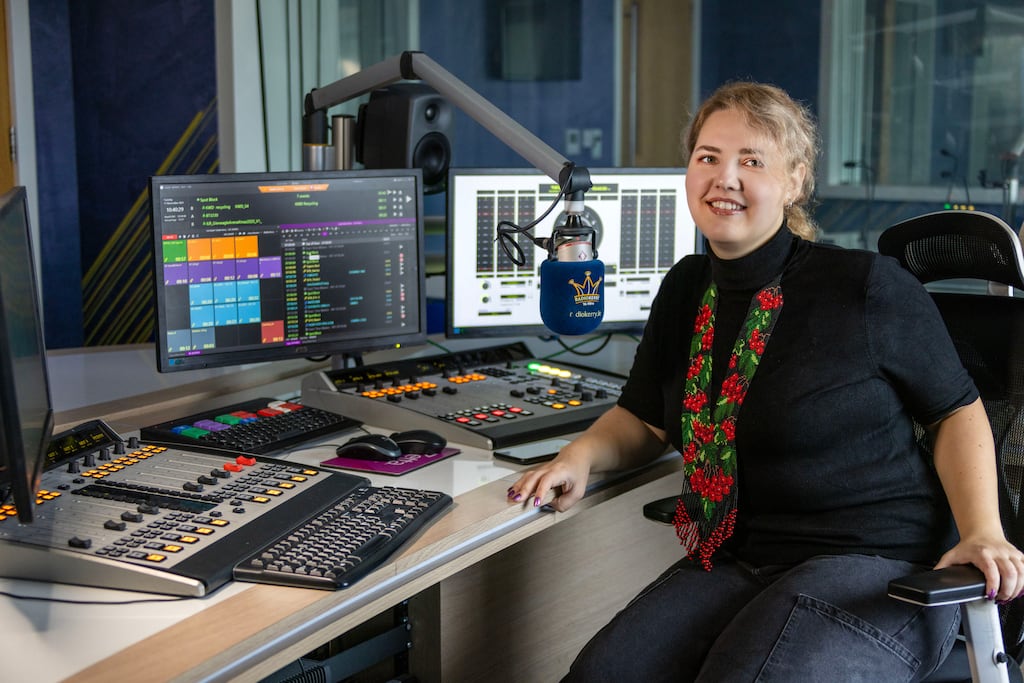
When she first moved to Tralee, Riabova completed a year’s course in Radio Journalism that Kerry College was running in conjunction with Radio Kerry, where she now works part-time. She is the producer and host of Radio Kerry’s The New Residents Podcast.
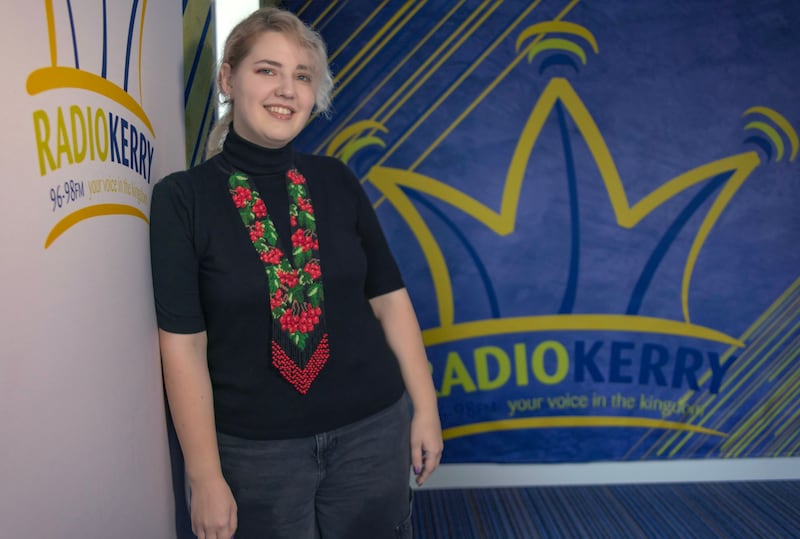
At the Kerry Film Festival, Riabova watched a short film called Refuge which has had a lasting impact on her.
“I realised there are so many stories like my story, but also a lot of different stories, that are never told and you never see them on screen. I just think there [is much] that could be explored and it is interesting to explore.”
Riabova was recently accepted onto the Film Journalism Mentorship Course.
“We write reviews, we talk to a lot of people who make movies and are involved at different stages of production, say scriptwriters, producers, accountants as well, because there is a lot of budgeting and planning and funding [that goes into making a film].”
In terms of the future, Riabova doesn’t think that she will live in Ukraine anytime soon because of the level of destruction Ukraine has experienced, for now she’s open to living anywhere and keen to try scriptwriting.
We would like to hear from people who have moved to Ireland in the past 10 years. To get involved, email newtotheparish@irishtimes.com or tweet @newtotheparish