
One of Donald Trump’s first moves after he returned to the White House in January was to try to close down the United States Institute of Peace, firing most of the staff. The institute’s president was escorted from its headquarters in Washington’s Foggy Bottom by police and FBI officers.
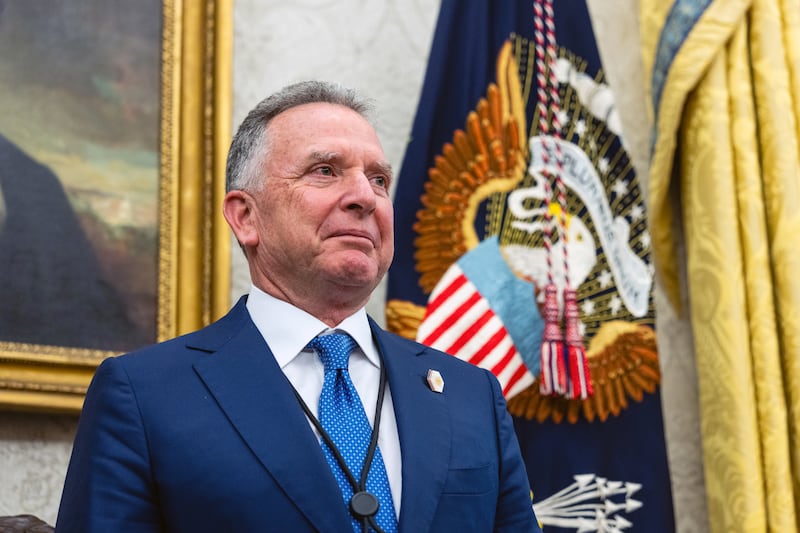
By early December, Trump was back in the building, now renamed the Donald J Trump Institute of Peace, celebrating his role as an international peacemaker. He was hosting the leaders of Rwanda and the Democratic Republic of Congo (DRC) for a ceremony to sign an accord brokered by the White House, during which he appeared to fall asleep.
The deal was one of eight peace agreements Trump claims to have negotiated this year, trumpeting his success in ending “unendable wars” as he lobbied for the Nobel Peace Prize. Some of these were not wars at all and others have not actually ended but most of Trump’s peace deals have one thing in common: a focus on American economic interests.
The ceremony at the Institute of Peace in December celebrated an agreement signed in the summer, but fighting has continued in the east of the DRC between its government’s forces and rebels backed by Rwanda. The region is rich in minerals, including cobalt, copper, gold, diamonds, tin, tantalum and tungsten, and this is what has made it a battleground for dozens of armed groups and has drawn the attention of the Trump administration.
RM Block


After the ceremony, the US and the DRC signed a minerals and infrastructure deal that will give US companies first refusal on mining contracts. This is one of numerous agreements around the world Trump has negotiated in an effort to secure access to minerals needed for technology, energy and defence and to diminish China’s dominant position in the trade.
When Trump targeted China with the highest tariff in the world last April, Beijing responded by restricting the export of rare earths, of which it controls 90 per cent of the processing. Within weeks, car factories in the US were warning that they would have to halt production as the supply of rare earth magnets used in advanced manufacturing threatened to seize up.
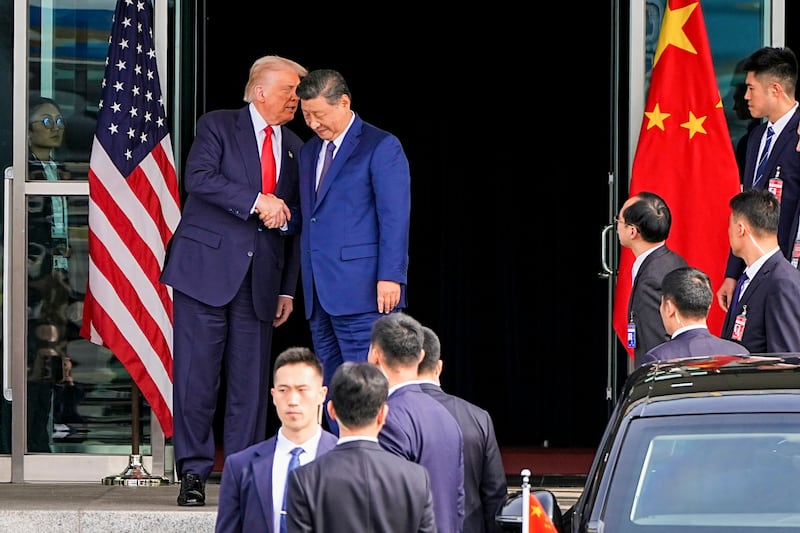
Over the months that followed, the US and China negotiated a staged de-escalation in their trade war, culminating in a meeting in South Korea between Trump and China’s president, Xi Jinping. Trump agreed to visit China next April and both sides have been avoiding confrontation since the South Korean summit.
The contest with China was expected to be the focus of Trump’s foreign policy during his second term but more of the president’s energy has gone on problems in other parts of the world. Chief among these has been Israel’s war in Gaza, an increasingly one-sided conflict that became more brutal as each month passed.
By September of this year, when the people of Gaza were facing famine and disease as well as bombardment, it was clear that any successful effort to end the war required action by the US. But Trump’s vision of Gaza as “the Riviera of the Middle East”, which he had elaborated in February, was rejected by everyone apart from Israeli prime minister Binyamin Netanyahu.
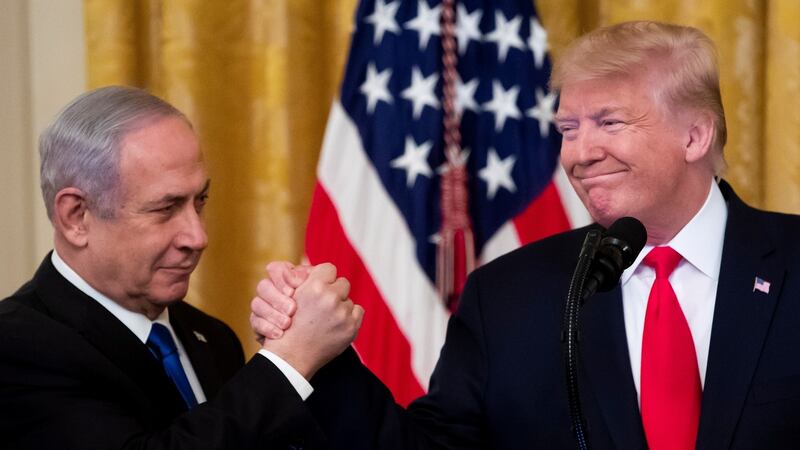
That plan envisaged the forced displacement of two million Palestinians from Gaza to six unidentified “safe communities” in neighbouring countries. The US would take possession of the territory and develop it into a strip of luxury beachside resorts.
“The Gaza Strip would be turned over to the US by Israel at the conclusion of fighting,” Trump said. “We have an opportunity to do something that could be phenomenal. And I don’t want to be cute. I don’t want to be a wise guy. But the Riviera of the Middle East.”
By the time Trump turned his attention to the region again at the end of September, the Riviera plan was gone and he was instead proposing a 20-point plan that would see an immediate ceasefire, followed by demilitarisation and the installation of a technocratic government. This would be overseen by a “board of peace” to be chaired by Trump himself, which would establish a temporary international stabilisation force to secure the border, demilitarise Gaza and protect humanitarian operations.
Trump sought and won the approval of the United Nations Security Council for the plan last month, with China and Russia abstaining while the other 13 members voted in favour. But the board of peace has not yet been constituted and there has been little progress in recruiting states to offer troops for the stabilisation force.
Although the ceasefire has brought relative peace to Gaza, Israeli forces continue to violate it and have killed more than 300 people since it began. Humanitarian aid is now getting into Gaza but it remains inadequate and food in local shops is so expensive that malnutrition remains a problem.
Perhaps the greatest vulnerability of the peace plan is the extent to which it depends on Trump’s continued engagement for its success. And Trump’s attention comes and goes, as Ukraine’s president, Volodymyr Zelenskiy, and his European allies have discovered this year.

A low point came on February 28th when Trump and his vice-president, JD Vance, hectored and humiliated Zelenskiy in front of reporters in the Oval Office. On August 15th, Trump flew to Alaska to meet Vladimir Putin, warning in advance of the meeting that there would be “severe consequences” for Russia if Putin did not agree to a ceasefire.
By the end of the meeting, Putin had persuaded Trump that there was no need for a ceasefire in advance of a comprehensive agreement to end the war. European leaders rushed to Washington and successfully slowed down Trump’s negotiations with Putin so that a planned second summit did not go ahead.
During the weeks that followed, Trump appeared to lose patience with Putin and tightened sanctions on Russia while allowing the Europeans to buy weapons from the US to supply to Ukraine. But in November, the US surprised Ukraine and the Europeans with a 28-point peace plan drafted by Russian and American negotiators that envisaged a settlement mostly on Moscow’s terms.
The plan would see Russia gain full de facto control of Luhansk and Donetsk, including the almost 15 per cent of that territory currently under Ukrainian control. Those latter areas would be a demilitarised zone with no Russian forces and, in Kherson and Zaporizhzhia, the current lines of control would be frozen, with Russia returning some territory subject to negotiation.
Ukraine would have to reduce its armed forces and would not be allowed to deploy long-range weapons that could strike targets deep inside Russia. No foreign troops could be deployed on Ukrainian soil but the US would offer Ukraine and Europe a security guarantee against future Russian aggression.
Ukraine would have to recognise Russian as an official state language and grant formal status to the local branch of the Russian Orthodox Church. The US and other countries would recognise Crimea and the Donbas as part of Russia, although Kyiv would not be required to do so.

The plan included the promise of a US security guarantee for Ukraine but the details were not specified. Half of the Russian financial assets frozen in European financial institutions would be released into a fund to rebuild Ukraine, half of the profits of which would go to the US.
Shuttle diplomacy between the US and Russia and Ukraine, along with some input from the Europeans, saw some modifications in the proposal and an apparent hardening of the security guarantee in the weeks that followed. But it remained clear that any US-backed peace settlement will involve significant territorial concessions by Ukraine and Russia’s return to the international economic system.
European leaders have not had a seat at the table during these negotiations and the Trump administration spelled out its views on Europe in its National Security Strategy published in early December. The section on Europe came behind those on the western hemisphere and Asia and, although it was headlined “promoting European greatness”, it was a merciless critique.
“American officials have become used to thinking about European problems in terms of insufficient military spending and economic stagnation. There is truth to this, but Europe’s real problems are even deeper,” it began, before describing Europe’s economic decline and warning that the Continent was heading for civilisational erasure.
“Should present trends continue, the Continent will be unrecognisable in 20 years or less. As such, it is far from obvious whether certain European countries will have economies and militaries strong enough to remain reliable allies. Many of these nations are currently doubling down on their present path. We want Europe to remain European, to regain its civilisational self-confidence, and to abandon its failed focus on regulatory suffocation.”
The document identifies as a core interest of the US the negotiation of a quick cessation of hostilities in Ukraine, in order to stabilise European economies, prevent unintended escalation or expansion of the war, and re-establish strategic stability with Russia.
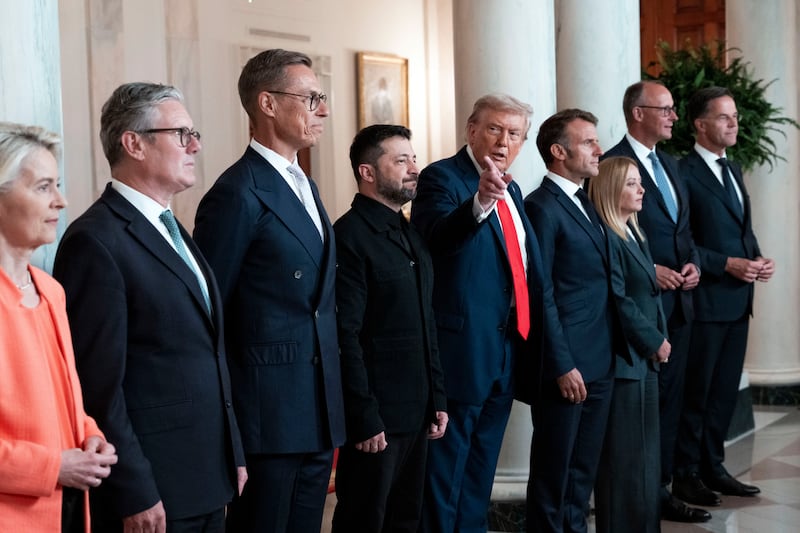
“The Trump administration finds itself at odds with European officials who hold unrealistic expectations for the war perched in unstable minority governments, many of which trample on basic principles of democracy to suppress opposition. A large European majority wants peace, yet that desire is not translated into policy, in large measure because of those governments’ subversion of democratic processes,” it says.
“American diplomacy should continue to stand up for genuine democracy, freedom of expression, and unapologetic celebrations of European nations’ individual character and history. America encourages its political allies in Europe to promote this revival of spirit, and the growing influence of patriotic European parties indeed gives cause for great optimism. Our goal should be to help Europe correct its current trajectory.”
The strategy paper is explicit in its hostility to the European Union and in its elevation of the nation state as the primary actor in international affairs it takes aim at “the sovereignty-sapping incursions of the most intrusive transnational organisations”. Some European politicians and analysts played down the document’s significance, suggesting that the National Security Strategy is written by and for policy wonks and has little impact in reality.
But a few days after its publication, Trump doubled down on the strategy paper’s message for Europe, describing it as a decaying group of nations led by weak people. He said that European states were creaking under the burden of migration and suggested that he would endorse European politicians aligned with his views.
“I’d endorse. I’ve endorsed people, but I’ve endorsed people that a lot of Europeans don’t like. I’ve endorsed Viktor Orban,” he told Politico.
He criticised the role of European leaders in efforts to end the war in Ukraine, saying they “talk, but they don’t produce, and the war just keeps going on and on”. And he said that if Ukraine did not have elections soon it would not be a democracy any more.
[ Trump says Europe is ‘destroying itself’ through immigrationOpens in new window ]
Most European leaders were cautious in their response to the National Security Strategy, and EU foreign policy chief Kaja Kallas appeared not to notice any criticism of Europe within it. But the president of the European Council, António Costa, called on the White House to respect European sovereignty and stay out of its elections.
“Allies do not threaten to interfere in the democratic life or the domestic political choices of these allies. They respect them,” he said.
But as the first year of his second term as president has demonstrated, Trump is not that kind of ally for Europe, if he is an ally at all.