In 2019, I did a master’s in marketing in TU Dublin. Four years later, I began another one – this time in contemporary European philosophy at the University of Luxembourg.
Doing a second one, and, in particular going abroad to do it, was down to three major contributing factors.
Firstly, I felt a bit overwhelmed after graduating, as throughout my bachelors (in international relations) and the master’s I did afterwards, I had been working to support myself in Dublin. My initial plan was to take on a full-time role within the marketing division of the company I had been with. But I was only 21 and daunted by the prospect of making long-term plans while still unsure about the career route I was going down.
Secondly, I always loved travelling and experiencing different cultures, and had an intense desire to push myself out of my comfort zone. I figured that by doing a master’s abroad, I would either confirm that my original career choice was the right one or would discover a completely new path.
AI technology could render education a ‘wild, wild west’, says union official

Global wave of militarism a ‘species failure’, Higgins tells INTO conference

Teachers must receive substantial pay rise, ‘no ifs or buts’, says ASTI

Teacher tells of being forced to return to work months after brain surgery due to lack of sick pay

Lockdown also played a part in my decision because I had gone from living independently and socialising in Dublin to being at home in Clare, watching Netflix and losing at Black Ops and Mario Kart to my brothers.
During the time at home, I regained my passion for reading and have always loved writing, critical thinking and philosophy – however, through my work in retail, I had veered away from academia. But having revived my love of reading, I started to reconsider my career path and decided to research the possibility of doing another course which would allow me to apply and build on my literary skills.
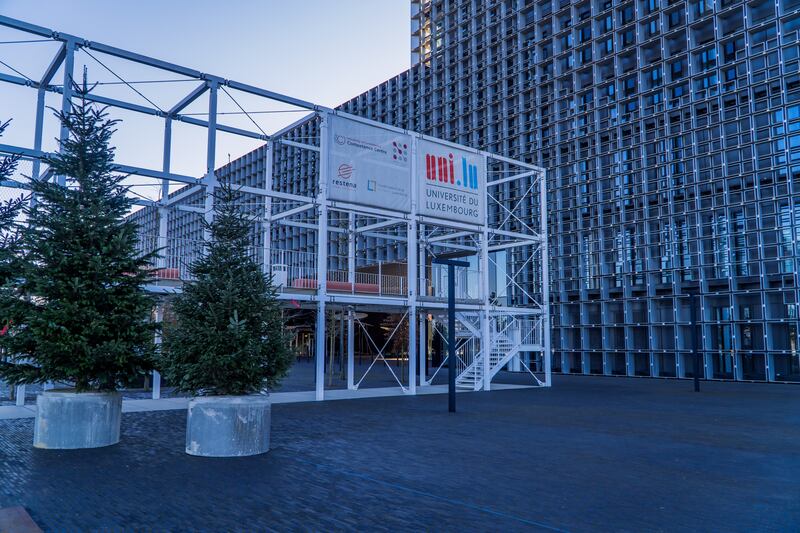
This is what led me to applying to the University of Luxembourg (UniLU). I decided that if it ended up being a terrible decision I could always go back to the trajectory I had previously chosen, with the confidence that it was right for me.
Having had the experience of doing a master’s in Ireland, the first thing I noticed about the Luxembourg one was the tuition fees – at UniLU it was free, apart from a €200 cost each term to cover student fees (this has recently risen to €400). In comparison, the Irish equivalent was €6,500.
But despite the low fees, I would still need to earn some money.
[ ‘Low tuition fees, transport is free’: Mastering further education abroadOpens in new window ]
And although working part-time while studying, as I did in Dublin, can help to alleviate costs without negatively impacting study, in Luxembourg it isn’t that simple. I speak decent French, so my plan was to search for a flexible job, but due to the incredibly competitive job market, it was very difficult and it wasn’t until my second year that I managed to find a suitable role, which was actually in the university.
On top of this, like everywhere else, the rental market in Luxembourg is problematic – with the price of a room in a shared apartment costing around €1,200 in the city and around €900 outside. The university itself is located in an old mining town called Belval, adjacent to Luxembourg’s second-largest city, Esch-sur-Alzette, which, if I’m being honest, is a bit of an eyesore with a slight dystopian feel – but living there or in another neighbouring town can help greatly with costs.
Postgraduate & MBA Options 2026
While many landlords avoid issuing contracts to students, even with a guarantor and/or offering to pay multiple months of rent up front, there are other alternatives, including student accommodation. This is highly competitive but can cost just €400 per month. The second option is to avail of the wonders of EU citizenship and find somewhere to rent in one of the many border towns in neighbouring France, Germany and Belgium. Another bonus is that public transport is completely free, so this can also reduce costs significantly.
So it can take some time to get sorted – but this is not unique to Luxembourg, as I had similar difficulties when trying to find somewhere to rent in Dublin – and we’ve all heard enough stories of how hard it still is.
Anyone deciding to do a master’s, whether at home or abroad, will do their research to ensure they take on the right course. When making my decision about Luxembourg, I found Reddit very useful for insights and advice which wasn’t available from the traditional channels – including the fact that the courses are taught very differently to Ireland, where it is the norm for seasoned professors to teach, compared to countries such as the Netherlands, where it is quite common for PhD students to give some tutorials.
In UniLU nearly all master’s course lectures and tutorials are given by professors or distinguished post-docs and the classes are small (there were only 12 in mine), which is great. This maximised the amount of time the teaching cohort could spend with our work, as well as the quality of the feedback they provided.
Also, one of the greatest aspects of the course in UniLU is that you have the freedom to structure the schedule of each semester as you see fit. In other words, to graduate, one has to pass a certain number of classes and exams and write a thesis to obtain 120 ECTS – but you can decide when you want to take these classes throughout the two years.
For example, you can take lots of classes in the first semester to make things easier later on, or take a class but put off taking the exam right away if things get too intense. I found this to be a great help and hadn’t heard of this level of freedom before.
In TUD, the course was totally different and so were the criteria to determine the quality of the teaching. Although the classes were larger (about 20 in my year), this was a bonus as a great deal of our coursework was conducted through teams and collaborating with external parties, such as small businesses in Dublin. One thing which I really loved about my time there was the entrepreneurial hands-on approach – and for many of the modules, we were split into teams and permitted to contact who we wanted to develop campaigns.
I also really liked how the professors were very approachable and directed the general shape of our projects rather than micromanaging. This was also the case in UniLU, with faculty organising group outings and lunches, so I came to see it as the norm. But have heard from other students that it is not the case everywhere.
In my experience there are pros and cons to doing a master’s abroad – and there are many benefits. Firstly, due to the Bologna system, all master’s degrees taught in the EU are recognised in the Irish job market, so it is quite simple to go abroad and return later to build your career.
Another benefit is the experience of living abroad and meeting people from different backgrounds – not only for character building, but by getting out of your comfort zone you really come to grasp the multitude of career paths and options that are open to us but not immediately evident. I think moving abroad has made me more confident and less scared of uncertainty. Right now, I am working in academia, but perhaps I will venture down another path at a later stage. It has helped me to see that by continuing to push and apply myself, anything is possible.
Going abroad isn’t for everyone and might be harder for those considering a master’s in business, particularly if they are set on returning to Ireland afterwards, as they will have built up their all-important network overseas rather than at home. However, in saying that, here in Luxembourg many multinational corporations offer internships to master’s students so it could be possible to begin the internship here and transfer to the Irish branch upon graduation.
Another downside is homesickness. Fortunately it is just a quick flight back to Ireland, but while I have conversational French, I never feel totally “at one with the community” here. I miss the little acknowledgments and recognitions, the friendly Irish nod, even to a stranger, the colloquial phrases, the small talk in a cafe or on the bus. So, for those thinking of building a career abroad, be prepared to lose this.
Also, the social life in Luxembourg is nowhere near as good as it is back home. Paradoxically, this can help you to make genuine friendships more quickly as everyone wants social interaction and, in terms of having fun, you soon learn to make do with what you’ve got.
Due to this, people often meet up at each other’s places or organise to travel to nearby cities (such as Metz on Trier) for better options. I think this is much more personal than going to a bar and you figure out quickly if you are going to get on with each other or not.
My advice to anyone who is undecided about doing a master’s abroad is to firstly make sure that the course is the right one.
Then, if you’re unsure of the region/country, you could always book a mini-holiday and stay for a week or so to get a sense of what living there would be like.
Keep in mind that you will probably have a feeling of uncertainty at the beginning, but after deciding on a course, I think just embracing it is the best option.