

On the last day of February, as meteorological winter came to a close, I walked out of a church following a funeral and stepped into sunlight so blinding it felt like a thousand bulbs popping. I walked along the sea. Along the shore, some birds appeared, their numbers low but the species diverse: oystercatcher, redshank, turnstone, and one solitary curlew picking its way along the sandy rocks with the frenetic air of someone who had 10 things to do but was only on the second. After a time watching them, I felt a kind of calmness, balance and repair.
It was a reminder of something easy to forget: being in nature can be deeply restorative and losing access to it is diminishing in ways that go beyond the ecological. In the 1970s, the naturalist Robert Michael Pyle coined the term “the extinction of experience” to describe what happens when people lose routine contact with the living world, and it’s a phrase that’s grown more ominous with time. The consequences form a grim feedback loop: fewer encounters with wildlife lead to less concern for their protection, which further reduces our access to them, deepening the indifference. And so we go on in a spiral that runs one way.
The antidote to this is evidence that conservation actually works – that replicable strategies are delivering results. Here are a few recent examples of the best.
Consider New Zealand’s native kākāpō, a large, flightless, nocturnal parrot reliant on camouflage to save it from the mouths of introduced predators such as cats and rats. By 1995, its population stood at 51 birds. Thirty years of predator eradication, intensive nest monitoring, genetic management and supplementary feeding have lifted that number to an estimated 237.


This year’s breeding season, triggered by a bumper rimu fruit crop on which they depend, could be as big as 87 breeding-age females nesting. Conservationists are now moving beyond intensive care and plan to relocate birds to larger areas with reduced predator levels. The lesson? Remove introduced predators from defined areas and even the most critically endangered species can recover. The challenge is doing it at scale.
Meanwhile, on the Klamath river in northern California and southern Oregon, salmon and steelhead trout are returning in their thousands. In 2024, four hydroelectric dams that generated small amounts of hydropower but blocked fish migration were removed, marking the largest dam removal in US history. It opened up 400 miles of salmon habitat. Within weeks, salmon had access to tributaries they had not been in for more than a century.
Thousands of adult Chinook salmon returned to natural spawning areas. Some fish swam more than 300 miles from the Pacific into southern Oregon’s Sprague and Williamson rivers, marking the first salmon there in living memory. Water quality, temperature and dissolved oxygen improved almost immediately. Unblocking a river, it turns out, is a fast and effective way to help fish populations rebound.
[ Wild salmon are on the brink of disappearing from Irish watersOpens in new window ]
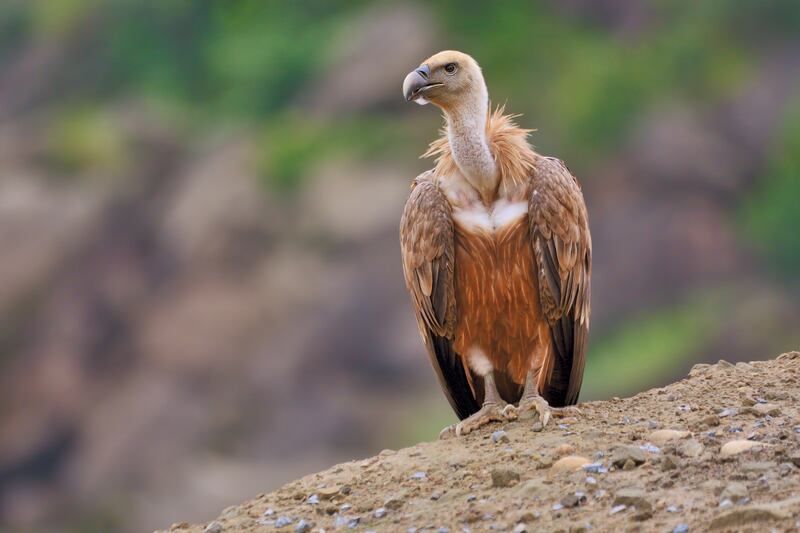
In a different ecosystem, Sardinia’s griffon vultures are coming back, too. By 2014, their numbers had collapsed to just 60 birds – poisoned by pesticides, lead shot and chemicals. Two successive EU-funded conservation projects tackled the problem by setting up safe feeding stations, making power lines bird safe, and persuading hunters to switch to lead-free ammunition. Young vultures from Spanish rescue centres were brought in to boost numbers. The population is now 500, an eightfold increase in just 10 years. Not only that, but the vultures are expanding their range across Sardinia, and restocked birds are pairing with native ones.
For some species, such as the Hainan gibbon, protecting habitat and allowing natural genetic processes to operate are the most effective ways forward. The Hainan gibbon is the world’s rarest primate, whose numbers dropped to just 13 individuals by 2003 on China’s Hainan Island. With strict habitat protection in the Bawangling National Nature Reserve and community education programmes to reduce human-wildlife conflict, the population has more than tripled. It’s still a tiny population, but a study published in Science Advances found that despite this, the gibbons show low inbreeding and have surprisingly resilient genetics.
Finally, in the mountains of southern Spain and Portugal, the Iberian lynx has pulled off what the International Union for Conservation of Nature (IUCN) calls the greatest recovery of a cat species ever achieved through conservation. At the turn of this century, it was the world’s most endangered wildcat, with fewer than 100 individuals left in two isolated pockets of southern Spain.
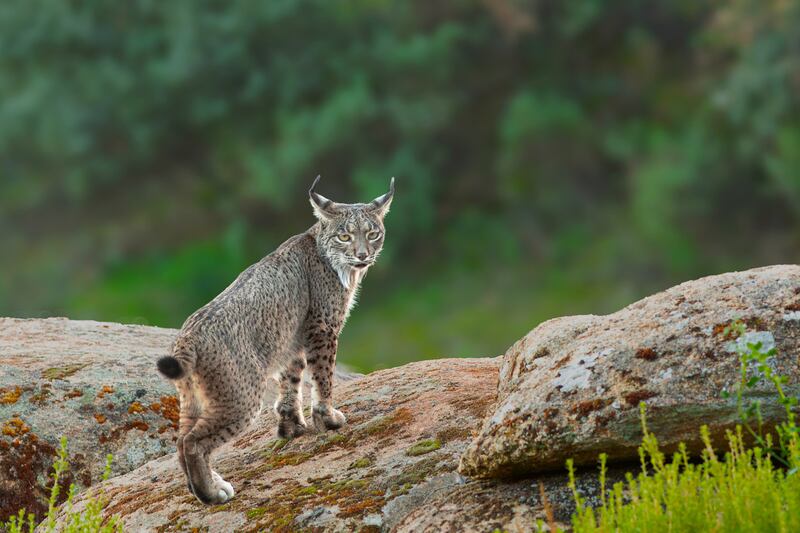
Outbreaks of myxomatosis and rabbit haemorrhagic disease have devastated the European rabbit, which makes up three-quarters of the lynx’s diet. Twenty years of EU-funded captive breeding, reintroductions, habitat corridors and measures to reduce road deaths have lifted the Lynx population to 2,401 – high enough for the IUCN to downlist the species from “endangered” to “vulnerable”, which in conservation terms is considered a significant success.
[ From the archive: The fight to save the world’s most endangered catOpens in new window ]
Species move quickly when obstructions such as predators, dams, and poisons are removed. Nothing in these stories promises that restoration is easy. But nothing in them suggests it would be impossible, either. It takes longer than a single government’s term in office. It requires international co-operation, sustained funding and scientific continuity. But the spiral, it turns out, can run both ways.


