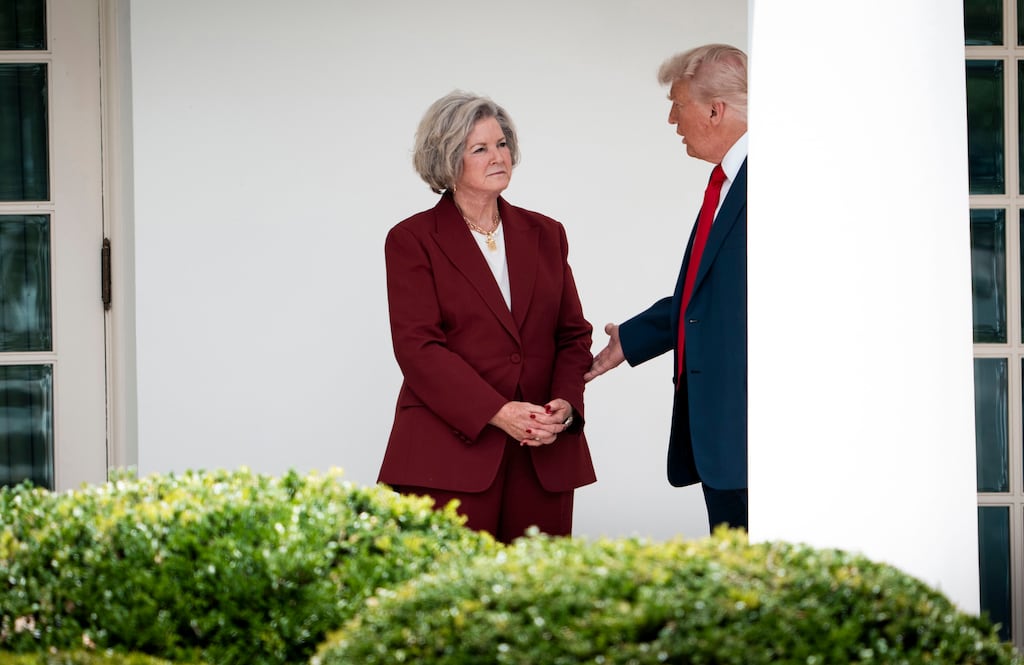
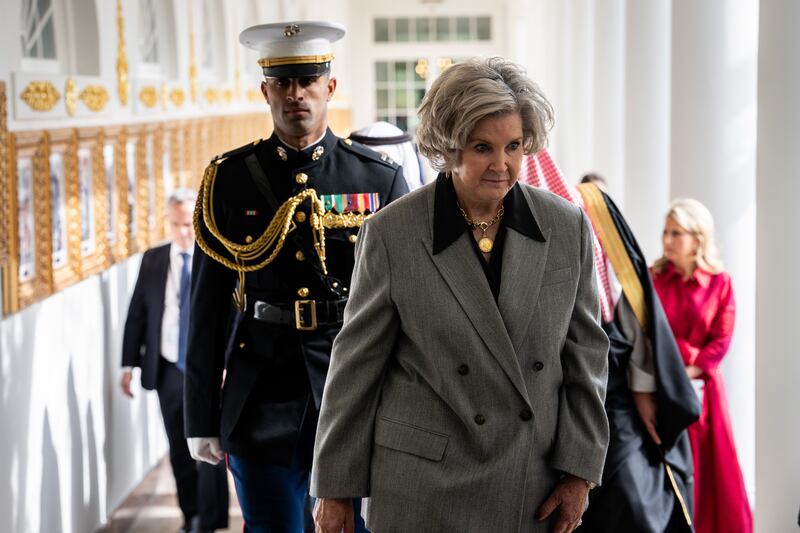
The US capital has been stunned by an explosive new article recounting a year’s worth of unguarded conversations with the usually guarded Susie Wiles, the White House chief of staff who spilled on everything from president Donald Trump’s “alcoholic’s personality” to the brewing war in Venezuela.
Ms Wiles, who typically shuns publicity, gave 11 interviews over the course of Trump’s first year back in office to Chris Whipple, the author of a book on White House chiefs of staff who published her comments in Vanity Fair. She spoke candidly about the challenges of managing a volatile boss, the battles she had lost and the curious collection of people surrounding him.
In response, Ms Wiles went on social media after the story was published to call it “a disingenuously framed hit piece on me and the finest President, White House staff, and Cabinet in history.” She took no issue with any of the facts in the article, but said only that “significant context was disregarded and much of what I, and others, said about the team and the President was left out of the story.”
Here are five takeaways:
Wiles tried to restrain Trump on January 6th pardons, tariffs and his campaign of “score settling” against enemies
Ms Wiles compared Mr Trump to her father, Pat Summerall, the legendary sportscaster who was an absentee parent and alcoholic. While Mr Trump does not drink, she suggested he had “an alcoholic’s personality” because he operates with “a view that there’s nothing he can’t do. Nothing, zero, nothing.” Her experience with her father, she said, made her “a little bit of an expert in big personalities.”
She described several occasions when she had advised Mr Trump to go slow or not as far as he wanted, only to have him bull ahead anyway. She said she had urged him not to pardon the most violent rioters from the Capitol attack on January 6th, 2021, which he ended up doing. She said she had tried to get him to hold off announcing the hefty tariffs in the spring because of a “huge disagreement” on his team, but he went ahead and did that too.
Most intriguingly, perhaps, she said that she had forged a “loose agreement” with him to end the “score settling” against his political enemies after 90 days because she did not want it to distract from his real agenda, an idea that clearly did not work. And she acknowledged that some prosecutions were driven at least in part by his desire for payback.
“In some cases, it may look like retribution,” she said. “And there may be an element of that from time to time. Who would blame him? Not me.”
Trump’s circle includes “a conspiracy theorist,” a “right-wing absolute zealot” and an “odd, odd duck” who has admitted using drugs
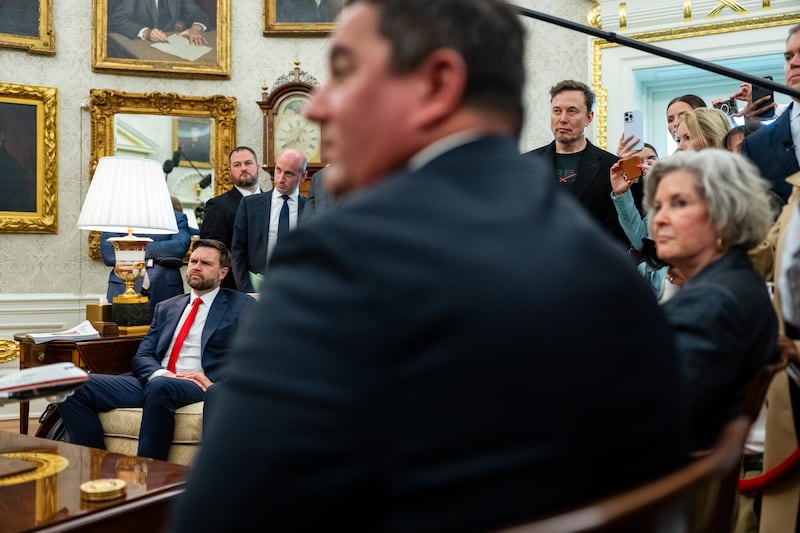
Ms Wiles was more candid than White House officials typically are about the cast of characters around the president. She said that vice president JD Vance had “been a conspiracy theorist for a decade” and called Russell Vought, the budget director, “a right-wing absolute zealot.”
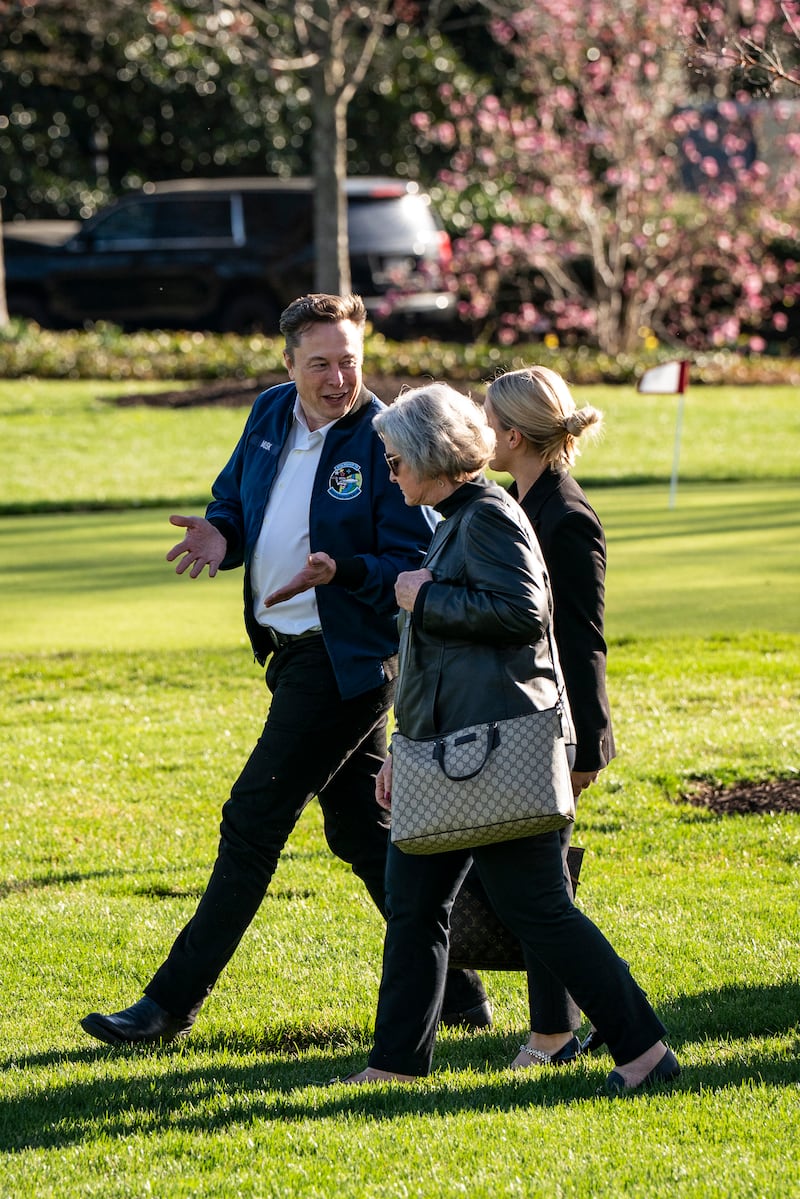
She was scathing about Elon Musk, the billionaire Trump ally who was given free rein early in the administration to take a wrecking ball to federal agencies and departments. “He’s an odd, odd duck, as I think geniuses are,” she said. “You know, it’s not helpful, but he is his own person.” She called him “an avowed ketamine” user, though she later told The New York Times that she did not have any actual knowledge of that beyond his own statements.
Ms Wiles recounted Mr Musk’s evisceration of the US Agency for International Development in devastating terms. “I was initially aghast,” she told Mr Whipple, noting that the foreign aid workers “do very good work.” Mr Musk’s approach was “not the way I would do it” and added that “no rational person could think the USAid process was a good one. Nobody.”
Trump keeps claiming that Bill Clinton visited Jeffrey Epstein’s island. But Wiles says he is “wrong about that.”
Wiles acknowledged that Mr Trump had not been telling the truth about former president Bill Clinton’s relationship with sexual predator Jeffrey Epstein, and faulted attorney general Pam Bondi for her handling of the investigative files about him.
While Mr Trump for years has repeatedly claimed that Mr Clinton visited Epstein’s private island, Ms Wiles said “there is no evidence” of that. Asked if there was any incriminating information about Mr Clinton in the Epstein files, she said, “The president was wrong about that.”
As for Bondi, a friend of Ms Wiles’, she said the attorney general did not recognise the fervor of the president’s right-wing supporters about Epstein. “I think she completely whiffed on appreciating that that was the very targeted group that cared about this. First, she gave them binders full of nothingness. And then she said that the witness list, or the client list, was on her desk. There is no client list, and it sure as hell wasn’t on her desk.”
Wiles’ comments on Vance and Rubio stoke speculation about their rivalry to become Trump’s successor
An important subtext of Wiles’ comments is the quiet rivalry between Mr Vance and secretary of state Marco Rubio, who are vying for Trump’s nod to succeed him in 2028. The distinction she made between the two was seen as evidence that she is propping up Mr Rubio, her fellow Floridian, over Mr Vance, the more Maga-friendly front-runner.
Here is the way she described how each of them went from being a sharp critic of Mr Trump to a key deputy: “Marco was not the sort of person that would violate his principles,” she said. “He just won’t. And so he had to get there.” As for Vance, “his conversion came when he was running for the Senate. And I think his conversion was a little bit more, sort of political.”
Mr Rubio told Mr Whipple, as he has previously said, that if Mr Vance runs, he will support him. But the ripple of rivalry was evident when Mr Vance joked with the Vanity Fair photographer that he would give him $1,000 if he made Mr Rubio look worse than him.
Trump seems intent on regime change in Venezuela but needs authority from Congress to launch “land strikes.”
Whether she meant to or not, Ms Wiles set a new political and legal bar for her boss if he opts to escalate his conflict with president Nicolás Maduro of Venezuela. While Mr Trump has bombed boats of alleged drug traffickers, seized an oil tanker and declared Venezuelan airspace off limits, he has not sought congressional authorisation so far. But if he orders the “land strikes” that he has been talking about, Wiles said he would need authority from Congress.
She also made plain that regime change was Mr Trump’s real goal. “He wants to keep on blowing boats up until Maduro cries uncle,” she said. “And people way smarter than me on that say that he will.”
- This article originally appeared in The New York Times.
2025 The New York Times Company