The United States has issued new sanctions on Venezuela’s oil sector and on members of president Nicolás Maduro’s family, while taking steps to keep tens of millions of dollars’ worth of oil from a large tanker that US forces seized off the country’s coast.
Venezuela’s economy depends on oil and has been hurt by US sanctions, leading Mr Maduro’s government to smuggle and sell crude through a web of tankers and middlemen. The new sanctions target three nephews of Mr Maduro’s wife and six shipping companies.
Separately, the Trump administration is seeking the legal authority to seize the oil from the Skipper, a tanker that US forces boarded and took possession of Wednesday in international waters near Venezuela, according to Karoline Leavitt, the White House press secretary. The oil had come from a state-owned Venezuelan company. US authorities have so far obtained a seizure warrant for the tanker – saying that it had been used in the past to smuggle Iranian oil – but not for the cargo currently on board.
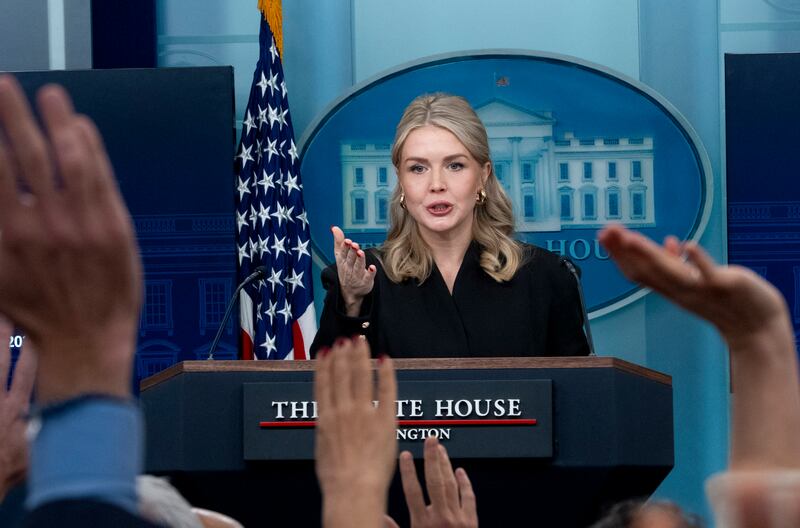
“There is a legal process for the seizure of that oil, and that legal process will be followed,” Ms Leavitt told reporters at the White House on Thursday.
RM Block


Together, the sanctions and the seizure of the Skipper represent a new front in president Donald Trump’s campaign to destabilise Mr Maduro’s regime. Mr Trump has accused Mr Maduro of operating a “narcoterrorist” cartel and has authorised a series of deadly military strikes against boats that he has said, without publicly providing evidence, are smuggling drugs. Many current and former officials in Washington say the military build-up in the region is ultimately aimed at regime change.
Later in the day, Mr Trump suggested that immigration was one of the factors that prompted the tanker seizure, saying that Venezuela had “allowed millions of people to come into our country.”
And he reiterated past warnings about a greater escalation.
“It’s going to be starting on land pretty soon,” he said of strikes in Venezuela.
The US government’s actions this week most likely will reduce the number of tankers that are willing to load oil in Venezuela, further isolating a country that depends heavily on the revenue it receives from exporting the fossil fuel. But there was little immediate effect on oil prices, which remained around $58 (€49) a barrel in the United States. The market is unfazed because Venezuela produces little oil, less than 1 per cent of what the world uses.
New details emerged Thursday about the seized oil tanker, including about its crew, which is mainly from Russia, according to a US official, who was not authorised to speak publicly. US authorities have asked the crew to sail the Skipper to the United States, but they have another crew on standby if needed, the official said.
The tanker has a capacity of two million barrels. It was loaded nearly full at a Venezuelan port about a month ago, according to data collected by Kpler, a company that monitors global oil shipping. The value of the oil carried by the Skipper amounted to roughly $78 million, said Francisco Rodríguez, an economist at the University of Denver.
The ship may have recently tried to hide its location and disguise its activities, according to a New York Times analysis of satellite imagery and photographs, reflecting the shadowy world of smuggling in which it is said to operate.
On December 6th, the Skipper conducted a ship-to-ship transfer in the open seas near Curaçao, offloading about 50,000 barrels of oil on to another tanker called the Neptune 6, according to Kpler, as well as TankerTrackers.com, a company that provides similar services.
Neptune 6 is headed to Cuba, said Homayoun Falakshahi, Kpler’s head of oil analysis.
The use of US military and law enforcement forces to seize a foreign oil tanker on the high seas is unusual. But the Skipper had been on the radar of the US government for several years, as part of a so-called ghost fleet that smuggles black market oil around the world. Venezuela and Iran have each made extensive use of such ships to smuggle oil and evade international sanctions.
In recent years, the Skipper has sailed the globe transporting oil for both Iran and Venezuela, according to ship tracking data from TankerTrackers.com and Kpler and analysis by the Times.
In 2022, the treasury department imposed sanctions on the Skipper, then sailing under a different name, for smuggling illicit Iranian oil. US prosecutors have said Iran uses the profits from oil sales to fund terrorism. That designation allowed the United States to seize the vessel on Wednesday.
“The department of justice requested and was approved for a warrant to seize a vessel because it’s a sanctioned shadow vessel known for carrying black-market sanctioned oil” for Iran, Ms Leavitt said at the White House on Thursday.
Despite the legal basis for the seizure relating to Iran, US officials have made clear that their actions were designed to pressure Venezuela and that they could seize more tankers carrying Venezuelan oil in the future.
Among the moves by the Trump administration to squeeze Venezuela are the sanctions announced Thursday.
Two of the Maduro nephews who were put under sanctions were arrested in Haiti in 2015 as they were finalising a deal to transport a shipment of cocaine to the United States. The men, whom the treasury department referred to as “narco-nephews,” were convicted in 2016 on drug trafficking charges but were granted clemency in 2022 by former president Joe Biden and returned to Venezuela, where, according to the treasury department, they continued trafficking drugs.
The sanctions also hit Venezuela’s economy by blacklisting six shipping companies – Myra Marine Ltd Arctic Voyager Inc, Poweroy Investment Ltd, Ready Great Ltd, Sino Marine Services Ltd and Full Happy Ltd – that have vessels transporting Venezuelan oil.
The targeted ships were “blocked” by the Treasury Department, impeding them from doing international business, although it was not clear if the US planned to seize them.
This article originally appeared in The New York Times.