
Much of Odesa was without power for more than four days this week, after a massive Russian missile and drone strike crippled energy infrastructure in and around this port city on Ukraine’s Black Sea coast.
It was the longest blackout to hit Odesa since Russia launched its all-out invasion of Ukraine in February 2022, and for most of its one million people it meant relying on batteries and power banks to run essential devices, and recharging at workplaces, cafes or so-called resilience centres that have their own diesel generators.
For many, it also meant days without heating and hot water, and wearying climbs to flats in high-rise blocks where the lifts were paralysed – but despite the hardship, locals vividly remember a time when the picture for Odesa was much darker.
“At the start of the war we were expecting troops from the Russian navy to possibly land on the Odesa coast. We could see their ships in the bay,” recalls Dmytro Barinov, whose working life has revolved around the city’s port.
RM Block


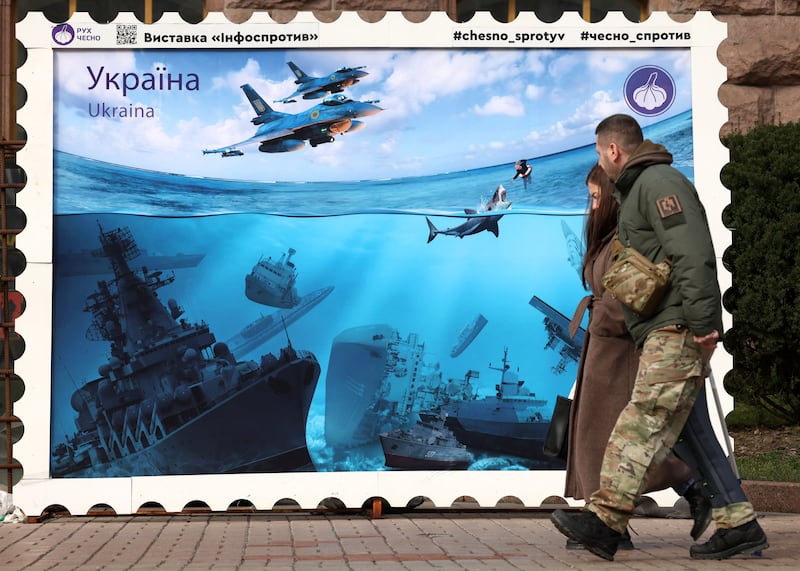
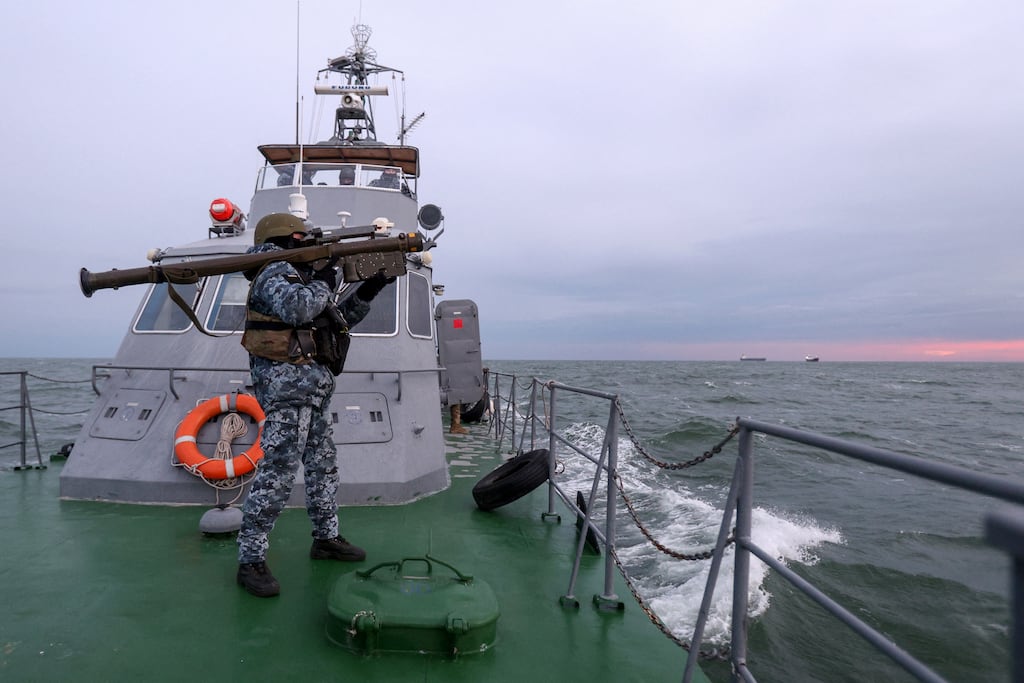
“But we drove them away with our missiles and sea drones. And we sank the Moskva,” he says, referring to the flagship of Russia’s Black Sea Fleet that was ignominiously sunk by two of Ukraine’s Neptune missiles in April 2022.
“Now the situation is completely different ... and Russian troops attacking from the sea is not realistic. We no longer have to fear their large landing ships – they would be a simple target for us. That’s why they moved the fleet from Crimea to Novorossiysk.”

The Kremlin’s Black Sea Fleet was seen as one of the world’s most fearsome naval forces until the war with Ukraine, but now more than a third of its 80 ships has been destroyed or damaged and it has retreated from the Black Sea peninsula occupied in 2014 to a safer port more than 300km to the east.
“Currently the Black Sea is the most successful battlefield for Ukraine. You cannot just use massive infantry assaults there, as Russia does on the land – you must work with technology and brains, and the Russians are losing this particular battle,” says Dmytro Pletenchuk, a spokesman for the Ukrainian navy.
Ukraine’s sea drones have continued to attack Russian ships and oil terminals in Novorossiysk, and Kyiv released footage this week of a powerful explosion in the port that it said was a first-ever strike by an underwater drone on a submarine.
Russia’s navy denied that the “sabotage” had damaged any vessels, but it has failed to achieve any of its key war aims in the Black Sea – from using it as a springboard to occupy Odesa to blockading it to strangle Ukraine’s export trade.
“Right now, 64 vessels are being loaded or unloaded in the ports of greater Odesa – that is Pivdennyi, Chornomorsk and Odesa itself. That’s about the same as would have been there before the war,” says Barinov, an adviser to the Odesa grain terminal who previously worked in senior posts in the Ukrainian Sea Ports Authority and sailed the world as the captain of cargo ships.
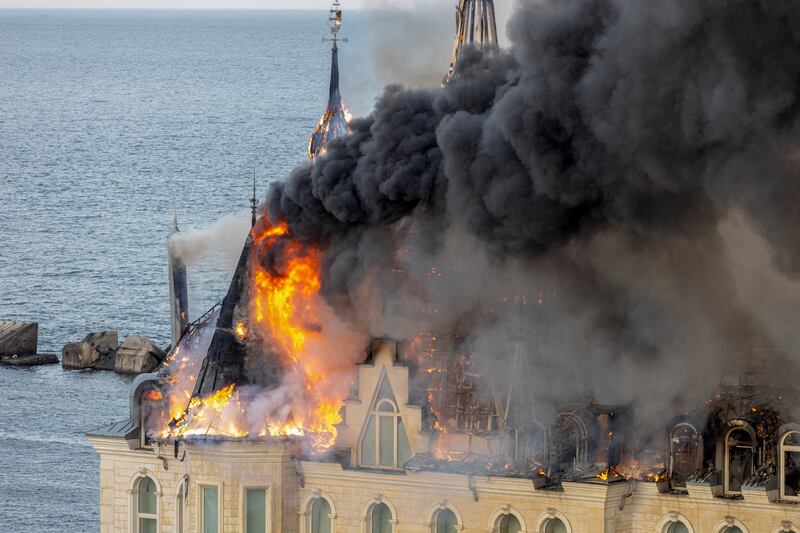
At the start of the war, Russian warships lurking off the Odesa coast forced Ukraine to reroute cargo to the Black Sea via small ports further west on the Danube river.
In July 2022, the United Nations and Turkey brokered a deal between Moscow and Kyiv to allow Ukraine to ship food from Odesa under the so-called Black Sea grain initiative.
When Russia refused to extend the pact a year later, Ukraine launched a new shipping corridor that hugged its coastline and then used the territorial waters of Nato members Romania, Bulgaria and Turkey to reach the Bosphorus.
“More than 160 million tonnes of cargo have been shipped through this Ukrainian corridor. It’s an incredible amount,” Barinov says. “And 96 million tonnes of that was foodstuffs, which have been very important for some countries in Africa and Asia.”
Ukraine has used sea drones in recent weeks to hit three tankers belonging to the “shadow fleet” that Russia uses to evade sanctions on its oil industry, and Russian aerial drones have struck at least four Turkish-owned or -operated cargo ships sailing to or from Odesa, including one that was unloading much-needed generators in the port.

Pletenchuk says Russia is ramping up its military efforts on land and sea to improve its bargaining position in talks over a new US push to end the war: “It’s a standard Kremlin tactic, called Moscow diplomacy, to push for the maximum and exert maximum pressure, even if they know they won’t get everything they’re asking for.”
Kyiv says any peace deal must include western security guarantees, and Pletenchuk says Ukraine would welcome help from western states not only in demining the Black Sea but in ensuring Russia could not attack from that direction again.
“The ports are extremely important for Ukraine – as for every country,” says Barinov.
“It’s like the door in your apartment. It should not be blocked, you should be able to take things in and out – and if something crazy happens and you can’t avoid it, then you must be able to protect it.”