
For more than a year European officials have warned that the Balkan state of Bosnia and Herzegovina is on the brink of a crisis threatening the stability of south-eastern Europe.
Now a group of US Maga lobbyists has helped trigger a dramatic intervention by the Trump administration in the volatile region, upending years of US-led diplomacy in the Balkans.
In late October Washington stunned some of its traditional European allies by lifting sanctions on the primary instigator of the crisis: Milorad Dodik, the hardline and pro-Russia former leader of the Bosnian Serbs.
The move came in return for his agreeing to step down from the presidency of Republika Srpska – the Serb-majority half of Bosnia that he has threatened to cleave from the rest of the country – and to rescind a series of secessionary laws.
RM Block


The decision is a quintessential display of Trumpian diplomacy in support of right-wing nationalists: it offers fresh insight into his transactional approach to foreign affairs, in which figures such as Dodik, an ally of Russia’s president Vladimir Putin, can sway US policy by saying the right words and hiring the right people.

[ 'I’m remembering Srebrenica while Srebrenica is happening in Gaza'Opens in new window ]
Among those working for Dodik were the US president’s former lawyer Rudy Giuliani, the outspoken Maga activist Laura Loomer, and former Illinois governor Rod Blagojevich, who was imprisoned on corruption charges before Trump commuted his sentence in 2020.
Supporters of the deal argue that it is a bold move to defuse the danger posed by Dodik, who has been a looming threat to a fragile regional peace. He has repeatedly threatened to separate the Serb-dominated territory from the rest of Bosnia, where more than 100,000 people were killed in the 1992-95 war.
“It’s in America’s interest that the Balkans don’t become destabilised,” Blagojevich told the Financial Times. “This is a step in the direction of showing that it’s a new day in the Balkans.”
The previous US approach “hasn’t really delivered the result”, said Anthony Godfrey, a former US ambassador to Serbia. “Maybe trying something else is a good idea.”
In a statement, a spokesperson for the US state department said that Washington worked “deliberately” and “discreetly” with its partners in Bosnia in a bid to end the crisis and bring greater stability to the country, and could reimpose sanctions if necessary to protect the Dayton Accords.
But some European officials who have helped to oversee the 1995 Dayton peace agreement that ended the war fear the removal of sanctions on Dodik and dozens of his relations and allies will turn out to have been premature. Their concern is that Dodik will continue to destabilise the region via proxies, from behind the scenes.
Valentin Inzko, a former high representative – the western proconsular role enshrined in the Dayton deal to implement its provisions – said the decision was “too sudden and too early” and surrendered vital leverage over Dodik and his allies.
“They should have given Dodik, say, six months to behave and then lift sanctions.”
Critics of the deal also worry the settlement reflects a deliberate surrender of US leverage. “Since lifting of US sanctions on a number of officials in the Republika Srpska, we have witnessed a continuation of incendiary behaviour and actions, including from those who were recently delisted by the Trump administration,” said Jeanne Shaheen, the top Democrat on the Senate foreign relations committee.
The episode does appear to offer a glimpse into the redefinition of American foreign policy in Trump’s second term in which the United States is seeking to step back from its long-standing role as the de facto arbiter of global conflicts and champion of democracy.
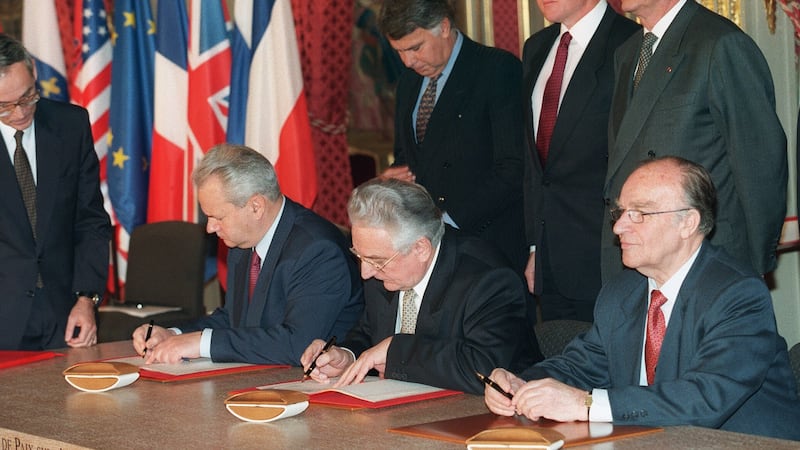
“We’re not interested in imposing a vision of a society that reflects the preferences of distant bureaucrats and narrow activists,” deputy secretary of state Christopher Landau said in Dayton, Ohio in May in a speech marking the 30th anniversary of the signing of the peace agreement which ended the war in Bosnia.
“Endlessly expansive policy, without restraint and historical humility, becomes an enemy of strategy and constitutional statecraft,” he said.
For Dodik, the deal is the culmination of a year of back-room manoeuvres. When Trump was re-elected last November, Dodik was jubilant, sensing an opportunity to end his international isolation, and he soon began recruiting lobbyists. By January, his office had signed its first agreement with the lobbying firm Zell & Associates.
Their objective, according to US government legal filings, was to “eliminate” sanctions on Dodik and his allies, and “to promote the public re-examination of the Dayton Peace Accords” within the US.
Over the course of 2025, Republika Srpska would sign contracts worth hundreds of thousands of dollars with four US lobbying firms which sought to cast Dodik as a kind of Trump of the Balkans – a provocateur and a victim, hounded by prosecutions that they claim are politically motivated – and the people of Republika Srpska as persecuted Christians, a popular cause in Trump’s Washington.
Dodik’s overtures “pushed all the buttons for various folks who are true believers”, said a person familiar with the matter.
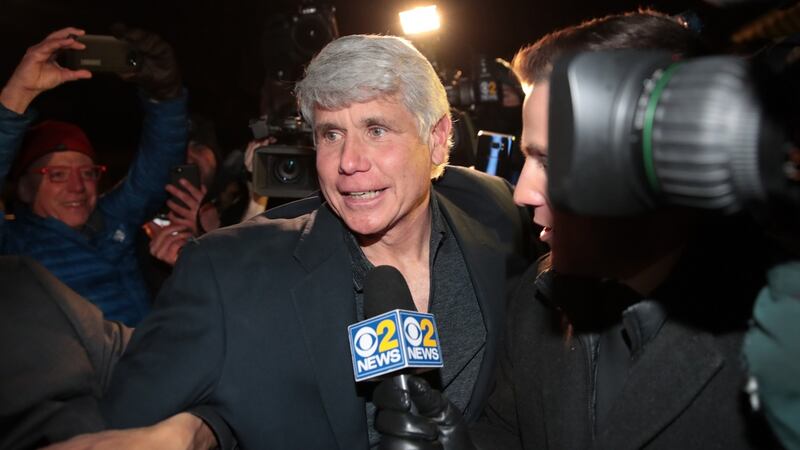
Blagojevich, whose firm was one of those hired by Republika Srpska, characterised the charges against Dodik and other officials in the enclave as “non-crimes” in an interview with the Financial Times. “This is a subject that I’d consider myself an expert on because I did eight years in prison for non-crimes,” he said.
Over the year Dodik and Srpska – which has a population of 1.2 million people, more than a third of Bosnia’s multi-ethnic total – began to attract the attention of other Trump allies, including Giuliani, unofficial White House adviser Loomer and the president’s former national security adviser Michael Flynn.
“Joining forces with strong nations and strong leaders like @MiloradDodik can beat back the GLOBALISTs who seek all of our demise,” Flynn wrote in a post on social media in August.
In an apparent appeal to Trump’s interest in business deals linked to diplomacy, Dodik urged the US to take advantage of mineral deposits, including lithium, in the east of the country. The deposits, however, are unexplored and undeveloped.
In the months leading to the US decision to lift sanctions on Dodik, US and European officials were growing increasingly concerned that Bosnia was careening towards a crisis over Dodik’s refusal to obey a court order telling him to step down from the presidency and accept the national capital Sarajevo’s legal authority over Republika Srpska.
Behind the scenes, US officials told allies in Europe and briefed Congress that they would be willing to lift sanctions on Dodik and his allies as an incentive for him to step down.
On the face of it, their strategy appears to have worked. At the end of September, Dodik agreed to step aside and asked the national assembly of Republika Srpska to appoint an interim president. He also rescinded Srpska laws which had defied Sarajevo’s authority.
It is not clear, however, whether Dodik really intends to retire to the sidelines. When the sanctions were lifted there were hopes he would tone down his inflammatory rhetoric, said Inzko, the former high representative. But Dodik, he said, believed the United States had given him a free pass on his rhetoric “which has actually worsened”.
Dodik did not reply to questions sent through an aide. In November he appeared to be back to his old hardline self, extolling the virtues of an independent Republika Srpska again.
According to Jasmin Mujanovic, a political scientist specialising in the western Balkans, that was to be expected. “I can’t imagine the Americans didn’t anticipate that,” he said. “But they clearly feel whatever they got in return was significant enough to turn a blind eye.” – Copyright The Financial Times Limited 2025


