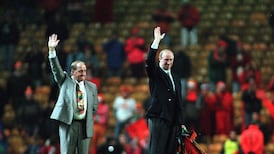
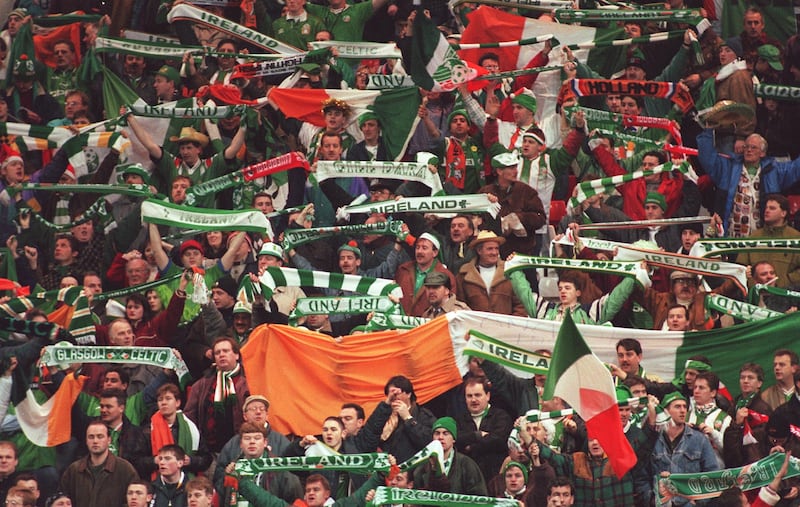
It ended in a strange kind of euphoria. Ireland had been gutted and filleted 2-0 by the Netherlands in a Euro 96 play-off at Anfield and at the final whistle thousands of Irish supporters stayed behind for a joyous wake. And because the crowds wouldn’t leave, Jack Charlton set off on a sheepish lap of honour, holding a Dutch flag and an Irish scarf in one hand, and nursing a lit cigar in the other.
The Irish fans on the Kop belted out You’ll Never Walk Alone, in harmony not just with the place but with the sentimentality of parting. Charlton held on for a week and tried to postpone a decision on his future as Ireland manager until the New Year, but he had lost control of that process.
Over the previous 12 months, results had gone the way of every stock market bubble: held to a scoreless draw by Liechtenstein, beaten home and away by Austria, thrashed by Portugal in Lisbon. Drinking stories had leaked out, team discipline had cracked, the magic carpet was grounded.
In his autobiography Alan McLoughlin tells a story of a trippy video analysis session in the build-up to the Holland game. “As the camera scanned across the two teams standing for the anthems it showed 11 anonymous faces in orange shirts surrounded by an empty stadium.
RM Block


“I squinted at the Dutch team on screen, unable to make out Kluivert, Bergkamp or any of their other stars. After five minutes it became abundantly clear to everyone that this was a video of the Dutch under-21 team. Everyone, that is, apart from Jack and Maurice [Setters, Charlton’s assistant].”
Ireland started that game with two full backs in midfield and finished it with seven defenders on the pitch. Searching for a goal in the closing minutes, John Aldridge was replaced by Alan Kernaghan, a centre-half. The cupboard was bare.
It is 30 years since that match: December 13th, 1995. Everybody knew where we had been and, just like with the Celtic Tiger, nobody thought we’d ever see a poor day again. But if this was such a transformative period in Irish football, what is its legacy now? Or was it just something of itself?
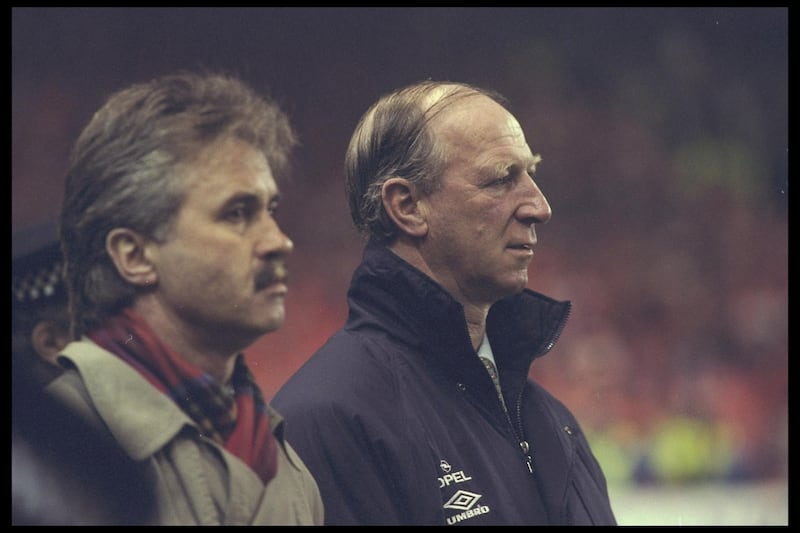
Some of the stuff that changed first and most dramatically had a flighty quality. In the lead-up to Euro 88 Ireland played three home friendly matches against Romania, Yugoslavia and Poland, attracting pitiful crowds of 15,000, 12,000 and 18,500. Many of the people who would later swear a blood oath to the Boys in Green were nowhere to be seen.
After the tournament, though, packed houses became the norm. A whole subculture developed around the team. There was a commercial scene, a pub scene, a celebrity scene, a media scene, a bandwagon scene. Even people who weren’t emotionally invested in Irish soccer or particularly interested were caught being curious. Some of that was wholesome, a lot of it was disposable, elements of it have survived.
I remember Packie Bonner coming to New Ross after Italia 90 .. He arrived by helicopter ... It was like U2 had come to town
— Kevin Doyle
Looking back from this remove, the greatest dividend of the Charlton years was propagation of the faith. Driving through villages in the 1980s you didn’t expect to see a soccer pitch, but it would be astonishing if you didn’t see one now. The game spread like clover.
For generations soccer had been concentrated in cities and towns, but during the Charlton years and afterwards it blossomed in places where the GAA had an uncontested lead. When Sean O’Keeffe first took on a role with the Kerry District League in 1989 it was home to no more than 20 clubs; in the years since, those numbers have doubled.
“It was hard to get soccer established,” says O’Keeffe, “but out in the country fellas decided they wanted to play soccer because they were watching the Charlton era. We had no facilities. Fellas rented a pitch off a farmer, stuck up some nets and off they went.”
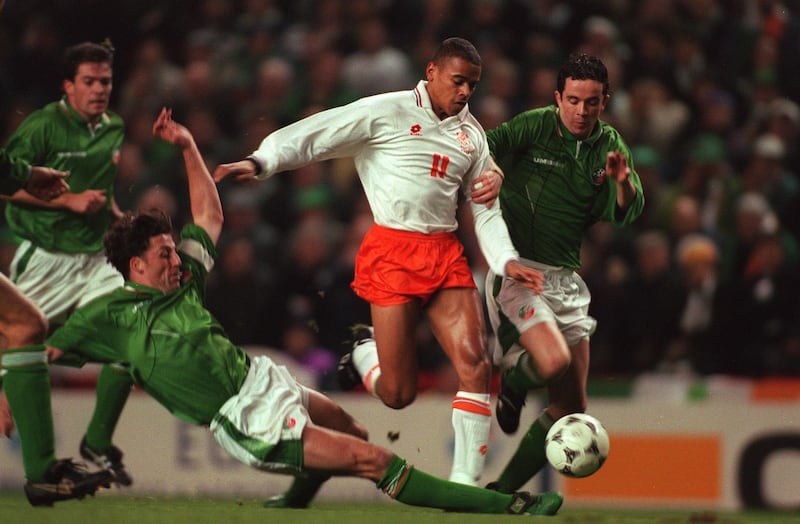
But none of that nationwide expansion was systematic. The chemical reaction between the team and the greater public didn’t escape from a FAI laboratory. It happened around them and in front of them and maybe in spite of them.
“It was an organic growth,” says Brendan Menton, former general secretary and treasurer of the FAI. “I don’t think the FAI had that much to do with it. I don’t think it was an overriding strategy. It was spontaneous.”
Noel Kennedy was secretary of the Connacht Football Association for 23 years and is still secretary of the Sligo-Leitrim league. In various capacities, he held a formal role in FAI affairs for more than 40 years. His memory of that time is clear and blunt.
“I don’t think the powers-that-be ever really harvested it [the sudden spike in interest],” says Kennedy. “What you have to look at there is the calibre of individuals involved. Hindsight is an exact science, but they were thrown into a world they weren’t accustomed to.
“Nothing really came down from the FAI to the grassroots. An awful lot came up from the grassroots. There was a seed planted by Jack and the players and it grew – but it wasn’t any magical stroke that the FAI did.”
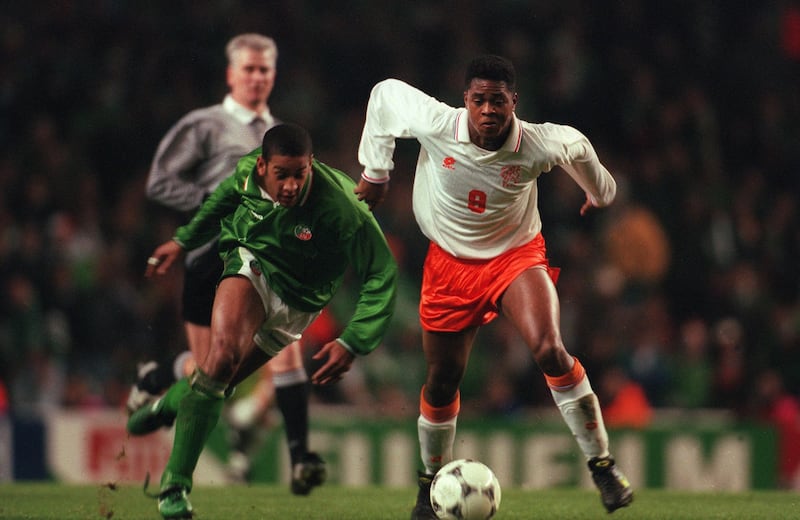
Many of the FAI’s records from that period were lost in a fire in their former offices in Merrion Square years ago but Menton’s recollection is that playing numbers virtually trebled between 1988 and the end of Charlton’s reign – from “80-90,000 to a quarter of a million,” he says.
A generation of young people were swept up on that tide. Kevin Doyle, the former Irish international, was only five years of age when Euro 88 exploded on these shores, but the impression it made on him was immediate and lasting.
“I have vivid memories of being out in the lawn trying to recreate Ronnie Whelan’s volley against the USSR,” says Doyle. “I used to be Niall Quinn, I used to be Packie Bonner. I have massive memories of Italia 90 and USA 94 – trying to do Ray Houghton’s goal [against Italy].
“I’d be fairly confident I wouldn’t have been a professional footballer only for Ireland’s success then. My mother is from a hurling family – she played camogie for Wexford. My father would have played underage hurling for Wexford. I had no reason to be into soccer only for the Irish national team doing well.”
Even though Wexford was a GAA stronghold there was a good network of schoolboy soccer teams across the county ever before the Charlton years. In Adamstown, where Doyle was from, there was a club on his doorstep.
“A few things like that aligned for me. All I cared about as a kid was the Irish national team and their games. I have pictures of me in a Dunnes Stores Italia 90 jersey. Every kid where I was from was the same.
“I remember Packie Bonner coming to New Ross after Italia 90 – he was doing a thing for Renault. He arrived by helicopter. My mother brought me and my brother in. It was like U2 had come to town. Thousands of people queued up. I got nowhere near him. That was the sort of hysteria and excitement around the players on the Ireland team.”
But there was no big-picture thinking. There was no scheme in which the bounty from those years could be invested as a nest egg for the future.
“Jack had no interest in football in Ireland,” says Brian Kerr, who managed teams at every level of the game. “He had no interest in underage development. He had no interest in the League of Ireland. He understood that he contributed to the development of the game because of the success.
“The route to that success was making the best of the players who were available and the players that were eligible. He had no interest in developing coaching structures. He did one thing for the managers in the League of Ireland at that time in relation to coaching. In my view it was fairly shambolic. There was nothing in it.”
Before Kerr, Liam Tuohy had been the most successful manager of Irish underage teams. Under his guidance in the early 1980s Ireland had qualified for three successive European Youth Championship finals and a World Youth Championships. Charlton, though, was barely in the door when Tuohy felt undermined by him and resigned. Setters was appointed in his place.
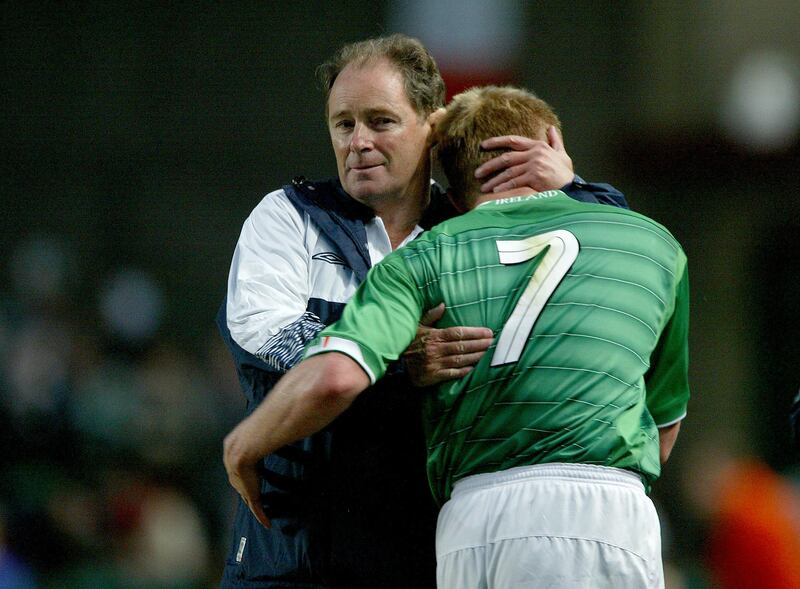
“One of the reasons I went into managing [Irish] youth teams was because of the shambles it had become during Jack’s time where himself and Setters had no interest in it,” says Kerr. “They were taking heavy defeats. They were picking the wrong players. They never looked like qualifying for tournaments and I remember the frustration I felt about that.
“Jack’s legacy was that there were more people interested in the game and the idea that we could be successful. Outside of that I don’t think there was any great legacy.”
[ Jack Charlton obituary: One of Ireland’s greatest adopted sonsOpens in new window ]
Within weeks of Charlton stepping down, the first serious questions were raised about what the FAI had done with the money from the boom years. An investigation by Veronica Guerin in the Sunday Independent revealed dealings with a ticket tout who had stiffed the FAI for a quarter of million euro at USA 94. At a meeting of the FAI council in March 1996 heads rolled in a public bloodletting.
According to Paul Rowan and Mark Tighe in Champagne Football, their seminal book on the FAI, the association “made a loss” from the two World Cups that Ireland had reached under Charlton. At that time, the FAI’s accounts were still kept “in an old fashioned ledger”.
“People forget that not long before Jack took over the FAI were famously close to getting a loan from the junior part of the game to try to keep afloat,” says Brendan Dillon, who was a member of the FAI board when Ireland qualified for the 2002 World Cup. “That’s how impoverished the FAI were.”
Somehow, the Charlton years didn’t change that either.
What were we left with? A soccer pitch in every village in Ireland.