You don’t have to be Solomon to realise that there’s a time for everything, or that the Epsom Derby’s time as flat racing’s most coveted prize is over. It shouldn’t be. But it is. No amount of tinkering by Epsom’s Jockey Club owners can change how shortsighted commercial breeding has made the Derby all but redundant in elite bloodstock terms.
The legendary Italian horseman Federico Tesio famously said the thoroughbred exists because of the Derby’s finishing post. It was an easy statement to stand over when he said it. The annual Derby test around Epsom’s mile and a half used to be the pinnacle of achievement. Tesio’s line gets trotted out annually and it sounds more rote with each passing year.
The Derby is trading on past glories. It happens. Fashions change. Before the second World War, Britain’s biggest all-aged race was the Ascot Gold Cup. The two-and-a-half mile stamina test famously attracted the 1935 US Triple Crown hero Omaha in 1936. His narrow defeat to the Oaks winner Quashed has been widely nominated as one of the great races of the 20th century.
Nowadays, the Gold Cup is effectively a curio when it comes to the flip side of the flat racing coin that takes place in the breeding shed. Stamina is a quality useful only in a jumps sire and in Europe accomplishment at a mile-and-a-half is increasingly viewed as a staying test.
Cutting the Derby trip is the real way to rejuvenate Epsom Classic’s flagship status

Blowers: 300-1 shot becomes joint longest-priced winner in racing history

Professionals are ‘very small percentage’ of overall attendees at racecourses

Hearing into jockey’s unseating by Redwood Queen at Wexford in May set for Monday
Coolmore’s Los Angeles, a Group One winner at two, three, and four, including last year’s Irish Derby, will stand as a National Hunt stallion in 2026. Even a Group One victory this year at 10 furlongs couldn’t make him commercially attractive enough for flat breeders. The capacity to carry speed over distance that once defined class doesn’t cut it any more.
It has resulted in an inevitable slide in the Derby’s prestige. Tesio’s quote and soundbite reassurances about the great old race’s status can’t disguise it. The industry itself doesn’t really believe what it says about the Derby any more. And if racing doesn’t believe it, why should the public buy into it still being the sport’s Holy Grail.
Epsom’s owners, the Jockey Club, have released supposedly radical plans to restore the Derby’s status. It came on the back of June’s attendance figures, where popular opinion voted with its feet. An official tally of just 22,312 watched Lambourn win the 246th Derby. More than 53,000 watched his grandsire Galileo win in 2001. It was anything but Epsom’s famed sea of humanity.
As seems to be a default move by any racing authority, the headline move was a prize money hike to £2 million (about €2.3 million) for the 2026 Derby. The Coronation Cup has been moved to Saturday and boosted to £1 million. Free admission for under-18s and free parking were also part of the package. All of it felt like motion to avoid real meaningful action.
How much a billionaire owner or Sheikh gets for winning the Derby is all but irrelevant for the sort of customers the Jockey Club hopes will fill out the infield to supply atmosphere. Promotion attempts will probably wind up being some variation on the tired old hokum of reflected glamour through C-list celebrities on the make. The Derby needs much more than that.
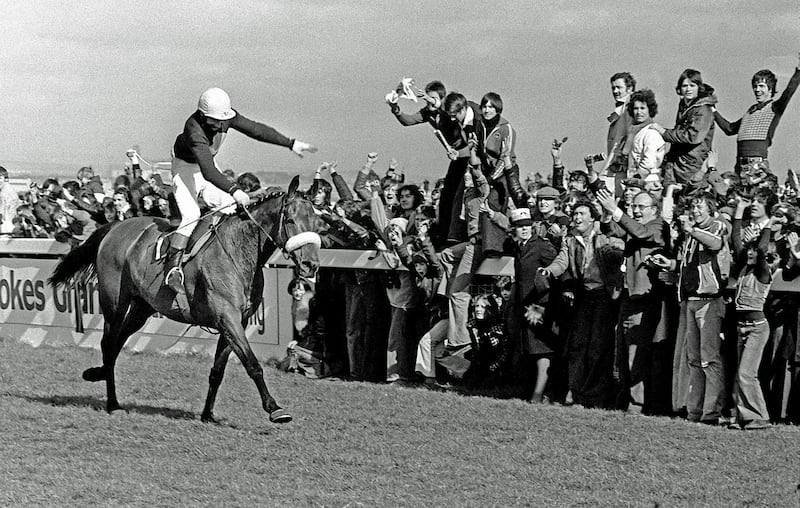
Parallels might be drawn with more than 50 years ago when British racing’s other great attraction, the Aintree Grand National, was all but dead. Its great good fortune was that its most famous star emerged. Red Rum ran five years in a row, won it three times, and captured the public imagination to the extent he remains perhaps the most famous racehorse of all.
A similar stroke of luck is impossible with the Derby. It is a once-off for horses that mostly won’t race more than another year. It means the essential draw must be excellence. The Derby must live up to its billing as the ultimate prize. The Kentucky Derby gets 150,000 fans every year, at least partly due to how no one doubts it’s the biggest show in US racing.
In June, Godolphin withdrew Ruling Court from the Derby just hours before the race because the ground was soggier than ideal. They wanted to protect the colt’s future racing prospects at a mile. It was a pragmatic but gutless decision, and it cut the ground from underneath humbug about the Derby being the ultimate.
It left Coolmore to win once again in a display of excellence that unfortunately generated a ho-hum atmosphere. The great irony is that no operation has commercially transformed the bloodstock sector to the Derby’s detriment more than Coolmore. But without its staunch support the race would have been devastated long before now.
The bitter reality is, though, that two of Coolmore’s most high-profile new sires, City Of Troy and Auguste Rodin, are so valuable despite having won the Derby. Lambourn went on to land the Irish Derby, a double not enough to get him a place at stud. He’s luckier than the 2020 Derby winner Serpentine, the first Epsom hero in a century to be gelded, a once unthinkable move.
It’s 20 years since the French Derby was cut in trip to an extended 10 furlongs. A similar step is rapidly becoming unavoidable if the Epsom Derby’s relevance is to be maintained. The same applies to the Curragh version. The only prized mile-and-a-half Derby these days is in Japan, where appreciation of middle-distance class is central to its rise to international superpower status.
The problem here is that advancement has taken place at the expense of improvement. Sadly, it seems to be a case of times changing and the Derby having to change with them.
Something for the Weekend
Friday’s Grade Two at Ascot (3pm) can see the Carlisle winner STEEL ALLEY successfully concede weight to four opponents. VICTTORINO is 3lbs higher in the ratings compared to when successful a year ago in Saturday’s big handicap chase at Ascot (3pm). He cut little ice in Newbury’s Coral Cup but Venetia Williams’s team appear to be in much better form now.