I got into coaching the same way everyone else did. Around this time in late 2023, I was approached by a mate to see if I wanted to help him out with a minor team. I told him I didn’t. He invited me to a training session, which I didn’t want to go to and didn’t speak at. I nevertheless owed it to him to show up and tell him to his face that I didn’t want to do it.
He said no problem. He left it a week. Then he invited me to a meeting outlining their plans for the year with parents and players. He asked me to keep an ear out on their behalf to make sure what they were saying was making sense and was being communicated clearly. Against my better judgment, but thinking this one night would do in lieu of a year’s coaching, I said I’d go. I was duly introduced at that meeting as the team’s new forwards coach, and off I went.
Now this is not the entire truth. But it is nevertheless a lot closer to the truth than you’d think possible. At no stage did I say I wanted the job . . . I just didn’t refuse forcefully enough. In fairness to Cormac, he saw that weakness and he exploited it ruthlessly.
Cormac is an exceptional coach. After a few weeks, I asked him what was the most important thing he could tell me about coaching young lads. His answer was simple. “Keep turning up.”
Ciarán Murphy: One last year of togging out awaits, but I’ve caught the coaching bug
GAA ramps up efforts to tackle ‘unsustainable’ team costs with new licence motion

Tipperary’s Colin O’Riordan makes history as new Sydney Swans AFLW senior coach

Katie Power, leader of camogie’s skorts protest, to sit out 2026 on medical advice

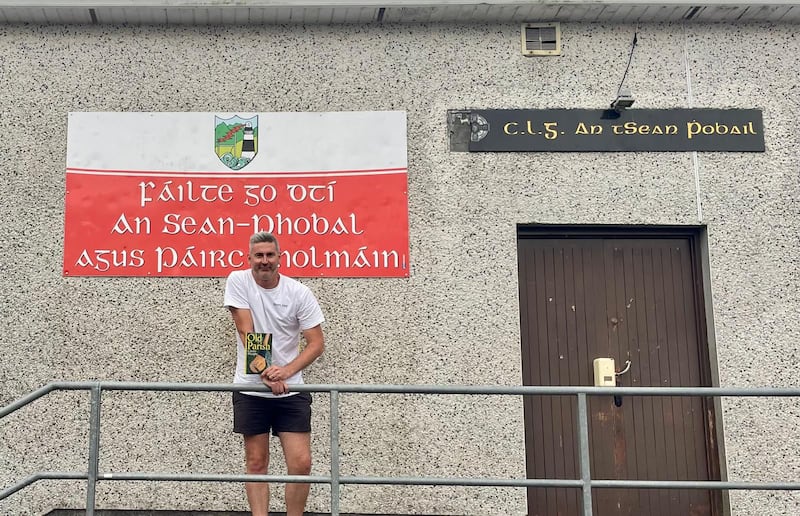
A couple of weeks after that conversation, I got a chance to move down to An Sean Phobal (Old Parish in the Waterford Gaeltacht) to join my father’s old GAA club, become a dual player and write my second book. That meant Cormac’s words rang uncomfortably in my ears for all of summer 2024. I was in Dublin a bit for work, but not enough. I felt like I’d short-changed the team and short-changed myself.
In January this year, after my Waterford sojourn had stretched on into late autumn and had changed my life, I was asked by An Sean Phobal if I’d stay playing with them for another summer. They also asked if I’d help out with the coaching of their football team if and when I was available.
I was simultaneously also asked to return to the minor setup in Templeogue Synge Street. Faced with an impossible choice, wrestling with the fact that I had planned another summer spent roughly equally between Dublin and Waterford, I did what any sane person would do . . . and said yes to both jobs.
Cormac’s words remained at the front of my mind, even as I was roundly ignoring them. So I spent most of my summer devising training plans on the M9 for sessions I couldn’t attend. It was deeply unsatisfying and yet I was surrounded on all sides by good people who more than picked up the slack and drove things on. I contributed what I could while doing neither job satisfactorily.
When it came to the crunch, I got unlucky and we had two direct fixture clashes. I missed our first two games in the Dublin minor championship to be at two losses in the Waterford junior championship. Having to make that choice was devastating, and we lost both minor games too, by a point. And that was that. When you’re a coach of my calibre, you can lose twice on the same day, in different provinces . . . twice.
Coaching adults is obviously a little different, and many of my teammates in Waterford would have preferred the small ball. But Old Parish stayed up in Junior A, and the Synger minors went on a run through the shield to end with a trophy. That meant the year finished on a high at least.
I won’t be coaching in 2026, because injury curtailed my playing minutes this year and I reckon I might have one more year togging out left in me. But I have the urge to coach again soon, and do it right. I know that in huddles I either talked too much (“I’ve made that point already . . . please stop talking . . . please stop talking”), or not at all (“the other lads have said everything here, don’t talk for the sake of it”).
I agonised over training plans to begin with, leaving no room to adapt to what the session was throwing at me. During games, you convince yourself a switch here and there can make a difference, when more often than not doing nothing and trusting your players is the right thing to do.
With the minors, I knew I was there to take some of the pressure off the fellas with kids on the team, who’d been coaching them since they were five. They felt the kids were sick of listening to them – maybe they were just sick of hearing their own voice. I know when the crunch came, the kids were playing for them much more than they were playing for the likes of me.
In the huddle at the end of that minor shield final, deep into November, I found myself with the floor and a chance to talk to them about what a privilege it had been to coach them, and what it had taught me about myself. I couldn’t quite find the words, even when they were right in front of me. The Templeogue Synge Street minor team of 2025 had looked after each other when times got hard off the field, and they did get hard. That was all that mattered. You tell yourself you have an influence, but they learned that lesson the hard way. And they learned it on their own.