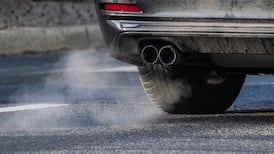
The announcement by the European Commission on Tuesday that it had dropped a complete ban on combustion engines by 2035 was not a surprise in view of developments over recent months, but nevertheless it still looks like a step in the wrong direction.
The European automotive industry as well as countries such as Germany and Italy had mounted a sustained lobbying effort over the past few months to force the Commission to dilute the 2035 combustion engine ban.
The argument for a compromise on the targets may appear compelling from an economic and competitiveness perspective. The European car industry is under pressure from tariffs imposed by the Trump administration and the importation of cheap electric vehicles from China.
Instead of a 100 per cent ban on combustion engines by 2035, this has been reduced to 90 per cent and car manufacturers have been given a longer lead-in time to comply with 2030 CO2 reduction targets. Some offsetting measures were also announced, such as the greater use of green steel made in Europe in manufacturing and the use of bio-fuels in non-electric vehicles.
RM Block


The EU had pledged to be a world leader in the adoption of climate change targets, but the latest announcement shows that its fragile economy is a more important short-term priority. However, economic pressures do not obviate the fact that climate change is an existential threat that will wreak significant damage in the short, medium and long term. Transport accounts for 30 per cent of EU CO2 emissions.
The Sustainable Energy Authority of Ireland annual report published on Wednesday shows that while Ireland’s CO2 emissions have decreased by 16 per cent since 2018, the State is still not on track to meet its legally mandated 2030 targets. Crucially, 93 per cent of Ireland’s transport sector is still powered by fossil fuels. For both Ireland and the EU, the road to meaningful change in CO2 reductions is through decarbonising the transport sector. The European Commission is just delaying the inevitable.