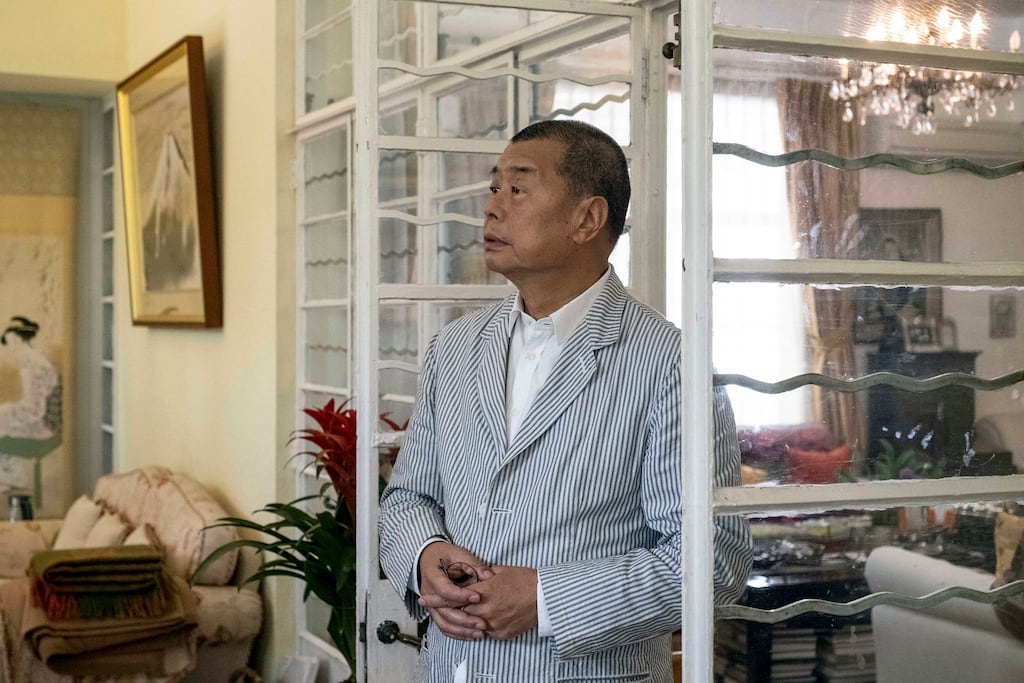
After a 156-day trial, intensely watched internationally, the Hong Kong court’s verdict was rationalised in an 850-page judgement, a measure of how seriously Beijing itself viewed the trial and conviction of newspaper mogul Jimmy Lai. And a measure of how much it needed to justify to the world the verdict of this show trial and the city’s notional commitment to the rule of law since independence from the UK in 1997.
Cast as the instigator of the city’s 2019 pro-democracy protests, Lai was convicted of conspiring to commit foreign collusion and to publish seditious materials through his newspaper, the now-closed pro-democracy tabloid Apple Daily. He denied the charges but can now expect a lifetime prison term.
First arrested in 2020, Lai has spent nearly five years in detention, previously sentenced to a series of terms over alleged involvement in “unauthorised” anti-government protests, a banned vigil in 2020 to mark the anniversary of Tiananmen Square, and alleged fraud at Next Media, his media group.
He responded to prosecution claims that he had supported international sanctions against Hong Kong, insisting that he had not done so after the passage of the draconian national security law (NSL) in 2020, which the authorities have used to crack down on dissent. But “the only reasonable inference we can draw,” Judge Esther Toh told the court, “ is the first defendant’s only intent - whether pre- or post-NSL - was to see the downfall of the CCP [Chinese Communist party].” This was despite the judge claiming he was not on trial for his political views.
RM Block


In parallel, on Sunday, under pressure from the authorities, Hong Kong’s biggest pro-democracy party, the Democratic Party, voted to dissolve after more than 30 years of activism. Beijing has “reformed” the city’s electoral system, permitting only pre-approved “patriotic” candidates – the system has struggled to gain public support, recording its second-lowest turnout on record in legislative elections last week. This was the people’s verdict, but Beijing does not appear to care.