
For a first-time EV buyer on a budget
EV buying? On a budget? Yes, it’s really true. In fact, most of the cheapest new cars currently on sale — the Dacia Spring, the Leapmotor T03, the Hyundai Inster, the BYD Dolphin Surf — are all fully and only powered by batteries. The era of the cheap electric car, for all the grumbling on Facebook (yes, we know you’re going to keep your diesel Avensis ...) is upon us. Which means that not only does the first-time EV buyer now need only to have a much smaller budget than before, they’re also able to buy some of the best new cars around. And, better yet, if you’re careful with your home electricity tariffs, you can run any of these cars for absolute buttons.
- Best: Hyundai Inster

We’ve mentioned the Inster before in our other 2026 Best Buy lists, but it bears repeating that this is a total little superstar of a car. True, it’s not as much out-and-out fun to drive as the Renault 5 E-Tech, but it’s a little more versatile and practical in its interior packaging, with much more space for rear seat passengers if you slide the back seats all the way to the rear. It may lack the Renault’s handsome good looks too, but then there’s a sort of characterful spark to the Hyundai’s slightly odd mixture of round and square exterior shapes. And its dashboard proves that Hyundai (and by extension, Kia) still has a better handle than most on how to make a big touchscreen and practical buttons work together. Combine that with a budget-friendly price, and you’ve got a winner.
- Also try: Renault 5 E-Tech

A starting price of just under €26,000 isn’t quite buttons, but it’s certainly not too much to ask for one of the most stylish and striking new cars around, electric or otherwise. Renault’s former chief executive Luca De Meo struck automotive gold when he spotted a styling proposal for this new Renault 5 — cunningly left where he couldn’t miss it on a tour of the studio — and instantly snapped his fingers and said: “Build it. Like that.” The retro-futuristic styling would be good enough on its own, but underneath the little 5 is just so brilliant. It’s not epic when it comes to long ranges - 320km real-world is your lot, even with the big 52kWh battery - but what makes the 5 great is the way its chatty, interactive steering responds; the firm, authoritative feel of its brake pedal; and the way the whole car seems to move as one, rotating around your hips. You’d think that all cars, electric or otherwise, would be able to do that. But no, and the 5 still feels startling because of that.
[ Best cars to buy in 2026: from family EVs to city runaboutsOpens in new window ]
- Also try: Fiat Panda-e

Across three brands — Fiat, Citroen, and Opel — the Stellantis Group is launching a whole series of closely related small electric and hybrid models, based on a new cut-price ‘Smart Car’ (nothing to do with the Smart brand) platform. But where the Opel Frontera and the Citroen C3 have suffered a bit too much from cost-cutting, the little Fiat Panda-e is positively bursting with character that allows you to look past the cheap plastics and awkward driving position. For Pete’s sake, this Panda even has an optional bamboo dashboard (yes, they are trying hard) and the clever self-retracting AC charging cable is such a simple idea you wonder why everyone hasn’t thought of it. The Panda isn’t the sharpest thing to drive, but at least it looks cool, and that’s what counts.
RM Block


- Wild card: MG S5 EV

It’s taken a little while, but you get the feeling that reinvented MG — owned by China’s vast SAIC group since 2005 — is finally hitting its stride. A case in point is this MG S5 EV, a small-ish crossover that leaves most of its European rivals reeling in its wake. Smart-looking, roomy, and with an interior that shows MG’s engineers have discovered both high-quality plastics and actual physical buttons, the S5 also has a very solid, usable range from its two battery sizes. The only flaw? It’s merely decent to drive, lacking the sparkle you might expect from a brand with such an amazing sporting lineage.
For rural drivers
It’s an oddity that rural driving is actually spectacularly well-suited to electric cars, but still, few rural drivers will countenance buying and running an EV. Neil’s mother is the perfect example. She has her own driveway for easy charging and never drives further than the 100km or so that takes her from west Cork to Cork City. Like many rural drivers, her daily journeys are quite short, with lots of time for any EV to sit and charge up without interruption. Yet she won’t be parted from her diesel Audi. Many others feel the same, so for this section, we’ve focused mainly on aspects other than the powertrain (although there’s a brilliant electric wild card to consider…).
- Best: Dacia Bigster

There’s a very good argument that the Dacia Bigster is the single best all-round car on sale in Ireland right now. That’s a lofty statement, but let’s look at the hard facts. The hardest fact of which is that the average mid-sized family SUV — the bestselling type of car in the country — has gone up in price by almost €10,000 in the past half-decade. The Bigster is the only such car to reverse that incline, with prices starting at a hair under €30,000. It also lives up to its name by being much bigger and roomier inside than the Duster (in spite of the two cars sharing a common platform), and it’s more refined and comfortable too, with a massive 600-litre-plus boot. The hybrid model is probably about as far down the electric road as most rural buyers are willing to travel for now, and it returns exceptional fuel economy for a big car, helped by the Bigster’s surprisingly trim kerb weight.
- Also try: Skoda Octavia
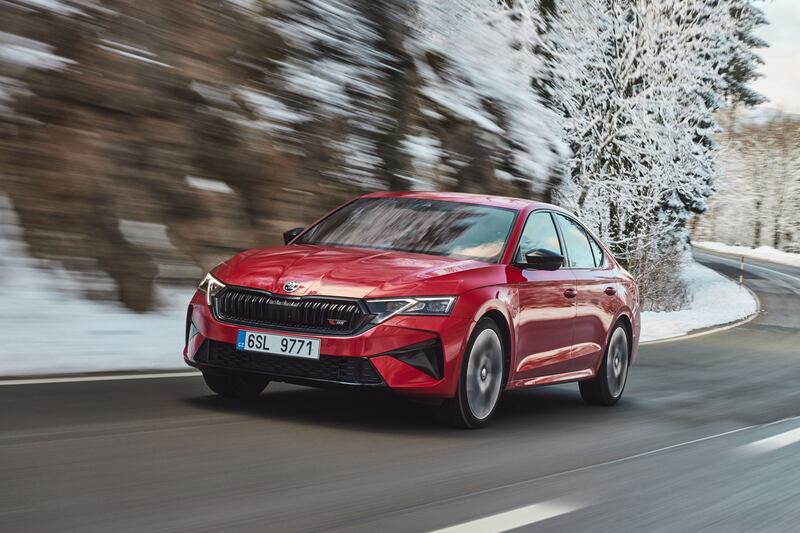
The Octavia has become something of a doyen of the Irish car market, rising to second place in the overall sales charts last year and this, and proving that at least some car buyers can still see sense, and look past an SUV when choosing their new wheels. With the Octavia, you simply don’t need an SUV, as there’s more space in the back seats and in the massive boot than in any comparably priced wannabe-4x4, and that’s without even mentioning the brilliant estate version. The front of the cabin is also beautifully made and hugely comfortable, so we can forgive it the awkward touchscreen. Basic 1.5-litre TSI petrol is the best engine to go for, although it’s hard not to be tempted by the impressive economy of the old-school diesel. The sporty RS is faster and more powerful than before, but a touch less sharp to drive, although still every inch the Farmer’s Ferrari.
- Also try: Toyota Corolla Cross
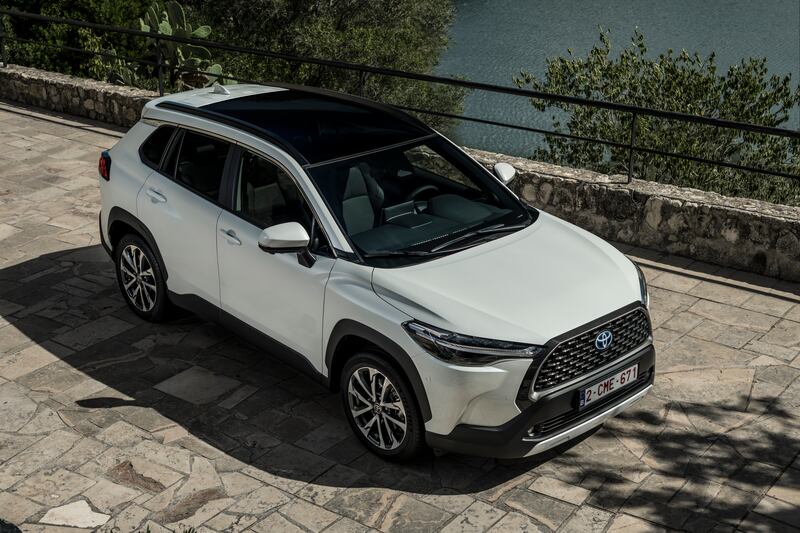
Okay, so SUVs are bad (big, heavy, thirsty, dangerous to others) but none of you like estate cars. So, how about a third way? The Toyota Corolla Cross is, obviously, based on the same chassis and hybrid engines as the standard Corolla (50-million-odd buyers can’t be wrong…). For 2026, the Corolla Cross gets sharper styling, an updated cabin, and the same choice of 140hp 1.8 or 200hp 2.0-litre hybrid engines. It’s simple, it’s frugal, it’s roomy, it’s practical, it has a little extra ride height for coping with lousy rural roads, and it’s a Toyota, so it’s not going to break. When you put it like that ...
[ Looking to buy a new car in Ireland? This is your essential guideOpens in new window ]
- Wild card: Renault Scenic E-Tech
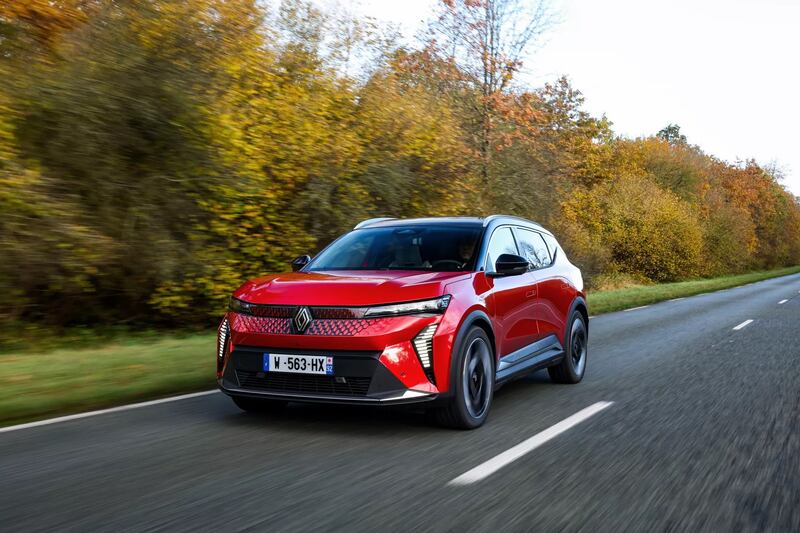
Wait, just hear me out. I know, as noted, rural buyers are still more sceptical of electric cars than their urban counterparts, but this Renault Scenic E-Tech genuinely might be the car to swerve around the scepticism. It’s more affordable than the rival Skoda Enyaq, yet just as roomy, and has a seriously lovely cabin. It’s smooth and pleasant to drive, and feels high-tech without overwhelming you with touchscreens. The long-range model can put a real-world 500km between charges, and probably better than that on lower-speed-limit rural roads. And it can charge at up to 22kW on AC power, so even kerbside chargers won’t leave you hanging around long. Honestly, try it — you’ll like it.
For families needing seven seats
- Best: Hyundai Ioniq 9

We knew the Hyundai Ioniq 9 would be good — after all, it’s based on the same basic set of mechanical and electric bits as the Kia EV9, and that’s a pretty darned good car too — but we just weren’t quite expecting it to be soooooo good. OK, it’s true that the Ioniq 9 isn’t quite as handsome as its Kia counterpart — it’s a bit too smoothed-off at the front, and looks oddly like an old Volvo at the back, but speaking of Volvo, while the new EX90 is slightly disappointing given its massive price tag and unimpressive real-world range, the Ioniq 9 is the exact opposite. It’s certainly not cheap, but it’s sufficiently refined, comfortable, and high in quality that it can compete with more expensive seven-seat premium EVs, such as the Volvo. The Ioniq 9’s real-world range of around 500km is also hugely impressive, as is the genuine adult-sized space in row three. You’re not going to drive an Ioniq 9 for immersive thrills, but you can treat it like your own ground-bound private jet, whisking you effortlessly from point to point. If there’s a demerit here, it’s that some of the cabin trim doesn’t look quite appropriate to the €79,000 price tag (that odd imitation aluminium trim is just ... not nice) but honestly, that’s a minor quibble in a list of merits as long as that possessed by the Ioniq 9.
- Also try: Dacia Jogger

Do you need seven seats in your car? And do you also need something that’s not too expensive? Well, once again when it comes to affordability, Dacia delivers, and the Jogger — which is due for a mild update in 2026, with a new and more powerful hybrid engine option — remains one of the very best all-round vehicles you can buy. Precious few big, chunky seven-seat SUVs offer actual space for fully-grown adults in the back row, yet the compact Jogger manages to do so. And you can whip those seats out to have a huge boot, or even pop in a fold-out bed to turn the Jogger into a compact camper van. As far as bang for buck goes, this is an unbeatable seven-seater.
- Also try: Peugeot 5008
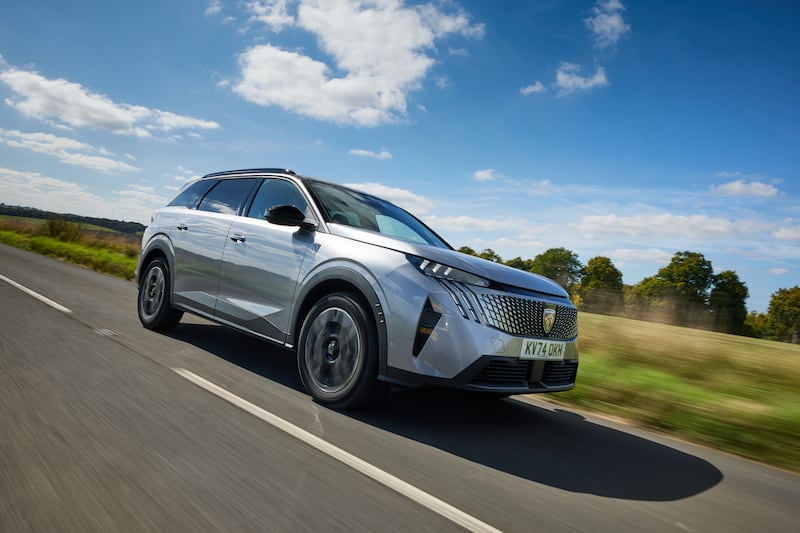
If you want an illustration of just how expensive cars have become, try this — when Peugeot first introduced the 5008 in SUV form in 2017, you could buy one for a hair under €30,000. Now, you can’t get one for less than €50,000 which is quite the chunk of change. Thankfully, the 5008 is broadly worth it, with a gorgeous, classy interior and plenty of space. Row three is for kids only, and the entry-level 1.2-litre hybrid can struggle with the weight, but the EV version is brisk and smooth to drive, and it’s a good-looking thing on the outside.
- Wild card: Citroen e-Berlingo
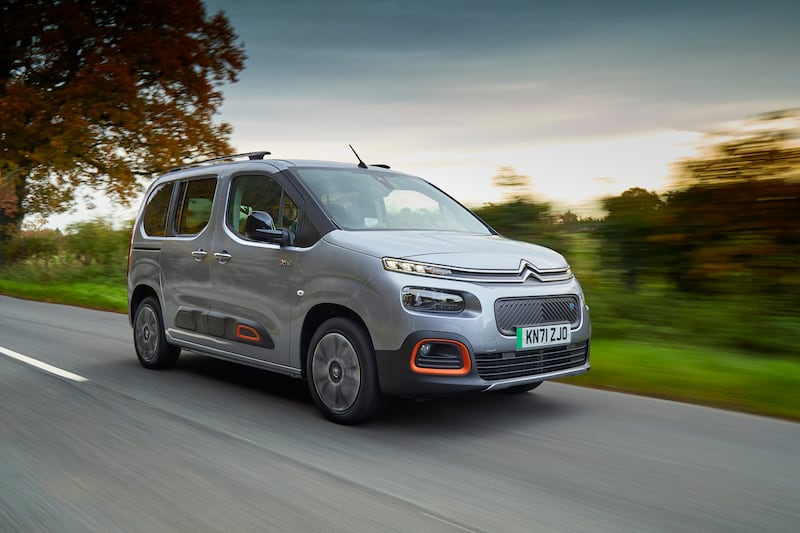
The all-electric Citroën e-Berlingo starts at €36,782 for the five-seater version after grants and VRT reductions. A seven-seat version is available for €38,693. Both variants claim a range of 345km between charges. For that money, which is in line with many family hatchback models these days, you get a spacious and ultra-functional family vehicle. Yes, it’s a van with windows, but there’s a roomy cabin that makes fitting child seats a bit of a doddle, further helped in busy car parks by the sliding side doors. The boot is massive, and it’s well-equipped for the price. The downside? It’s electric, which means a limited range for those long treks across country. As for whether you opt for the Berlingo, Peugeot e-Rifter or Opel e-Combo, there’s not a lot of difference between them aside from aesthetics, so it might well come down to which dealer makes you the best offer and is closest to your home – an important consideration for when things go wrong.
[ Seven shortlisted for Car of the Year 2026Opens in new window ]
For long-distance drivers
- Best: Skoda Superb
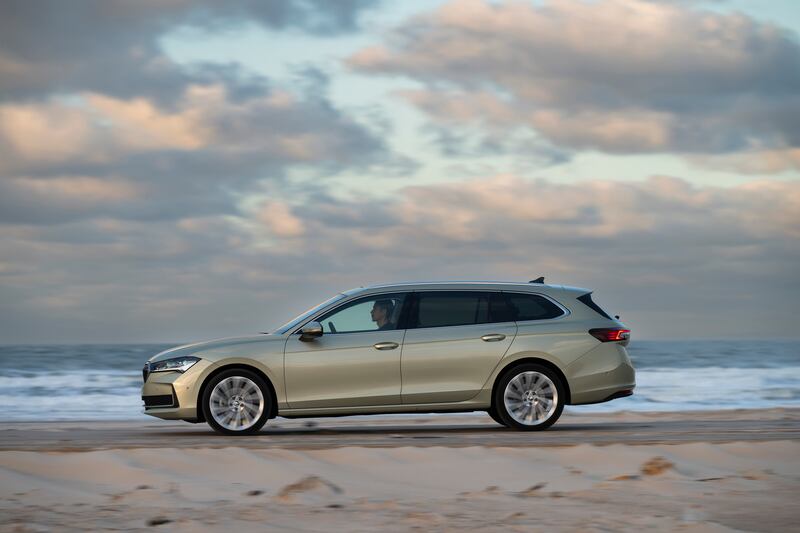
Skoda just gets it. Most people don’t want or need outrageous performance, nor outré styling, nor a badge that doubles as a gold medallion. No, what most people want from a car is space, comfort, reliability, and efficiency. Little wonder, then, that the Superb saloon (and estate) remains a strong seller even in a world gone nutty for SUVs. This generation of Superb looks a touch classier than previous models, with a more, shall we say, assertive grille and slightly sleeker styling overall. Inside, it also looks more upmarket, and the handy multi-function dials are a great solution to the conundrum of touchscreen controls. Space and comfort are just off-the-scale good, although there’s a definite sense that the cabin of this Superb isn’t quite as solidly-built as that of the previous version (that’s the B8 model if you’re a Skoda product code nerd). It’s a €50,000 car now, the Superb, which sounds kind of mad, until you look at the cost of buying a rival model with a genuine premium badge. The best version is the estate, not just for its vast practicality, but because you can have it with an excellent plug-in hybrid system that offers 100km of electric range, but which won’t raid your wallet too badly for fuel on a longer journey.
- Also try: Volkswagen ID.7
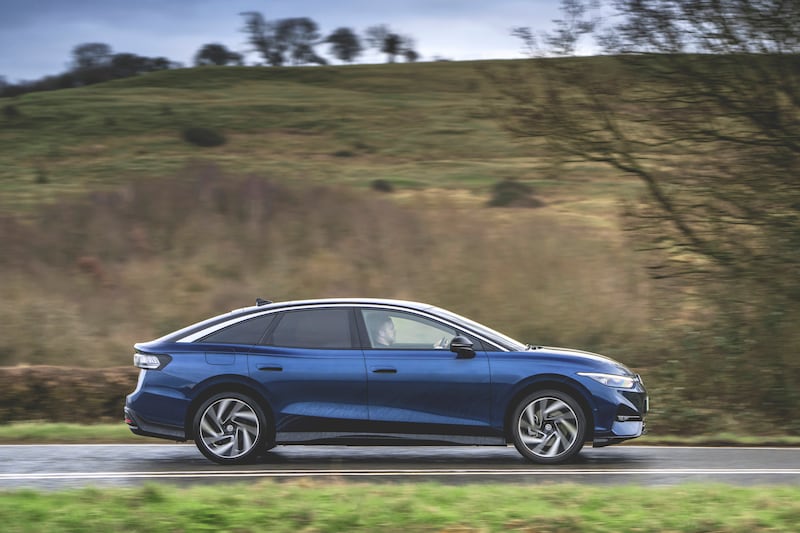
Can you really use an electric car for long journeys? Well, yes of course you can — there’s a couple from England who’ve driven a Nissan Ariya from the North Pole to the South Pole — but in more mundane circumstances, this Volkswagen ID.7 just laughs at the notion of range anxiety. The big-battery version has a claimed 700km range, and can do a realistic 600km between charges, while the 77kWh version offers around 75km more range than the VW ID.4 SUV with the same battery. Space inside is massive, and is even more so in the roomy estate version, and cabin quality is much better than in early ID models, even if the touchscreen remains more of a liability than a benefit. Pricey, but then what isn’t?
- Also try: BMW X3 2.0d

Sometimes, for long journeys, you just need a good old diesel engine, and as there’s no longer a diesel-powered 5 Series nor 3 Series available, the X3 20d becomes, by default, one of the best choices. Actually, that’s underselling it a little, as the X3 is worth a look all by itself. It’s not the prettiest BMW around, and the cabin shows some worrying signs of quality cutbacks, but it’s genuinely rewarding to drive, roomy, luxurious, and will put around 900km between refills if you’re careful.
- Wild card: Volvo XC90

If you have to drive long-haul, you’ll want it to be relaxing, and there are few cars more relaxing than the Volvo XC90. True, you can pillory it for being an aged design (11 years old and counting) and the fact that it’s only available now as a plug-in hybrid means that its thirst can be an embuggerance on a long drive (although if you can afford the lofty list price, this is unlikely to be much of a barrier for you). What the XC90 is, though, is a car that feels much better-finished and more rounded than its all-electric EX90 brother, and it has quite possibly the best seats and the best in-car stereo in all of the motoring firmament, which are major boons on a long run.


