The National Lottery has been accused of using cartoon imagery which appeals to children in its online marketing while a series of newly published research papers also suggest the lottery watchdog routinely downplays problematic gambling associated with the games.
Three studies published out of the Technological University of the Shannon (TUS) this week and involving academics in Cork, Limerick and Belfast described as “particularly troubling” the use of “child-friendly imagery” on official National Lottery web pages.
The researchers also accused the Regulator of the National Lottery of “largely avoiding” terms linked to the risk of gambling in official documentation, and highlighted how the Lottery’s age verification processes can potentially be circumvented with fake IDs.
The first of the studies authored by Professor Anne Campbell of Queen’s University Belfast and Dr Frank Houghton of TUS alongside Mia Daly from University College Cork and Daisy Houghton from the University of Limerick examined National Lottery website content just days before Halloween 2025.
RM Block


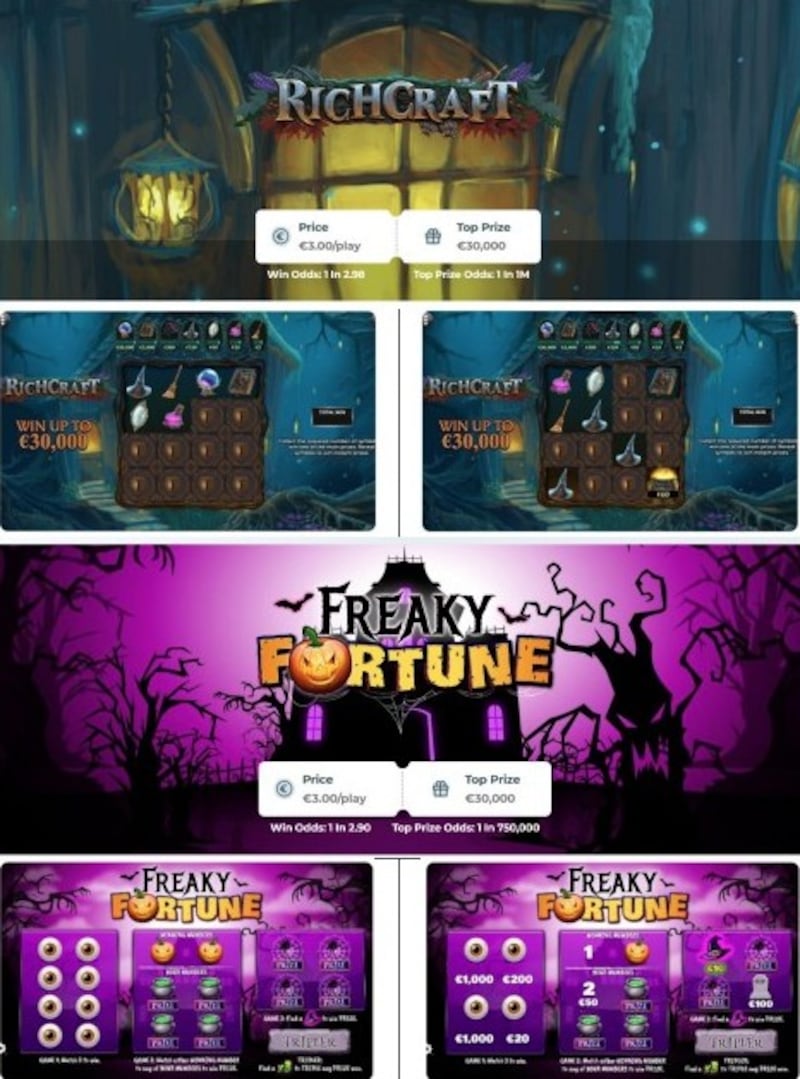
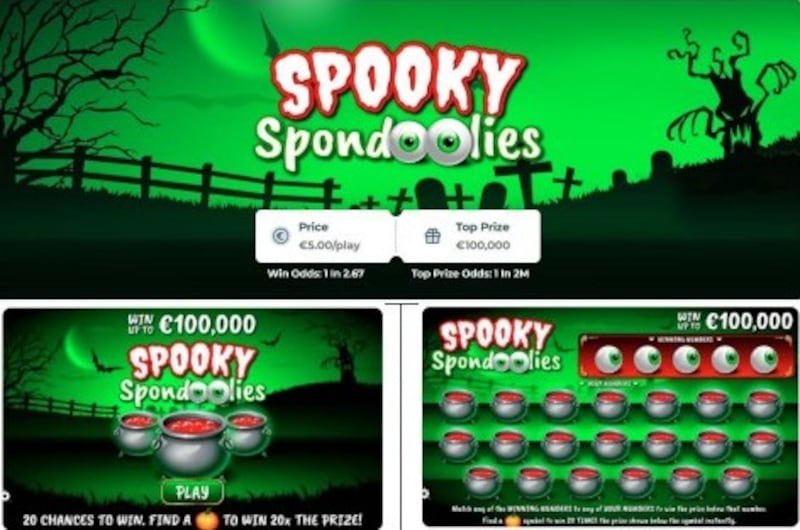
A total of 48 webpage elements were analysed across four pages, including three Halloween-themed instant-win games advertised with cartoon-style pumpkins, witch hats, cauldrons, spellbooks, potions, eyeballs, broomsticks and crystal balls.
An estimated 50 per cent of the elements “exploited children’s susceptibility or inexperience”, the research says, while 42 per cent “used symbols or characters of particular appeal to children”.
The second study analysed the annual reports of the regulator between 2014 and 2024 and found it “consistently” used language such as play and game and emphasised entertainment and good causes while largely avoiding terms linked to gambling risk.
The authors argue that this downplays gambling-related risks and normalises Lottery participation, conflicting with the Regulator’s responsibility to safeguard participants.
A third TUS-led study raised concerns about youth protections and found that 55.4 per cent of fake underage accounts it used were approved by the National Lottery’s online age-verification system, despite using counterfeit IDs produced with basic software.
“Our research shows that the National Lottery is routinely presented as harmless fun, yet the evidence clearly demonstrates significant risks associated with gambling,” Dr Houghton said. “It is particularly troubling that child-friendly imagery appears on official Lottery web pages.”
He said Ireland “urgently needs a public-health approach to gambling regulation – one that prioritises protecting people, especially young people, over revenue generation.”
The National Lottery disputed the findings and told The Irish Times that it “operates under a robust and specific regulatory framework rooted in player protection and community benefit.”
It said it “rejects the authors’ conclusions regarding imagery being of particular appeal to children” and added that a “comprehensive” advertising code of practice “contains specific measures to protect minors, including ensuring imagery is of a general rather than particular appeal to children.”
The National Lottery also rejected suggestions minors could access its games and said it “goes above and beyond its licence requirements to protect against underage play.”
It stressed that despite “highly sophisticated” attempts to circumvent its age verification systems, “our controls, both automated and manual, successfully ensured that there was no play on any of these accounts”.
For its part the Regulator said that the Lottery’s advertising and marketing must conform to a code of practice” with the “specific legal test is that the themes of games must not be of particular interest to children. The Regulator has refused to approve such games in the past.”
With regard to its annual reports it said it was “important to note” they were corporate governance documents with the language used reflecting that fact.
The statement added that it was a aware of attempts last year to open a number of online accounts using what appeared to be fraudulent Government ID documents. “The Regulator is satisfied that no money was spent, appropriate measures were taken to shut down all the accounts in a timely manner, and there was no breach of the Act or Licence.”