

Getting Botox or filler from an unlicensed practitioner can have “devastating consequences”, a doctor has warned.
Dr Caitríona Kieran, vice-president of the Irish College of Aesthetic Medicine (ICAM), said some people view getting aesthetic procedures “in the same way as popping in to get your hair done for Christmas, or a facial”.
But these interventions are “medical treatments” and should be treated seriously, she said.
“If they’re done in the wrong hands, they can have really, really devastating consequences that can even be disfigurement or death.”
RM Block


Deaths from dermal fillers or Botox are rare but do occur, more often when unqualified people use unlicensed products.
Dr Kieran said many unqualified practitioners now offer these services in Ireland.
“There’s just so many people who aren’t qualified or aren’t registered, and it’s really hard for the general public to figure out what is right and wrong.”
Botox injections are commonly used to smooth face wrinkles by preventing muscles from moving for a certain period, and the effect typically lasts for a few months.
Dermal fillers – injectable gels usually made from hyaluronic acid – are used to smooth wrinkles and add volume to a person’s skin or lips.
Before booking a procedure, a customer should check the provider is a registered medical practitioner, said Dr Kieran. This can be done by searching a person’s details on the ICAM database or the Irish Medical Council or Dental Council websites.
Under Irish law only registered doctors or dentists, or registered nurses acting under the directions of a doctor or dentist, are permitted to administer Botox. In November the Irish Medical Council said unregulated Botox treatments can cause “infection, paralysis or life-threatening complications”.
Dermal fillers, which involve injecting gel-like substances under the skin to add volume and smooth wrinkles, can be administered without a professional qualification in Ireland. The ICAM says this needs to change.
The Government has committed, as part of its goals for its five-year term, to ensuring “the administration of dermal fillers is only undertaken by trained healthcare professionals”.
Dr Kieran said any professional who is properly registered and insured should have no issue in providing proof of this. They should also be able to confirm the products they use are CE-marked, signifying they meet EU health and safety standards.
“If they can’t answer those questions or if they refuse to share the proof of it, then I would strongly advise that you don’t proceed with the treatment,” she said.
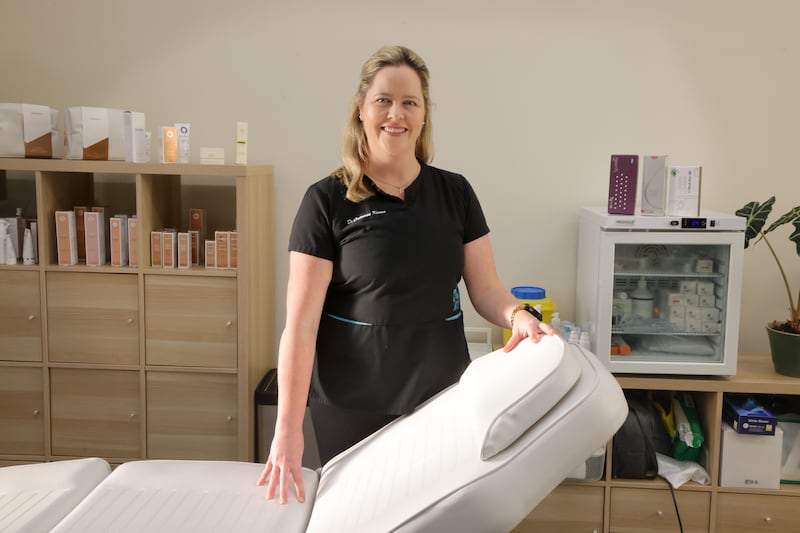
Dr Kieran, who is the medical director at Rae Clinic in Dublin, has had to carry out corrective procedures on people who experienced complications after getting work done elsewhere.
Dermal fillers are not supposed to be administered to people under 18, but she is aware of instances where teenage girls booked appointments to get their lips done together.
“It’s kind of similar to, I suppose, what we would have done with ear piercing when we were younger.”
On one occasion a 15-year-old girl had a bad reaction after getting lip filler.
“I had to cut into the back of her lip and then take out nodules. Her lip will never be the same.”
Dr Kieran said people sometimes develop vascular occlusions – where the blood supply to the area in question becomes blocked off – after dermal filler procedures. In one case a person could have “lost part of their lip” but they received medical help on time.
Sometimes the best course of corrective action is not clear as medics don’t know what was in the product that was administered.
“Then it’s very hard because we don’t know what the product is. We don’t know if it’s something that we can dissolve or correct.
[ Nurse suspended over Botox treatments in Donegal clinicOpens in new window ]
“If the skin tissue dies, then you’re at a situation where you’re looking for plastic surgery for that, and the correction isn’t always very good.”
People can easily be swayed by what appears to be a great deal online, but if the price sounds too good to be true, it usually is.
Kathy, who lives in Cavan, fell victim to this over the summer. She had been going to a licensed clinic for Botox for some time but decided to try a new practitioner after seeing her work online.
“I found this girl on Instagram and I liked the shape of the lips she was doing,” said Kathy, who did not want her surname published.
She was happy with the results of the filler, so she decided to go to the same person for Botox.
“The price was very, very cheap,” she said, admitting this was a red flag.
During the procedure, Kathy said the woman injected into “different” parts of her forehead than areas she was used to.
Botox can take up to two weeks to fully kick in, and some bruising is common during that time.
At first, Kathy said, she did not notice much of a difference after the procedure. However, on the 14th day, the skin above and around her right eye dropped significantly.
“The brow had dropped so badly that I couldn’t basically open my eye,” she said.
The next day, the same thing happened to her left eye.
Kathy had never had a reaction like this when previously getting Botox. She contacted the provider, and the woman injected the area again to “lift” the skin. This made the situation worse, said Kathy. She developed ptosis, causing her eyelids to droop.
“I have been crying basically since, the two eyes completely dropped,” Kathy said, adding it was “hard to actually see”. She also experienced bad headaches after the procedure.

Kathy said she contacted the woman again via Instagram but she refused to answer questions and then blocked her.
“I don’t know what she gave me. Was it even Botox? She wasn’t a dentist and she definitely wasn’t a nurse.”
Kathy went back to her regular practitioner who was able to correct some of the results but, six months later, the skin around her eyes is not back to normal. She hopes this is temporary.
Kathy said she should have known better and would never go to an unlicensed person again.
“Instagram is so, so fake ... You really don’t know who you’re dealing with,” she said.
Dr Kieran advises anyone who suspects they have suffered adverse effects from a procedure to contact a medical professional as soon as possible.
“If you feel it’s wrong, just please get in touch because it’s much easier to deal with earlier, rather than later.”


