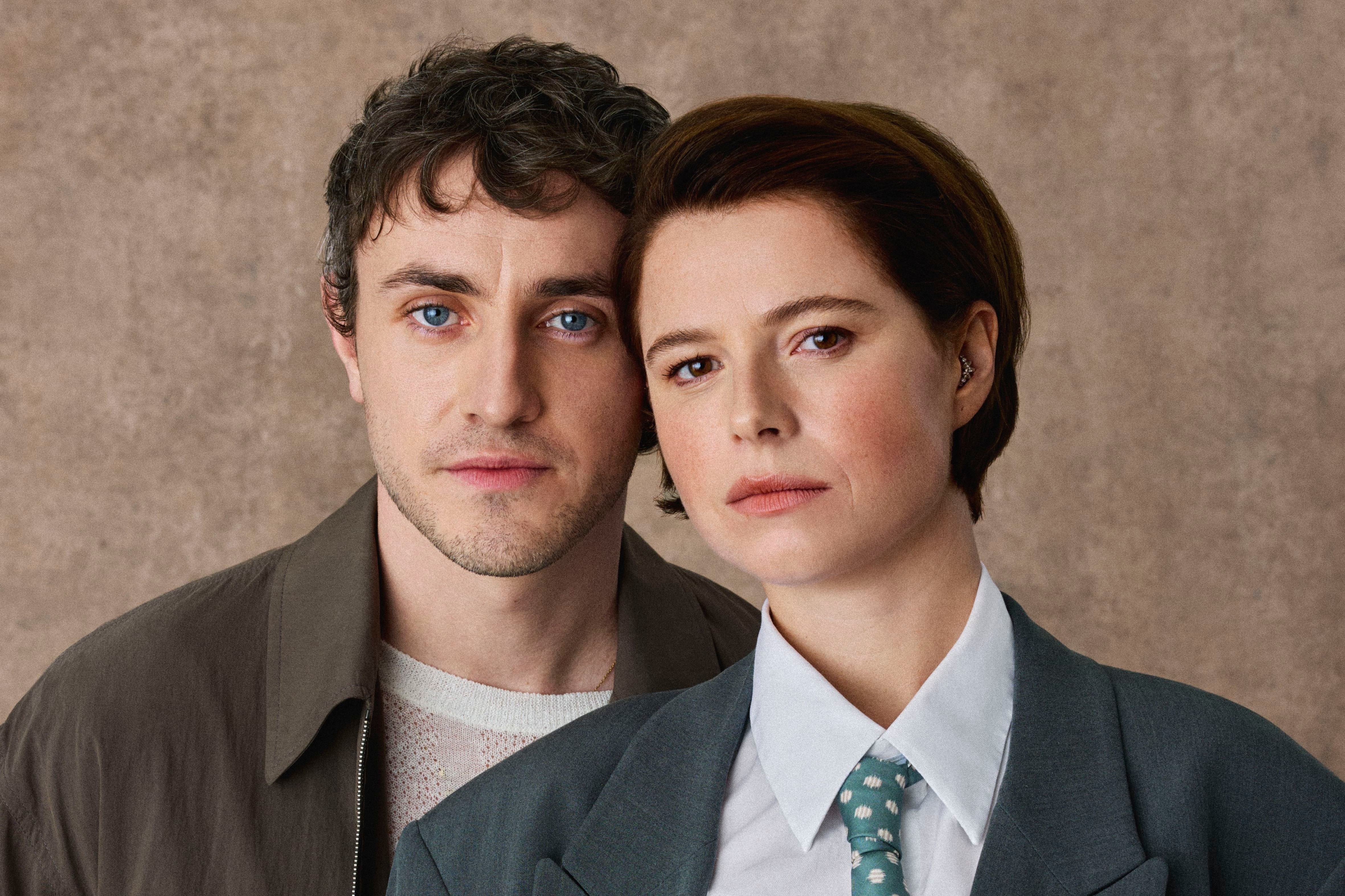
Elle Fanning and Inga Ibsdotter Lilleaas, the stars of the awards-season favourite Sentimental Value, are contemplating the emotional responses to the film that they’ve observed.
“It’s so fascinating to meet audiences and hear their spontaneous reactions,” Fanning says.
“People share so much personal stuff. It’s like an instant connection you have with people. It’s very healing. Someone said they hadn’t talked to their father in however many years and they came out of the movie and called him for the first time in so long.”
Joachim Trier’s follow up to the Oscar-nominated The Worst Person in the World unfolds as an unstable hybrid, hovering between spiky movie-industry satire, bruised family melodrama, Nazi-resistance ghost story and study of darkest depression.
RM Block


The Norwegian director’s late near-neighbour Ingmar Bergman would surely have enjoyed the misery. The film was certainly a hit with the jury at this year’s Cannes film festival, who awarded it the Grand Prix – essentially second place. Multiple Oscar nominations are expected.
Sentimental Value is not always agonising. Its narrative keeps veering off-road, as though Trier were testing how many tones a single movie can survive. What begins as a whimsical comedy, with a wry monologue about the Oslo house where the featured Borg family have lived for generations, swerves into a character study of a self-deluding, once-important filmmaker, Stellan Skarsgard’s Gustav.
For a time the plot solemnly centres on two sisters, Agnes and Nora, played by Lilleaas and Renate Reinsve, who are sorting through their family home – a dream house scarred by divorce, neglect, intergenerational trauma and the suicide of their paternal grandmother – only to pivot again into Hollywood farce when Rachel, Fanning’s American starlet, swoops in to rescue, and complicate, Gustav’s comeback bid.
Skarsgard’s problematic family patriarch has written a role in his new film for his daughter Nora, but she turns him down. The part, which was inspired by his own tragic mother, is offered to Rachel, who is in turn encouraged to mimic Nora. Her fame brings Netflix on board as financiers.
These tonal shifts partly developed during rehearsals. Trier and his co-writer, Eskil Vogt, typically develop their scripts in ways that blend theatre-like preparation with improvisational freedom.
“The comedy didn’t resonate with me as much as the melancholy and the love my character feels for her family,” Lilleaas says. “She has a desperate need for them to be whole, and she feels responsible for keeping them together, especially her sister. That influenced how I approached it, so the comedy faded, and she became more sensitive and fragile.”
[ The 50 best films of 2025 – a full list in reverse orderOpens in new window ]
Lilleaas, who has been acting in her parents’ theatre company since childhood – including in a youthful production of Samuel Beckett’s play Waiting for Godot – auditioned for more than six months to land the role of Agnes. She beat at least 100 other actors who tried out for the part. Last month she was nominated for best supporting performance at the Oscar-predicting Gotham Film Awards.
“The script for Sentimental Value was like reading a novel. It felt very alive. It was well described but also left so much to the imagination,” she says. “As an actor that’s a gift, because there’s room for you.”
Trier is very much an actor’s director, having built a career exploring characters who dissect themselves from the inside out. He has always gravitated toward protagonists who probe and poke their own psyche until a fleeting insecurity mushrooms into existential catastrophe.
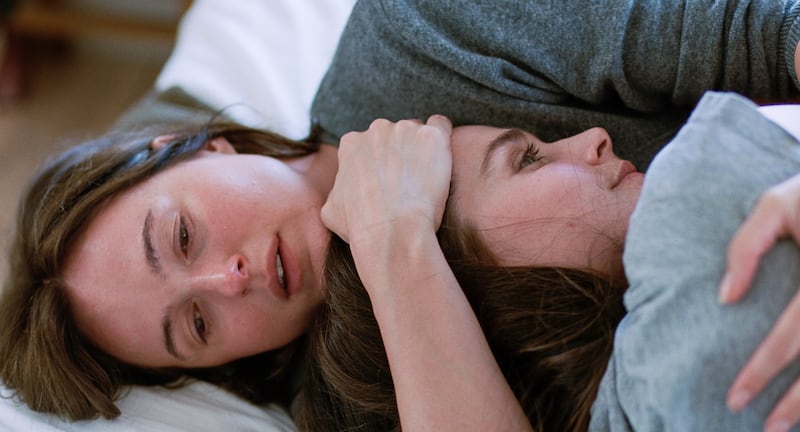
Their Nordic introspection tells them that the stakes are enormous while the world around them fails to notice.
“I’ve seen his movies since Reprise, in 2006,” says Lilleaas, a long-time fan. “My friend showed it to me in my 20s. I thought it was so natural, intimate, funny and moving. Then I saw Oslo, August 31st in the movie theatre. That was such a big emotional experience.
“I always hoped I’d work with him. But after Worst Person in the World I thought maybe he’d leave and make movies somewhere else. Luckily, he stayed in Norway and keeps making Norwegian films.”
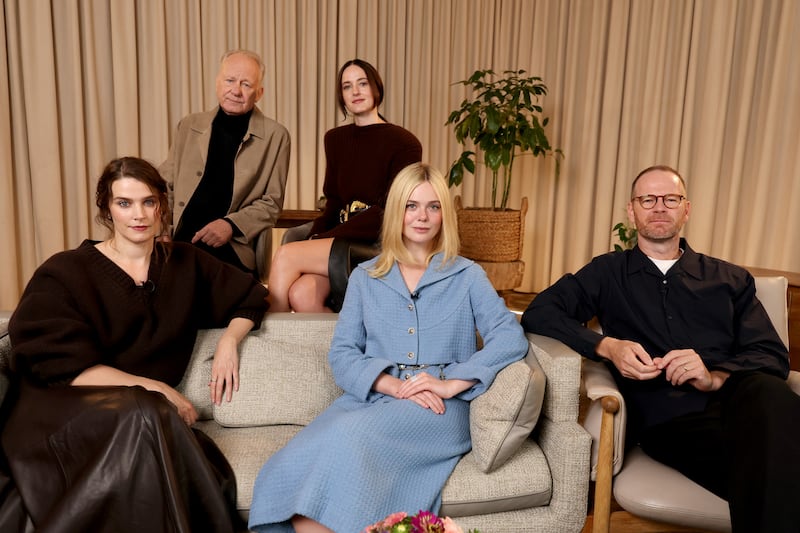
The Worst Person in the World, which with those two films make up what became known as his Oslo trilogy, propelled Trier to international prominence. Also written with Vogt, his long-time collaborator, the film inverted the romantic-comedy template around Reinsve (a Trier favourite) in a breakout, Bafta-winning performance. The film was also nominated for two Oscars.
“I had seen The Worst Person in the World; that’s how I was introduced to Joachim,” Fanning says. “I’ve now gone back and watched the others. I fell in love with that film, as so many people did. I was a fan, but I never expected he would ask me to be in one of his movies. I didn’t know if there would be a part for me. When I heard there was one for an American actress I thought, ‘Oh, I can make myself fit that’.”
At 27, Fanning is already a veteran of the big screen. She began her career at the age of three, when she was cast to play a younger version of her child-star sister, Dakota, in the Sean Penn film I Am Sam, from 2001.
“I was just there, and I do look like my sister, and that was that,” she told The Irish Times in 2011. “I don’t remember much of it, only flashes. But I remember I was up for it because I got to swing on a swing. I didn’t even know there was a camera rolling.”
Playing a movie star, you can fall into cliche
— Elle Fanning
Fanning broke through with her role in the JJ Abrams film Super 8. She has subsequently served on the main jury at Cannes and collaborated with Sofia Coppola on Somewhere and, alongside Nicole Kidman and Colin Farrell, on Coppola’s unsettling western The Beguiled. She shared the screen with Angelina Jolie in Maleficent. Her comic performance as the empress Catherine in the TV series The Great earned her Emmy and Golden Globe nominations.
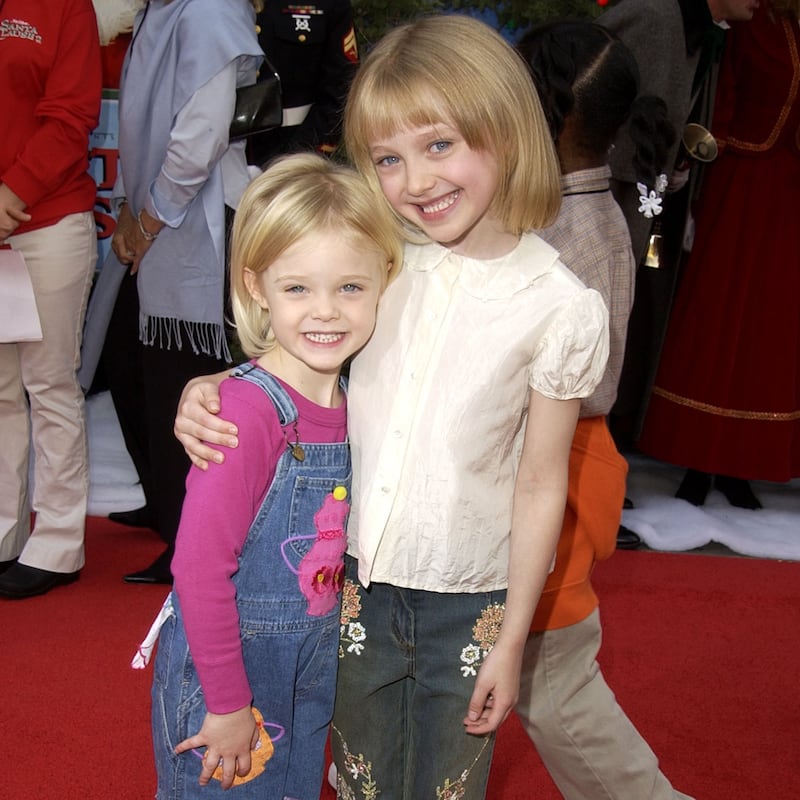
After a scarcely believable 24 years in the business, she now seems close to unavoidable.
Fanning was shooting Predator: Badlands, the box-office smash in which she teamed up with a Disneyfied intergalactic marauder, when she heard about Trier’s film.
“I started crying reading the script,” she says. “The description of the final shot floored me. I had to read it quickly, because I was signed on another film and needed to rehearse soon. I read it that night and did a Zoom with Joachim the next morning.
“After that I had to go straight to Norway and start rehearsing. It was a whirlwind. Very much like Rachel herself going there for the first time.
“I would have said yes to anything if he was directing. I was excited to tap into something I hadn’t done before. And being on a set where everyone speaks Norwegian was actually a relief: I couldn’t eavesdrop even if I wanted to, so it gave me tunnel vision.”
Fanning’s bond with her sister Dakota, star of the Twilight films and The Alienist, was another reason to say yes. “Watching the sisters’ dynamic articulated so clearly – how the protector becomes the protected – made me think about my own sister,” she says. “It resonated so deeply. Joachim really captured what it feels like to grow up beside someone who shapes you.”
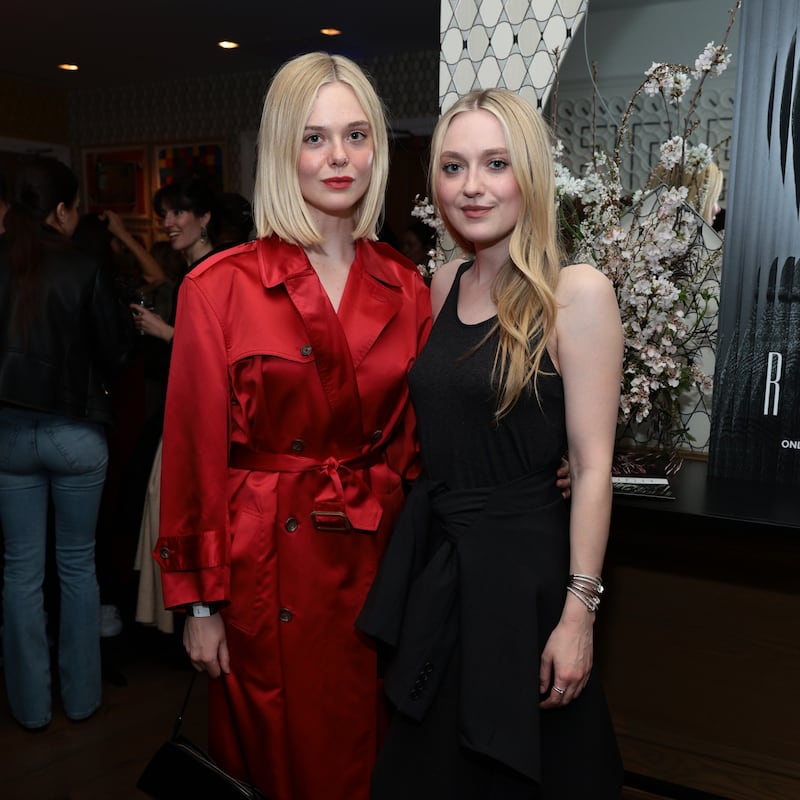
In Sentimental Value, Fanning digs deep for a character who could easily be portrayed as an annoying Hollywood interloper.
“Playing a movie star, you can fall into cliche,” she says. “You know, vapid, one-note, comic relief. But Joachim wanted her to be complex: flawed, struggling with her career, but also brave, kind and curious. The facade fades when she gets to Norway, and she becomes much more vulnerable.”
The film is similarly tolerant of all its characters. As Sentimental Value twists and turns, even the reprehensible Gustav softens around the edges.
“I kept seeing these characters as lost children looking for their parents,” Lilleaas says. “When Agnes realises her father is a lost boy who never learned to express himself, it’s heartbreaking. I carried that with me for the whole shoot.”
One can understand why an audience member rushed out to phone Dad.
Sentimental Value is in cinemas from St Stephen’s Day