
Luc Besson has been one of Europe’s best-known film-makers for more than 40 years, an extravagant visual stylist whose career has weathered commercial highs, financial setbacks and cultural shifts.
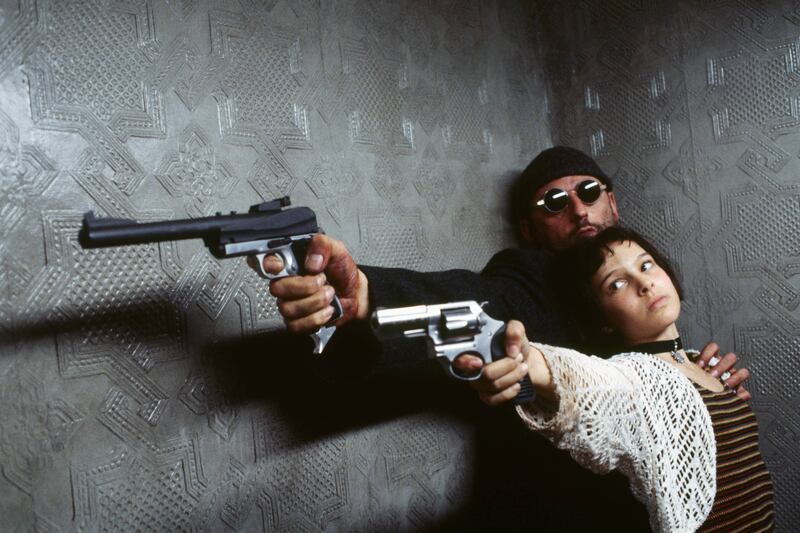
With Dracula he returns to the swashbuckling, maximalist production values that made him – with features such as Léon: The Professional, and The Fifth Element – an auteur superstar during the 1990s.
The new film reunites the director with Caleb Landry Jones, the intense American star of his recent, critically mauled DogMan. Speaking from Paris on a rare break during the filming of Father Joe, a new crime thriller that he has written, starring Keifer Sunderland and Al Pacino, Besson characterises his new muse as a once-in-a-generation artist.
“Caleb is one of those rare actors who gives you absolutely everything – the emotion, the darkness, the fragility, the joy,” he says of cinema’s latest Dracula. “He has no difficulty opening himself completely. And, as a human being, he’s incredibly gentle and polite, entirely focused on the work. He lives a quiet life with his wife, his child, his dog. He’s not distracted by the circus around film-making.
RM Block


“Every morning he’d arrive with ideas – ‘What about this? What about that?’ – always respectful, always generous. If you say no for a good reason, he accepts it instantly. The last time I encountered that level of instinct and dedication was Gary Oldman.”
Oldman worked with Besson on the over-the-top Fifth Element, from 1997. By that stage the director was already a legend. His early career had been defined by very French aesthetic debates surrounding “cinéma du look”, a dismissive label applied to him, Jean-Jacques Beineix and Leos Carax in the late 1980s.
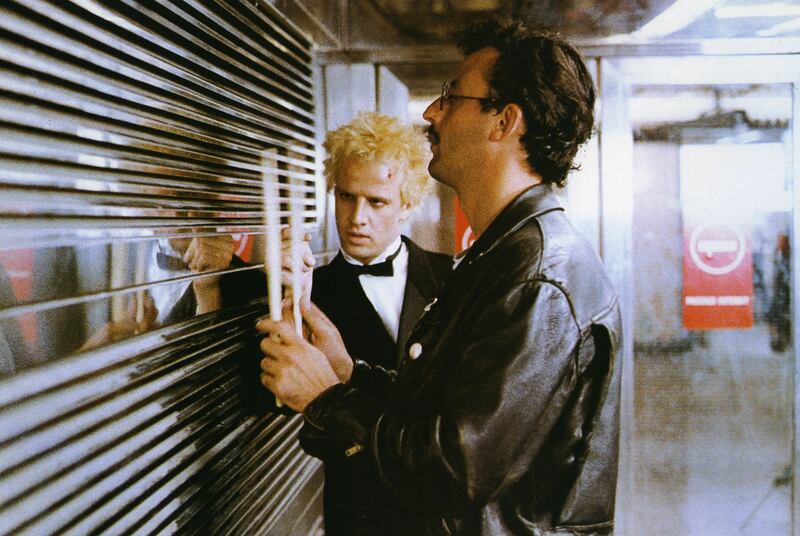
Coined by the critic Raphaël Bassan, the term suggested that these directors favoured spectacle over narrative, pizzazz over coherence. The films associated with it, notably Beineix’s Diva, Carax’s Mauvais Sang (or Bad Blood) and Besson’s slick 1985 thriller Subway, featured neon lighting, fast cuts, youthful frustration and a mix of high and low cultural references.
The movement drew sniffy comparisons to advertising and MTV, and caused some commentators to lament the excesses of France’s disaffected François Mitterrand generation.
Besson defended his approach to the New York Times, drawing parallels with the nouvelle vague of the early 1960s.
“Jean-Luc Godard and François Truffaut were rebelling against existing cultural values and used cinema as a means of expression simply because it was the most avant-garde medium at the time,” he said. “Today, the revolution is occurring entirely within the industry and is led by people who want to change the look of movies by making them better, more convincing and pleasurable to watch.”
You can still detect traces of that philosophy in Besson’s characteristically spectacular, proudly camp reimagining of Bram Stoker’s most famous story.
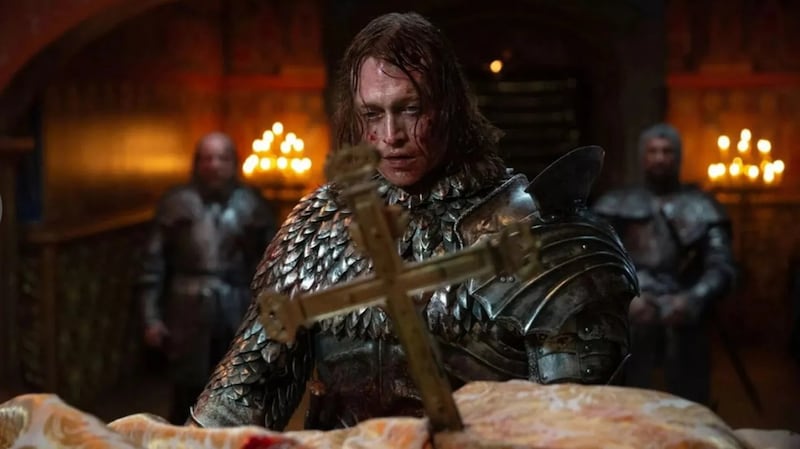
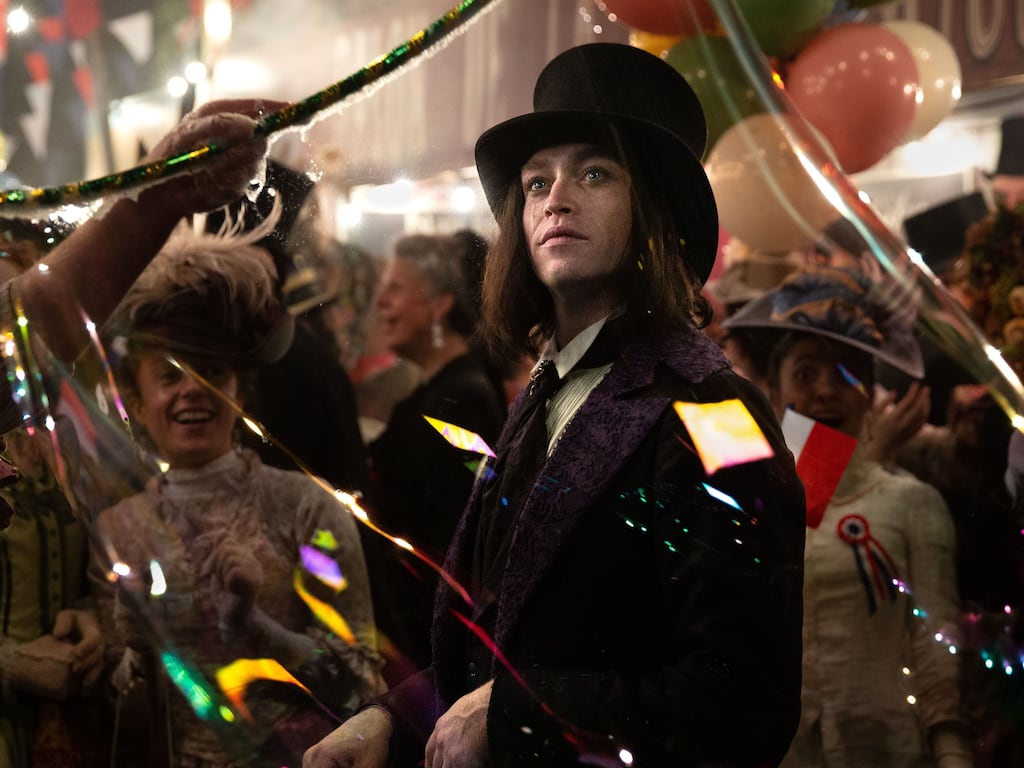
Jones plays a grief-stricken Vlad Dracul, who becomes the God-swerving Dracula after losing his beloved wife, Elisabeta (Zoë Bleu), and spends 400 years searching for her reincarnation. He finds her in Mina (also Bleu), fiancee of the timid solicitor Jonathan Harker (Ewens Abid), whom Dracula imprisons, before pursuing Mina to the Paris of the belle epoque.
Besson stages Dracula’s centuries-long odyssey with flamboyant spectacle – outrageous disguises, comic misadventures, operatic set pieces, an all-you-can-eat vampire buffet in courtly Versailles – culminating in a thrilling final siege at the count’s ancient castle.
“If someone wants a traditional horror film, they should watch something else,” the director says with a laugh.
Although Besson has long worked in genres where stylisation dominates, his approach to Dracula, not unlike that of Francis Ford Coppola, zeroes in on the eternal romance of the story. Before he started to adapt the novel he had no historical interest in the character’s broader legends or the count’s storied cinema history.
“I’ve never been a great lover of horror films, and honestly I don’t care much about the Dracula mythology,” he says. “What moved me, when I reread the book, was the idea of a man waiting 400 years simply to say goodbye to his wife.
“That felt heartbreakingly romantic. That’s the story I wanted to tell. For me the film is much closer to Beauty and the Beast than to anything in the horror genre. The name Dracula is almost incidental – a frame to play with.”
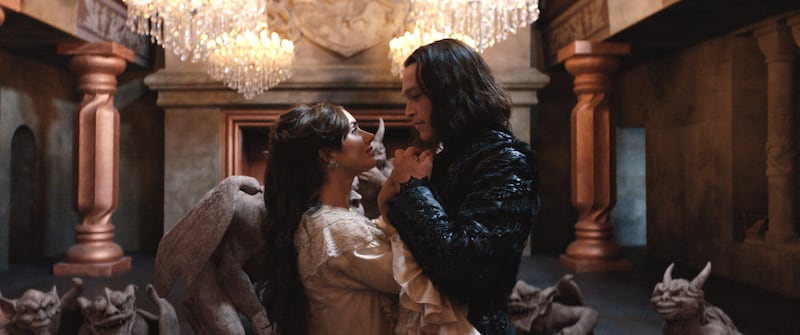
Besson, who is the son of diving instructors – inspiration for The Big Blue, his free-diving drama from 1988 – has always been a hands-on film-maker, preferring models and practical effects over Hollywood CGI.
For all of Dracula’s huge set pieces, including a wild seduction sequence set against a detailed re-creation of the Paris Exposition of 1889, the film’s development followed the method that Besson has streamlined in recent years: instead of assembling vast departments, he convenes a small group of collaborators.
“We picked purple as a guiding colour, then silk. Caleb reacted by becoming slightly dandy, slightly feminine,” he says. “That led to gestures, like him touching his neck, and suddenly we’re studying iguanas to design something organic for him to wear.
“It all grows slowly, by hand, from collaboration. The American system is different: four weeks and an army of 120 people. It’s a machine. But I prefer this artisanal process where everything is built, sewn, shaped with a real sense of touch.”
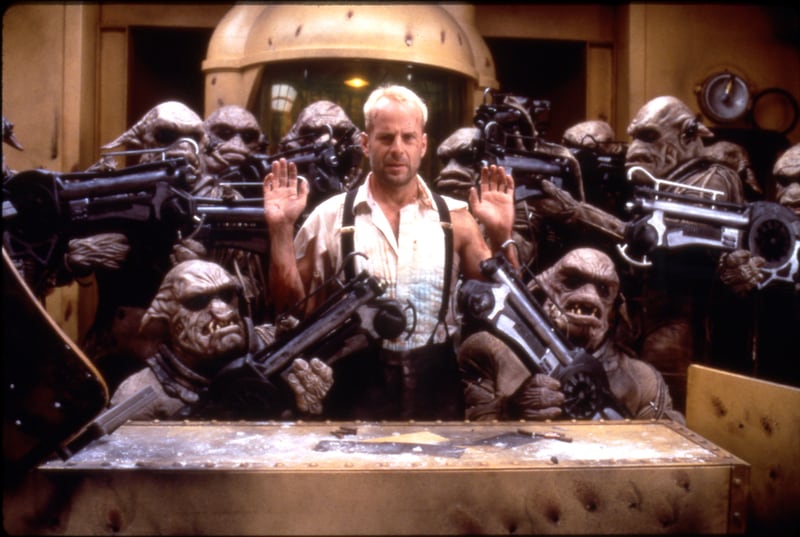
It’s odd to picture a director known for such big creative swings in such intimate circumstances. In 1999 his Joan of Arc required armour, weapons and horses for about 1,500 extras. Jean Paul Gaultier designed an estimated 800 costumes for The Fifth Element, with Jean “Moebius” Giraud and Jean-Claude Mézières contributing additional concept art.
But Besson’s current views on craftsmanship and authorship extend into a broader critique of current movie-making culture.
“Twenty years ago the people with money didn’t pretend to be the artists,” he says. “They trusted Scorsese, Spielberg, the directors. They’d say, ‘We don’t know, but he knows.’ Today it’s accountants, lawyers, managers. Everything is governed by Excel tables.
“Films become products, and products must follow market data. Someone will tell you, ‘Your film is called The Big Blue, but we’ll rename it The Big Red, because red tests better.’ But the sea is blue! ‘Doesn’t matter – red is popular.’
“This is the beginning of the end of creativity. And for what? The success rate is the same. No one can predict what audiences will want in two years. We should follow creative people, not statistics.”
Dracula follows a period of professional and personal difficulty for Besson.
In 2018 he was accused of rape; it wasn’t until 2023, when France’s highest court declined to reopen the case, after several appeals, that Besson was finally cleared of all charges.
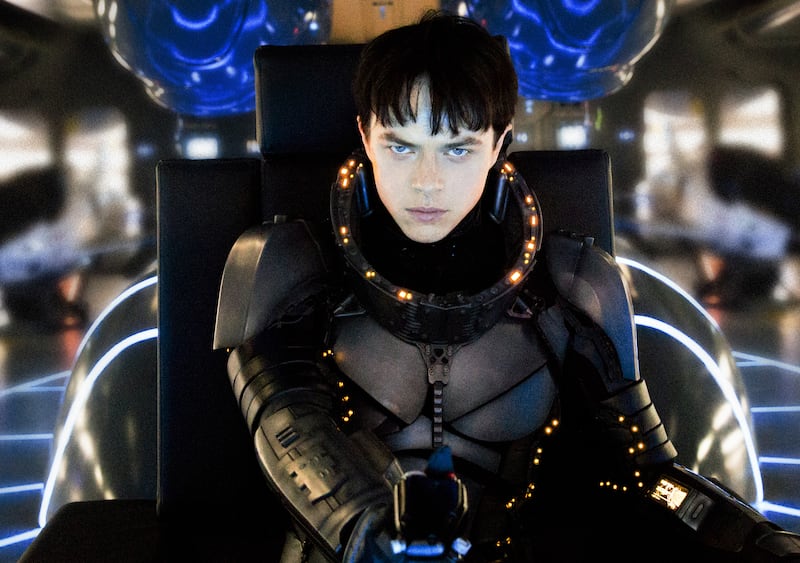
Besson’s company EuropaCorp, originally founded in 1985, lost a lot of money after the release of Valerian and the City of a Thousand Planets, in 2017. Besson is estimated to have poured at least $200 million into that space opera, hiring more than 1,200 crew members and creating more than 100 alien species. It was the most expensive independent European film when it was released – and it bombed at the box office.
He has bounced back, continuing to pursue new projects with his long-time collaborator, producer and wife, Virginie Besson-Silla.
June and John, a romcom, was shot guerrilla-style, using mobile phones, during the pandemic. In 2024 he cowrote and produced Weekend in Taipei, an action movie starring Luke Evans that became a sizeable hit in its native Taiwan.
Besson credits his resilience to his well-worn routines. Come what may, he writes every day.
“I’ve written every day since I was 17 – holidays, weekends, it doesn’t matter,” he says. “I wake at 4.30am, make tea, put on music and write for two or three hours. It’s my form of gymnastics. If I don’t write I become grumpy, like someone who hasn’t exercised.
“The rest of the day is logistics: solving problems, meetings, business – all the stuff I find boring. But the morning is my sanctuary. It’s where I can enter the worlds I’m building, whether that’s Joan of Arc or Dracula or something entirely new. That quiet space is where I feel I can actually fly.”
Besson, no longer an enfant terrible, seems to have greatly mellowed. Those debates of 40 years ago no longer get him so riled.
“When people talked about ‘cinéma du look’, it was really about Subway and the films of Carax and Beineix, this sense of a ‘new new wave’,” he says. “But I was 23 when I made Subway. I had lived so little. Of course, the film is full of colour, movement, music. That’s what a 23-year-old expresses.
“Then you get older. You pay more attention to story, to actors, to tone. You make Léon, The Fifth Element, Joan of Arc. Now I arrive at Dracula at 65 with a completely different understanding of love and life. It’s natural. Cinema is a young art, and you evolve along with it. A boy becoming a man.”
Dracula is available on digital platforms now and on DVD and Blu-ray from Monday, December 22nd