A Tidy Towns group has taken its third legal challenge over planning approval for a development of more than 400 apartments near the Dublin mountains.
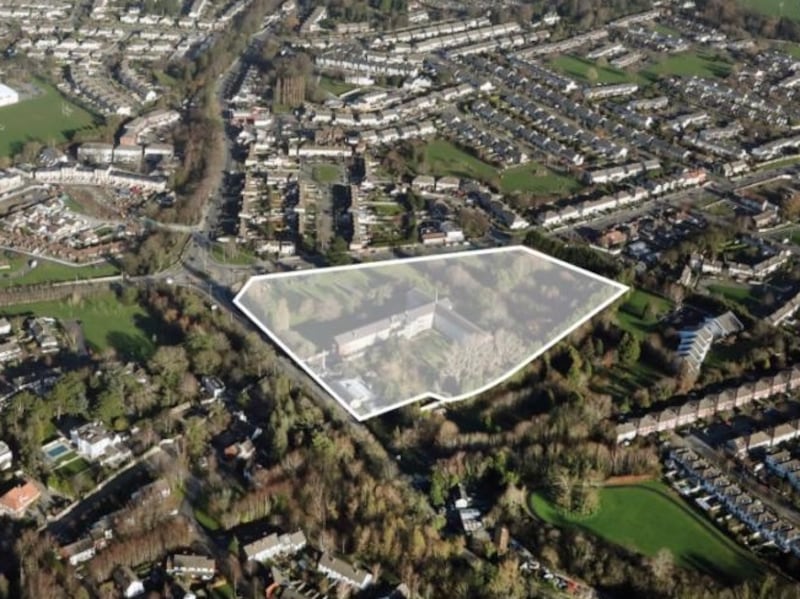
Ballyboden Tidy Towns Group (BTTG), in a third judicial review over the proposed development at the former Augustinian seminary at Taylor’s Lane, Ballyboden, wants orders overturning a permission granted last September by An Coimisiún Pleanala.
The permission, granted to Shannon Homes Dublin Unlimited Company, is for the development of 402 residential units. It is the third permission for the development, the previous two having been successfully challenged. The case will be heard next month.
The BTTG and a local residents’ group got court orders in January 2022 overturning permission to build 486 apartments on the same plot.
RM Block



In quashing that permission, the High Court held An Bord Pleanála failed to properly consider public transport capacity for the area before deciding the project could proceed. It found a further flaw regarding the scheme’s density which, at about 142 dwellings per hectare, breached the objectives of the county development plan.
The matter went back to the board but a second judicial review challenge was taken to its October 2023 approval for a development of 401 units in three apartment blocks of up to five storeys.
In February 2025, the commission conceded that challenge on the basis it had erred in law in relying on mitigation measures when screening out the likelihood of significant effects on protected areas for nature as a result of construction and operational activities. It also conceded it could not lawfully exclude likely significant effects on the objectives of the Wicklow Mountains special area of conservation.
Last September, the commission’s inspector recommended permission be granted for 402 apartments. That was granted on September 22nd, subject to 31 conditions.
In its challenge to the third permission, BTTG claims it breaches domestic and European law.
Its domestic law grounds include claims that the commission’s inspector, with whom the commission agreed, erred in law in finding the development involved no material contravention of the county development plan in respect of housing density. The site is not an urban built-up area and is not near an urban centre. The inspector also erred in forming the view the site was defined as a “suburban” area, it claims.
Other claims include the inspector and commission erred in finding the development’s material contravention of the county development plan in relation to open space requirements was justified and the proposed quantity of public open space was “acceptable”.
The problem with the commission’s approach is that the residents suffer because of inadequate public open space and/or the public suffers because no contribution in lieu was provided for to improve park and amenity facilities, the group claims.
Among its European law grounds is a claim the commission failed to comply with the European Impact Assessment Directive. It was not open to the commission to exclude the possibility of significant effects on the environment, in the absence of adequate survey information in relation to bats and the acknowledged disturbance impacts on bats.