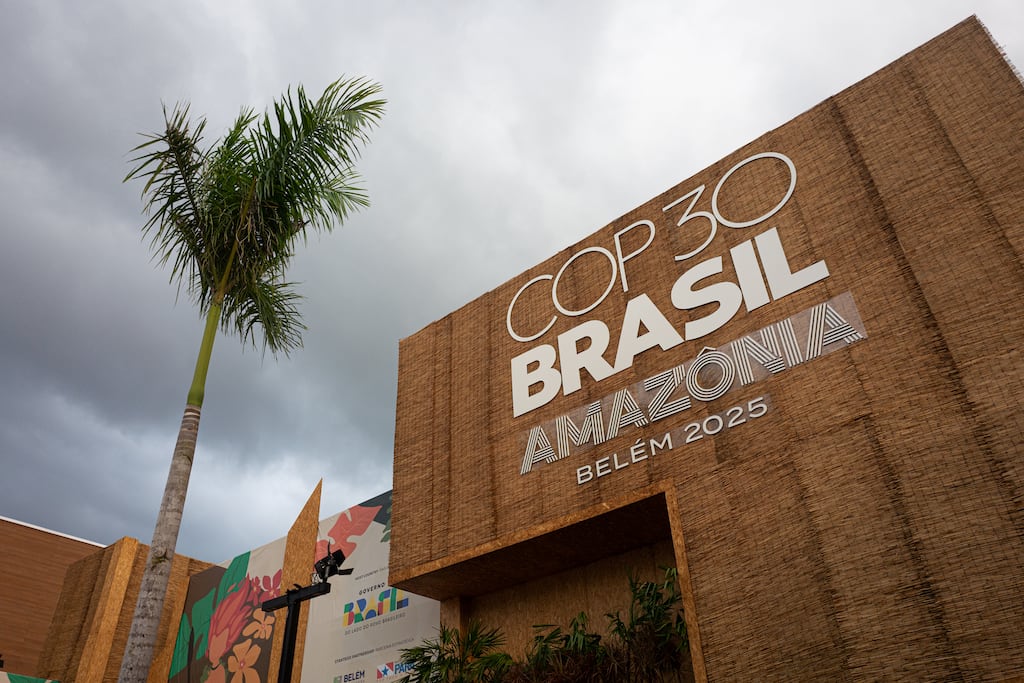

Under the legally binding Paris Agreement reached at the 2015 Conference of State Parties (Cop21) on climate change, 195 countries pledged to keep the increase in the global temperature to well below 2 degrees above pre-industrial levels, and to try to limit the increase to 1.5 degrees.
To mark the Cop, a set of artworks installed on the walls of the Gare du Nord metro station consists of a series of equations. My grandson identified that they were from a paper in the Journal of Atmospheric Sciences in 1967, which estimated that doubling the carbon dioxide concentration in the atmosphere would raise the global temperature by 2 degrees.
Thus, the scientific community has known about global warming for almost 60 years. Despite this early understanding of the dangers from growing carbon emissions, the world has been very slow to take effective action.
A 1990 study from the Organisation for Economic Co-operation and Development (OECD) examined the costs and benefits of tackling global warming across the planet. The OECD analysis showed that taxes on greenhouse gas emissions, based on the polluter-pays principle, would be the most effective way to reduce them.


The European Commission followed up with 1992 proposals to tax carbon emissions EU-wide. However, this was vetoed by a number of member states, including Ireland.
It took a decade and a half for the European Union to introduce an emissions trading scheme aimed at tackling the issue, and for Ireland to introduce a carbon tax on sectors outside that scheme.
Despite the growing overheating of the planet, and the resulting damage being inflicted by more frequent and intense adverse weather events, the consensus on urgent climate action shown a decade ago in Paris has somewhat frayed. The current US administration has denounced climate change as a hoax, and it boycotted last month’s Cop30 in Brazil.
Countries possessing major oil and gas reserves, such as Saudi Arabia, prevented any call at Cop for enhanced action on tackling climate change. With increasing geopolitical tensions, climate change has slipped down leaders’ agenda.
It’s disappointing that most countries won’t commit to working harder as the climate crisis has become noticeably worse. However, that doesn’t stop the efforts already underway, albeit they are inadequate.
At Cop, the world’s poorer countries – many of them the most vulnerable to the effects of climate change – sought increased financial assistance from developed countries to help them to adapt to the changing climate. In this sphere, the EU has already taken the lead, doubling its support from under €15 billion a decade ago to more than €30 billion today.
About half of these funds go to support the green transition in developing countries, with much of the rest helping them to deal with the serious consequences of climate change.
The EU funding is focused on major projects, where the bureaucracy needed to draw down the funds is significant. However, smaller projects around the globe, governed by simpler regulations, could have a real impact.
That would also give concrete expression to Europe’s stated commitment to tackling climate change across a wider range of projects and countries. Through funding local community initiatives, like tapping the abundant solar power many poorer countries enjoy, the EU, and Irish Aid, could have a real impact on people’s lives and standards of living, while allowing countries grow their economies without drastically increasing their carbon footprints.
Here at home, we have a lot more to do to turn our stated commitments on climate change into effective action at scale. We have the second-highest emissions per head in the EU, and need to do a lot more to reach net zero by 2050.
We have made good progress on decarbonising electricity and in retrofitting buildings. But we are moving too slowly on transport – we need better public transport that encourages people to switch, and we need to electrify our car fleet at a much faster pace: most new car registrations should be EVs, beginning next year.
Progress in agriculture is disappointing, in spite of it being clear that modest changes would have a real impact. Switching a portion of land from beef farming to forestry should be a winner for both farmers and the planet.
To make that happen there needs to be enhanced support for green action, taxation to discourage emissions, and regulatory reform to allow farmers to modify their existing activity. The further extension by the EU of the derogation on nitrates is not the answer.
We like to portray ourselves as climate progressives on the world stage. But we need to step up our game at home to tackle emissions.