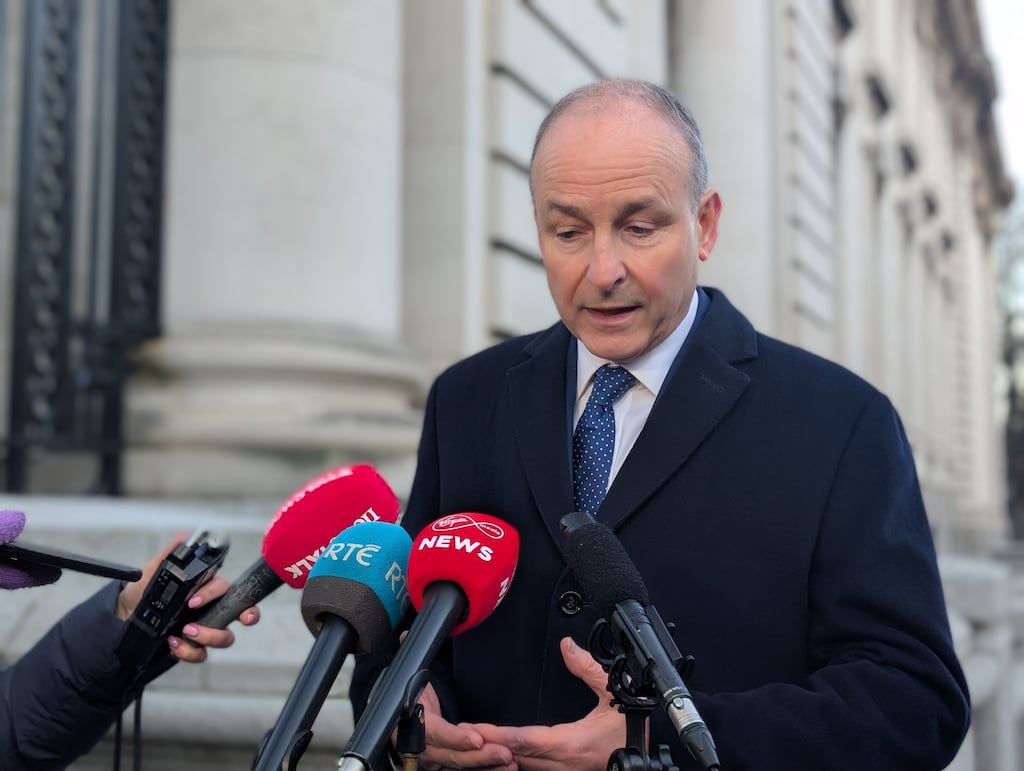


It was a long night at Leinster House for the Fianna Fáil parliamentary party and not just because it was their Christmas drinks.
TDs and senators met for more than five hours to discuss the report on the party’s disastrous presidential election campaign, finalised yesterday morning and circulated to the parliamentary party shortly before the meeting.
It was billed as the showdown that had been brewing for months. Micheál Martin offered a spirited defence of his leadership, but there was sustained criticism from many of his TDs. Some of them called outright for a change of leadership – but perhaps none of these was a surprise to their colleagues. Martin’s opponents in the party believe that the report was either a whitewash or damning indictment. Well, it can’t be both.
The report itself did not contain any new killer facts. It laid out a detailed timeline of events in which Jim Gavin repeatedly assured party officials that he had no recollection – the phrase conspicuously used repeatedly throughout the report – of any dispute. But it did lay out a process that would ultimately prove to be disastrous for the party – and which Martin led his party straight into. There’s no getting away from that.

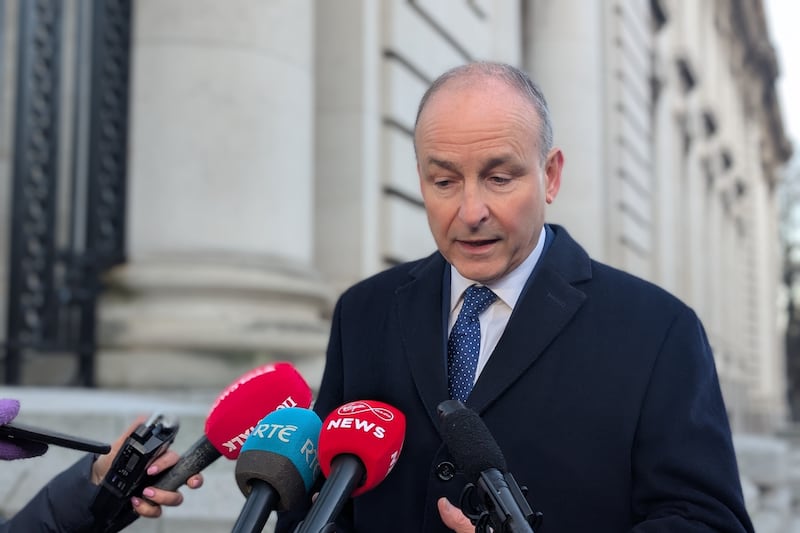

There was chatter around Leinster House yesterday morning about a possible motion of no confidence in Martin. The numbers don’t appear to be there for that, and crucially there was no indication that the middle ground in the party has moved decisively away from Martin. But it didn’t feel like a resolution last night. The words of Pat the Cope Gallagher were ominous for Martin: “this is not over”, he said.
Our page one story on the matter is here.
Here’s the full account of the report.
And Jack Horgan-Jones summarises what we learned.
Elsewhere, health correspondent Shauna Bowers has a dreadful story about abuse of vulnerable people at Bloomfield Hospital in Rathfarnham.
Better news in Limerick, where a new hospital will be built. Eventually.
There’s also news of more capital investment in military equipment. The State is to spend half a billion euros on a military radar system, Conor Gallagher reports.
Gardaí are getting counter-terrorism training simulators.
And there’s a new Government aircraft.
Best reads
Oliver Sears on the Sydney massacre.
RTÉ director general Kevin Bakhurst on the station’s future: a smaller RTÉ does not mean a hollowed-out RTÉ, he says.
Harry McGee looks at the Government’s legislative record in its first year.
Denis Staunton’s new Global Briefing newsletter (you should sign up) on the interview given by White House chief of staff Susie Wiles to Vanity Fair.
Playbook
The Oireachtas schedule is packed as the whips try to get stuff through by the end of the year. Some of them have to be done by then – the Dáil must pass the Appropriation Bill this week if the Government is going to spend any money next year. Others, such as the Defamation Bill that is back in the Seanad, we could still be talking about this time next year. Dáil business starts at 9am and finishes after the weekly votes at 11.15pm.
The full details of the day are on oireachtas.ie.
Highlights include the Bill from Ruth Coppinger of People Before Profit-Solidarity to ban fox hunting, which is being debated this morning and will be voted on tonight. Coppinger has been seeking a free vote, but she’s not going to get it.
The GAA top brass, along with former president Mary McAleese, are in at the sports committee to talk about the integration of ladies football and camogie with the GAA. And a delegation from the Young Sheep Farmer Forum is in at the agriculture committee in the afternoon.
Later Micheál Martin heads to Brussels for this week’s crucial EU summit, where heads of government will try to reach agreement on a package of funding for Ukraine. Politico is calling it the most important EU summit since the pandemic. Wonder will the Taoiseach go on the new jet?
Up at the Áras, meanwhile, President Catherine Connolly will receive climate campaigner Greta Thunberg. Greta does not have a new jet.