On the night of October 7th, the town of Pryluky, 150km east of Kyiv, was hit by Russian cruise missiles.
The cruise missiles were not aimed at military targets. One of them slammed into a five-storey block of apartments, killing 18 people in their beds, including three children.
Pryluky is the hometown of the Ukrainian ambassador to Ireland, Larysa Gerasko.
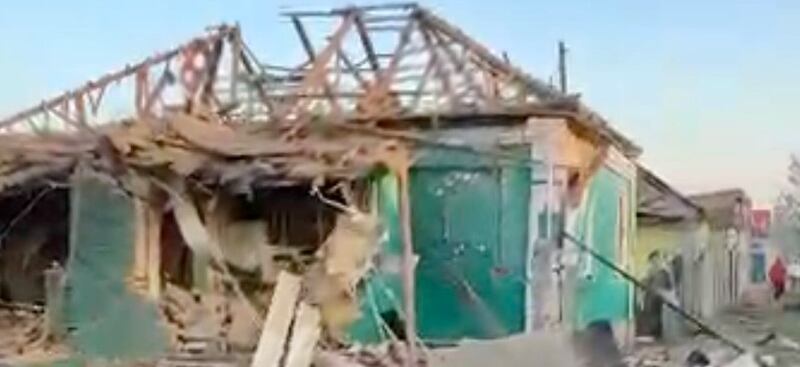
A missile crashed into her aunt’s back garden, destroying her home while she was asleep inside.
RM Block


“It was around 7am. She woke up to the sound of an explosion and rubble falling down from the roof. It’s a miracle she survived,” Gerasko says.
A whole family, neighbours of her parents, were wiped out in the attack on apartments in the neighbourhood where she grew up.
Her hometown has been targeted before by the Russians, but not with such a loss of life.
Gerasko wakes up many times at night to check Telegram channels to see which places are being attacked. Most Ukrainians living in Ireland do the same.
“Physically we live here, but mentally we live in Ukraine. It’s more painful when it’s personal,” she says.
Ukrainians are facing into a grim winter. The Russians have stepped up their attacks against civilians and against energy infrastructure night after night.
US president Donald Trump has completed a deal with Vladimir Putin to allow Russian diesel back on to the world market.
Without US support, Ukrainian air defence missiles have become depleted and there is doubt about the continuation of US intelligence-sharing. More Russian missiles and drones are getting through and reaching their targets.
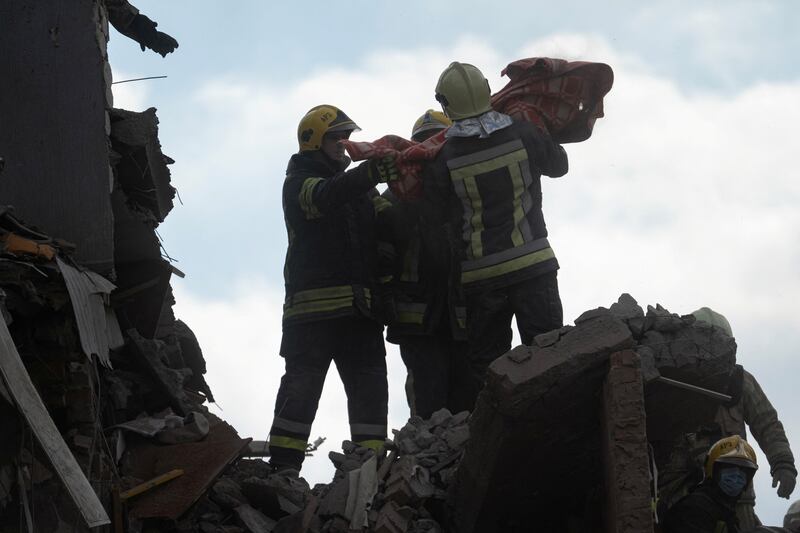
The purpose of these attacks against civilians is to intimidate ordinary Ukrainian, the ambassador says. It is a tactic, she believes, that is bound to fail.
“They want to encourage ordinary people to give up or to pressurise the government to surrender,” she says.
“It doesn’t work like that. The resilience and the resistance of Ukrainians is very strong. Putin and Russians, even now, don’t understand that for us, in the case of occupation, Ukraine would be eliminated and exterminated.
“We know the price. None of us want to live under a dictatorship. I grew up in Soviet times. I know what it means to grow up in a closed autocratic country.”
More than 120,000 Ukrainian refugees arrived in the State after the Russian invasion in February 2022 and, as of June, about 85,000 have stayed.
The number of Ukrainians seeking refugee in Ireland slowed dramatically at the start of last year, but Gerasko says the relentless targeting of civilians by Russia is likely to lead to an upsurge of Ukrainians wishing to leave the country.
Some are moving to rural Ukraine for the winter to escape the bombings, but others will not have that choice.
“Those who still live in Ukraine don’t want to leave the country because they have a job or business or family,” she says.
“They want to stay in Ukraine as long as they can, but what I hear from Ukrainians is that those who have children want to leave.”
What can Ireland do?
She suggests there should be an end to tourist visas for Russians within the EU. If Russians believe Europe is the enemy, they should “stay in Russia and enjoy the Russian style of life”.
She asks about Russian people living in Ireland protesting against their own country’s invasion of Ukraine.
“I met two of them in 2022 and that’s all I have seen in nearly five years. I don’t remember any Russians joining the protests outside the Russian embassy,” she says.
She wants an end to the May 9th celebrations in Ireland when people from the former Soviet Union gather in cavalcade to celebrate the defeat of Nazi Germany. She says it amounts to a pro-Russian rally.
She has raised it with the Department of Justice and the Garda Commissioner every year since the invasion.
“I always received the same answer. It is about freedom of speech. I respect freedom of speech and assembly, but you have to go to draw the line between freedom and propaganda,” she says.
The ambassador says she is “very disappointed” with the attitude of the Irish Government towards Aughinish Alumina following revelations in The Irish Times earlier this year that alumina produced in the Co Limerick factory was ending up in the supply chain feeding the Russian war machine.
A Government investigation proved inconclusive and the matter is with the European Commission.
To Ukraine, Aughinish is a “black and white issue, it is clear”, says Gerasko.
You cannot distinguish between military and civilian use of Aughinish’s exports to Russia, she argues. “It’s impossible technically to exclude Irish alumina from other alumina,” says the ambassador.
She compares it to deciding which grain from which barley harvest goes into a bottle of whiskey.
Though the country faces into a potentially terrible winter, Ukraine is not losing on the battlefield. This isn’t just bravado, she says, Ukraine has liberated 250 sq km of its territory this year.
How will the war end? It would be “her” dream to see all occupied Ukrainian territory liberated, but there has to be an end to hostilities first.
“We have to get a ceasefire, but unfortunately Putin is not ready. We are defending not only our country, but Europe itself.”