
Perhaps the only small mercy this week for the once infallible Nike brand is that Sabastian Sawe is a non-starter in Sunday’s Berlin Marathon. Five months after becoming the first man to officially break the two-hour barrier, running 1:59:30 in London, the Kenyan runner won’t be defending his Berlin title due to injury, thus ruling out any talk of improving his own world record too.
This may afford Nike the chance to make up some ground in the so-called super shoes race, after the crushing loss of seeing Sawe break the world record in London wearing a pair of the Adidas Adizero 3. Nike, in fairness, had been miles ahead in this race since first introducing their Vaporfly technology 10 years ago, leading the way and setting the trend for rival brands to follow.
Then Sawe/Adidas passed them out in one fell swoop, erasing years of Nike research and investment with their own featherweight 97g shoe, which promised more improvement in running efficiency and recovery than anything Nike had to offer. Nike also lost some credibility when their women’s marathon world record holder Ruth Chepngetich received a three-year doping ban last October, although that’s a whole other story.
Anyway, even if a Nike-sponsored man or woman does manage to win in Berlin, it won’t diffuse what has been the worst week in the company’s history. And not just financially. Beginning in 1971, when Phil Knight relaunched his small running shoe company Blue Ribbon Sports under the brand name Nike, one of its main assets and talking points has been the often-breakneck speed of its growth. Most of the talk now is about its irretrievable decline.
Relentless pace of the running boom shows no sign of slowing down

Dublin Marathon analysis shows club runners produce significantly faster finishing times

‘The brightest light never truly fades’: Ciara Mageean remembered at funeral

Michael Darragh Macauley says Ciara Mageean looked out for others until the end

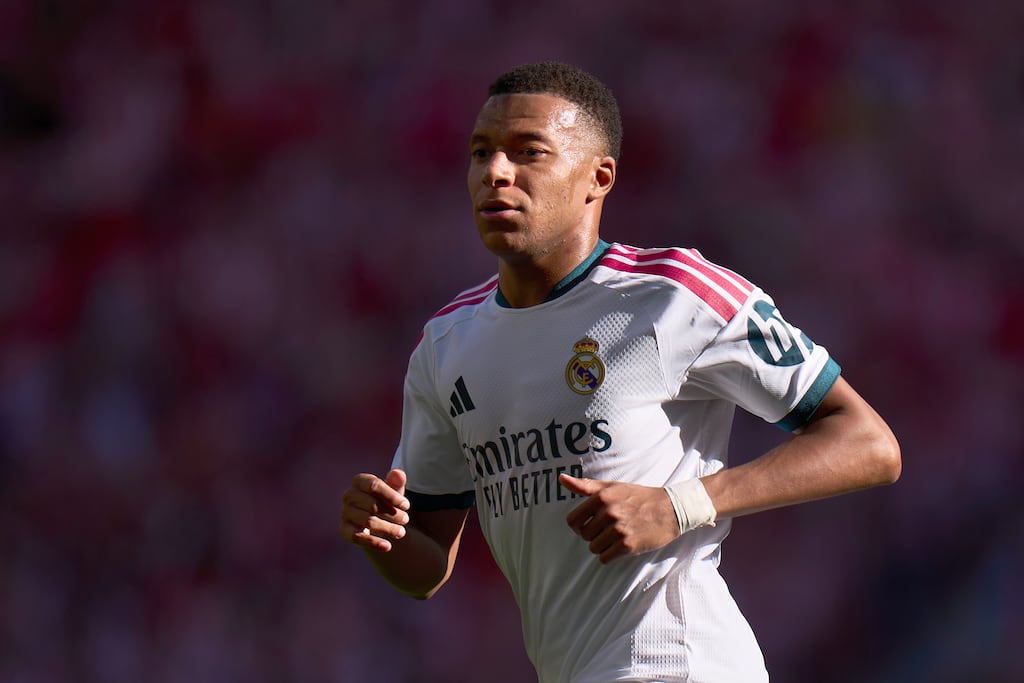
The news that Kylian Mbappé was ending his long-term relationship with Nike to sign a new deal with Swiss brand On came as a sort of double whammy. The 27-year-old French and Real Madrid striker had effectively been on Nike’s books for almost two decades, when they started giving him free football gear as an eight-year-old, before signing him for multi-million-euro contracts as soon as he was old enough.

Despite offering him a 10-year contract worth more than €20 million per year – the sort of Nike territory only LeBron James has so far enjoyed – Mbappé saw his future with On. Crucially, his On deal includes both cash and equity, similar to the deal Roger Federer received when he left Nike for On back in 2019. Federer’s original three per cent stake in On is now estimated to be worth around $300 million, more than double the $130 million he earned across his entire 24-year tennis career.
The fact that the On brand doesn’t manufacture any football boots yet was no issue to Mbappé. Part of his role will be to develop their new boot, to be introduced next year, with former France and Arsenal striker Thierry Henry, who last week was also announced as On’s new director of football.
Mbappé and Nike have at least parted ways relatively amicably, with Mbappé further explaining the move in a 4,000-word interview this week with The Athletic, the sporting wing of The New York Times.
[ Kylian Mbappé reveals he was ‘close’ to Liverpool move after Jürgen Klopp talksOpens in new window ]
“I had an amazing story with Nike ... I can only say thanks to Nike because they brought me in when I was eight years old. I realised many of my dreams with Nike, from a kid to a global superstar. But I wanted something different because I’d changed as a person, as a man, and I had different goals and visions. It’s new for them (On), coming into football, and I wanted to be part of it from the start and to build a legacy.”
Nike, however, will also be acutely aware that they played some role in the founding of On to begin with. When former Swiss Ironman champion and Nike-sponsored athlete Olivier Bernhard went about seeking a new style of running shoe to help deal with his chronic Achilles injuries back in 2010, his original prototype was rejected by Nike, so he started up the On brand instead, aimed largely at the premium end of the market.
As if to add more insult to injury, Mbappé still wore his Nike Mercurial Superfly 11 in last Sunday’s Madrid derby, a 1-2 loss for Real at Atlético’s home ground, but covered up the swoosh to make it appear like he was wearing some sort of On prototype.

Nike’s woes this week didn’t end with Mbappé’s exit. Nike also had to cancel a scheduled filming session for a campaign advert featuring former Real Madrid striker Karim Benzema on Wednesday night after the sportswear company decided the footballer did not align with the brand’s values.
In a statement to The Athletic, Nike said: “This project does not reflect a wider relationship between the athlete and Nike. We regret that conversations got this far.” Benzema had previously been convicted of complicity in blackmail in a sex-tape scandal, which had overshadowed his French career, missing five years of representing his country as that case continued.
Over the weekend, Nike’s subsidiary Converse also issued an apology for an advertisement that some critics said evoked Ku Klux Klan imagery. The ad had depicted the bottom half of a person wearing a white garment, which some critics likened to a Ku Klux Klan robe, while holding a pair of black Converse shoes, which critics said appeared to dangle in the air like a lynching victim.
There is also a pending lawsuit which alleges the sexual assault of a teenage athlete at the Nike Elite Program, for top high-school track and field athletes in Beaverton, Oregon, over the last Fourth of July weekend.
Then there’s the Nike shares story, where everything is going from bad to worse, and money can’t change a thing. Shares have fallen over 43 per cent this year, recently trading around at $36, compared with its 2021 high of nearly $180.
The prolonged decline has also reduced Nike’s influence within the Dow Jones Industrial Average, the benchmark of blue-chip US equities, and its position there is now looking increasingly tenuous.
All of which has left some long-term Nike investors to think it’s no longer a case of just do it, but just sell it.