The reminiscences of old men about youthful sporting days always carry poignant nostalgic charm, but the stories of the men who were boys in the Star of the Sea junior football club in the late 1960s hold a special type of regret.
The story of the north Belfast club will be told on Tuesday, October 20th, in the TG4 documentary, Réalt na Mara: An Peil, Na Trioblóidí agus An Iarmhairt (Star of the Sea: The Football, The Troubles, and the Aftermath).
The documentary by film-maker James Wynne tells how the Troubles in 1969 brought bitter sectarian divisions into Rathcoole, one of the new housing estates built in the early part of the decade.
Led by an inspirational manager, Dr Liam Conlon, the Star of the Sea club had been formed out of the local Catholic secondary school, but it was open to all.
RM Block


In its day it was regarded as the finest junior football team on the island. Its young players included the later IRA hunger-striker, Bobby Sands and Terry Nicholl and Michael Acheson, who were later members of the Ulster Volunteer Force (UVF).
[ Star turns: The brilliant Belfast boys who defied the sectarian tideOpens in new window ]
However, the documentary does not seek to glorify. “Bobby joined an organisation that murdered 1,800 people. Terry joined an organisation, the UVF, that murdered hundreds of people, as did Michael. They weren’t the guys I knew. They chose to go down that road. They had a choice,” says fellow team-mate, Raymond McCord, whose son, Raymond jnr, was battered to death in a quarry with bricks by the UVF in 1997, fearing he would become an informer.
The lives of each one of the Star of the Sea team was changed by the violence that was unleashed: Denis Sweeney narrowly avoided being killed or injured in a pub bombing and chose to become a doctor.
Best friends, Dessie (Desi) Black, a Catholic, and Willie Caldwell, a Protestant – “you never saw one without the other”, the documentary hears – tried to live their lives apart from the violence.
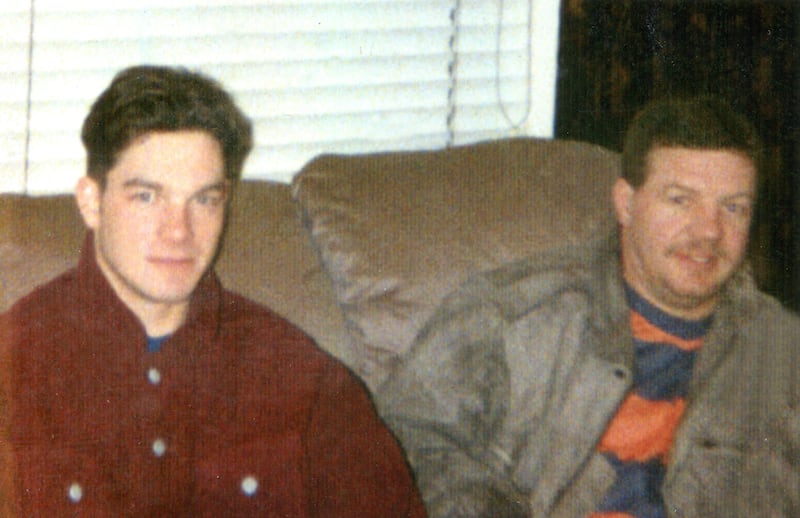
In the end, however, Black decided after being near a bombing to get out, once he saw advertisements for blocklayers in Guernsey. “It was like f***ing paradise,” he says. “I got married and that and a couple of kids, grandkids and that.”
Soon after, he persuaded Caldwell to join him. It was probably for the best since Caldwell had continued socialising on both sides of the divide in a city that no longer permitted life on both sides of the line.
“I was going to discotheques on the New Lodge Road, which is a Catholic area, one night. The next night, going out with Protestant mates, going to an area just three streets away, Tiger’s Bay, going to loyalist clubs. So, I thought the best thing for me is to get out,” he says in a clip filmed in 1983.
Recently the two came to Dublin from their homes in Guernsey for a screening of the documentary. “They came with their families,” says Wynne. “It was smashing to see them just hanging out all these years later.”
It is not the first time the story of the Star of the Sea has been told. In 1983, many of the team were interviewed for a BBC documentary, Old Scores, but it is one that still rankles with some of the men.
Filmed just two years after the May 1981 death on hunger strike of Bobby Sands, the documentary told the story largely through his eyes and times: “There was too much about Bobby in it, and not enough about what the Star meant,” says McCord.

However, this latest documentary is not just about the Rathcoole club either, since a large part covers the brutal murder of McCord’s son in 1997 – a killing blamed on UVF men who were also police and British military agents.
A later investigation by the Northern Ireland Police Ombudsman in 2002 found “systemic collusion” between the RUC’s Special Branch and loyalist paramilitaries, and that the murder investigation had been deliberately scuppered.
The names of his killers were known within a week: “And young Raymond, the guys that killed him, they were supposed to have been his friends, and they slaughtered that lad there.
“They went to shoot him, and the gun jammed, and they beat him with bricks. I’ll never forget it. The guys that done it were at his funeral,” says another Star of the Sea player, Geordie Hussey.
For Wynne, the documentary tells the story of quiet heroes – the ones who held the line and who helped prevent Northern Ireland from falling fully into the abyss, when it so easily could.
On such a list, the club’s manager, Dr Liam Conlon takes pride of place: “The majority caught in the middle just want a peaceful existence, but that is being disrupted – as we have seen again just in the last few weeks – by divisive rhetoric,” Wynne tells The Irish Times.
Months of research and filming in Rathcoole “reinforced the original idea of the film that shows how Liam Conlon’s ethos was literally 60 years ahead of his time, bringing people together”, he says.
For years afterwards, even when the cross-community make-up of Star of the Sea was but a memory, Conlon continued to help: “He had a holiday home in Donegal that he gave to people. The kind of people who wouldn’t even get the chance of a holiday. It sounds a bit simplistic or glib, but that’s the thing – people willing to do the right thing, regardless of the opposition. He carried that through right to the end,” Wynne continues.
Rathcoole, and so many other places under the sway of paramilitaries 30 years after the Belfast Agreement still need people like Liam Conlon, as one of the final scenes in the documentary reveals, if only in part.
In the scene, McCord is seen visiting his son’s grave in Newtownabbey. However, the film does not show that the gravestone is the fourth put over his son’s grave. Each of the others were desecrated by loyalist paramilitaries.